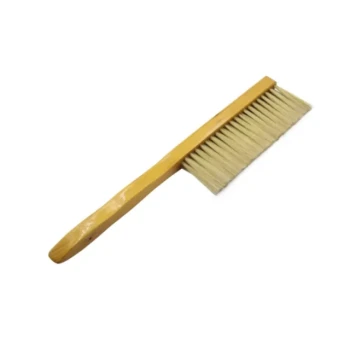
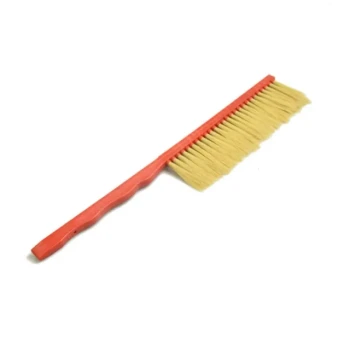
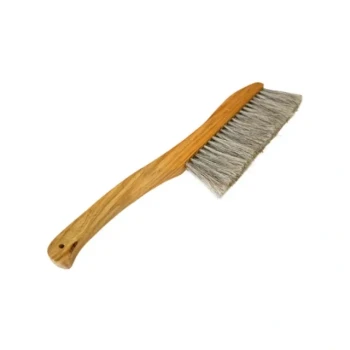
A smoker and a bee brush work in tandem to manage colony defense mechanisms and physical positioning. The smoker utilizes cool smoke to mask alarm pheromones and induce a feeding response that calms the bees, while the bee brush allows for the gentle physical relocation of bees from frames without crushing them or triggering defensive stings.
Safe hive management requires controlling both the biological instincts and the physical location of the bees. The smoker disarms the colony's defensive communication system, while the brush enables precise manipulation of hive components without causing injury.
The Smoker: Managing Biological Defense
Triggering the Survival Instinct
A professional smoker produces cool smoke that tricks the bees into believing a fire is nearby. This triggers a survival instinct, causing the colony to consume their honey stores in preparation for a potential evacuation.
When bees are engorged with honey, they become physically lethargic and significantly less aggressive. This induced "food coma" creates a window of docility, making it safer for the beekeeper to open the hive.
Masking Alarm Pheromones
The most critical safety function of the smoker is disrupting chemical communication. When a guard bee perceives a threat or stings, it releases alarm pheromones that signal the rest of the colony to attack.
Smoke effectively masks these pheromones, preventing the spread of defensive behavior throughout the hive. If a sting does occur, applying smoke to the specific area can neutralize the scent marker, stopping other bees from targeting the same spot.
The Bee Brush: Managing Physical Interaction
Preventing Crush Injuries
To inspect brood health or harvest honey, a beekeeper must often clear bees off a frame. Using hands or rigid tools can easily crush bees, which is not only fatal to the insect but immediately releases alarm pheromones.
A bee brush is designed with soft bristles to gently sweep bees aside without harming them. This allows the operator to inspect the comb or extract frames with minimal physical disturbance.
Ensuring Visibility
Safe inspection requires a clear view of the frame's surface to identify eggs, queens, or pests like wax moths. The brush allows you to move the "carpet" of bees temporarily.
By clearing the visual field without agitation, the beekeeper can perform meticulous checks for hidden risks or potential splitting opportunities.
Understanding the Trade-offs
The Risk of Over-Smoking
While smoke is an essential control tool, it must be used with restraint. Overuse of smoke can agitate the colony rather than calm it, causing panic.
Furthermore, excessive smoke during honey harvesting can contaminate the flavor of the honey. The goal is to use the minimum amount necessary to achieve a calming effect.
Improper Brushing Technique
The bee brush is effective, but it can cause aggression if used incorrectly. Brushing too vigorously or against the natural direction of the bees can roll and irritate them.
If the bees become agitated by the brushing motion, they may release alarm pheromones despite your best efforts. Gentle, decisive movements are required to maintain the safety established by the smoker.
Making the Right Choice for Your Goal
To maximize safety and efficiency, apply these tools based on your specific objective:
- If your primary focus is routine inspection: Rely heavily on the smoker to mask pheromones before opening the hive, ensuring the colony remains calm while you check for pests or brood health.
- If your primary focus is honey harvesting: Use the smoker sparingly to avoid flavor contamination, and prioritize the bee brush to physically clear frames for extraction without injuring the workforce.
Mastering the balance between chemical calming and gentle physical manipulation is the hallmark of a skilled beekeeper.
Summary Table:
| Tool | Primary Function | Safety Mechanism | Best Practice |
|---|---|---|---|
| Bee Smoker | Chemical Control | Masks alarm pheromones; induces feeding response | Use cool smoke; apply sparingly to avoid agitation |
| Bee Brush | Physical Relocation | Gently moves bees without crushing or injury | Use soft bristles; sweep in the natural direction of bees |
Elevate Your Beekeeping Operations with HONESTBEE
At HONESTBEE, we understand that the right tools are the foundation of a successful and safe apiary. Whether you are a commercial beekeeper managing thousands of colonies or a distributor seeking high-quality supplies, we provide the comprehensive wholesale solutions you need.
Our Value to You:
- Full Spectrum Equipment: From durable smokers and soft-bristle brushes to advanced hive-making and honey-filling machinery.
- Essential Consumables: A wide array of industry-standard supplies to keep your operations running smoothly.
- Specialized Hardware: Precision-engineered tools designed for professional-scale honey production.
Ready to scale your business with the industry's most reliable beekeeping equipment?
Contact HONESTBEE Today to discuss our wholesale offerings and discover how we can support your apiary’s growth.
Related Products
- Heavy Duty Manual Bee Smoker Blower for Beekeeping
- Wooden Bee Brush with Triple Row Artificial Fiber for Beekeeping
- Stainless Steel Honey Bee Smoker Hive and Honeycomb Smoker for Beekeeping
- Professional Bee Smoker with Elongated Spout and Durable Bellows for Beekeeping
- Classic Wooden Bee Brush with Double-Row Boar Bristles
People Also Ask
- What are bee smokers made out of? Choose the Right Material for Your Apiary
- What are the advantages of a manual bee smoker? Enhance Hive Safety with Controlled Cool Smoke Technology
- What is the primary function of a manual bee smoker? Master Hive Control for Safe Inspections
- What is the proper technique for applying smoke to a beehive? Master Calm and Effective Hive Management
- What is the purpose of using a bee smoker for Small Hive Beetle inspections? Master Chemical Control & Hive Safety