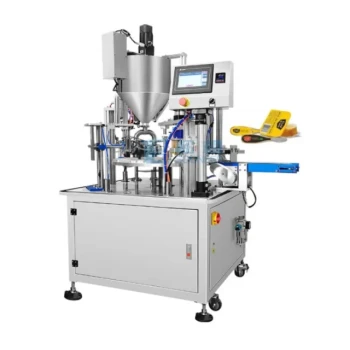
Automated filling and filtration systems represent the critical infrastructure required to bridge the gap between local beekeeping and global export standards. By transitioning from manual handling to industrial-grade precision machinery, producers physically remove impurities through fine mesh systems and eliminate environmental contamination risks via enclosed, sterile filling environments.
The transition to automated equipment does not just increase speed; it fundamentally alters the risk profile of the product. It ensures export viability by guaranteeing consistency, preventing secondary contamination, and physically removing spoilage agents while preserving the honey's natural characteristics.
Elevating Purity Through Precision Filtration
The primary barrier to export quality is often physical inconsistency. Automated filtration addresses this by standardizing the clarity and texture of the honey.
Removal of Macro and Micro Impurities
Raw honey often contains wax debris, larval remains, and other physical particles. Industrial-grade equipment utilizes fine stainless steel meshes to physically extract these contaminants.
This process significantly improves the sensory quality and commercial grade of the product without relying on chemical additives.
Delaying Crystallization and Spoilage
Filtration systems remove crystalline particles that act as nucleation sites. By removing these early crystals, the machinery helps extend the shelf life of the product on export transit routes.
Furthermore, these systems filter out micro-impurities that could compromise the product's stability, ensuring the honey maintains its liquid state and visual appeal for longer periods.
Ensuring Safety via Enclosed Environments
Export markets have zero tolerance for biological or chemical contamination. Automated filling solves the safety issues inherent in manual processing.
Eliminating Secondary Contamination
Manual bottling introduces significant risks from human contact and open-air exposure. Automated filling machines operate in enclosed, sterile environments, creating a physical barrier between the operator and the product.
This "closed-loop" system minimizes the risk of pathogens, dust, or foreign debris entering the jars during the critical final packaging stage.
Defense Against Biological Spoilage
Airborne molds and yeasts are primary causes of fermentation and spoilage. High-precision automated machinery reduces the probability of these organisms entering the finished product.
By combining sterile filling zones with effective sealing processes, the equipment forms a hardware defense against fermentation, ensuring the honey meets strict food hygiene standards.
Preventing Heavy Metal Migration
High-quality processing equipment is manufactured from food-grade stainless steel. This is critical for preventing the migration of external metal impurities into the acidic honey medium.
Using proper industrial materials ensures that heavy metal levels remain below legal safety limits, a common compliance hurdle in international trade.
Standardization and Commercial Consistency
To secure shelf space in global markets, every unit must be identical to the next.
Precision Dosage Control
Automated fillers utilize high-precision volumetric controls to ensure exact weight and volume. This guarantees consistency in packaging specifications, which is a requirement for international trade regulations.
Preserving Nutritional Integrity
Advanced machinery is designed to fill and seal efficiently without subjecting the honey to unnecessary stress. Accurate dosage and efficient sealing help preserve natural antioxidant activity and nutritional components.
This allows producers to market a product that is not only safe but also retains the high-value properties of raw honey.
Understanding the Trade-offs
While automation is essential for scale, it introduces specific operational challenges that must be managed to maintain quality.
The Risk of Over-Filtration
There is a fine line between cleaning honey and stripping it. If filtration meshes are too fine, they may remove pollen grains, which are essential for proving the honey's botanical and geographical origin.
Removal of pollen can disqualify honey from being labeled as "organic" or "raw" in certain premium markets. Equipment settings must be calibrated carefully to match the target market's regulations.
Maintenance and Sterility
An enclosed system is only as safe as its cleaning protocol. Because the honey moves through a closed loop, any bacterial buildup inside the pipes or pumps is difficult to detect visually.
Operators must adhere to rigorous Clean-In-Place (CIP) protocols. Neglecting maintenance transforms the safety mechanism into a source of systemic contamination.
Making the Right Choice for Your Goal
Selecting the right level of automation depends on your specific export strategy and target market.
- If your primary focus is the Mass Commercial Market: Prioritize systems with ultra-fine filtration and high-speed volumetric filling to maximize shelf life, clarity, and visual uniformity for retail shelves.
- If your primary focus is the Premium/Organic Market: Select equipment with adjustable filtration meshes and low-temperature handling to ensure you remove debris without stripping pollen or damaging heat-sensitive enzymes.
Ultimately, automated equipment transforms honey processing from a variable agricultural practice into a controlled industrial science, securing the safety and consistency required for global trade.
Summary Table:
| Feature | Export Advantage | Impact on Honey Quality |
|---|---|---|
| Precision Filtration | Removes wax & debris | Enhances clarity and delays crystallization |
| Enclosed Filling | Prevents secondary contamination | Eliminates pathogens and airborne molds |
| Food-Grade Materials | Avoids heavy metal migration | Ensures chemical safety and regulatory compliance |
| Volumetric Control | Standardized weight/volume | Guarantees commercial consistency for global trade |
| Adjustable Mesh | Protects pollen profiles | Maintains organic and raw honey certifications |
Scale Your Honey Export Business with HONESTBEE
Transitioning from local supply to global export requires industrial-grade precision. HONESTBEE specializes in empowering commercial apiaries and distributors with the robust machinery needed to meet international standards.
Our comprehensive portfolio includes:
- Automated Honey-Filling & Filtration Machines: Ensure sterile, consistent, and high-speed production.
- Hive-Making Machinery: Precision equipment for building durable apiary infrastructure.
- Beekeeping Tools & Consumables: A full spectrum of essential hardware for large-scale operations.
- Cultural Merchandise: Expand your brand reach with honey-themed retail products.
Whether you are targeting mass commercial retail or the premium organic market, our specialized hardware provides the "hardware defense" your product deserves.
Ready to elevate your production? Contact us today to discuss how HONESTBEE can streamline your wholesale operations and secure your place in the global market.
References
- Davit Pipoyan, Meline Beglaryan. Assessing Health Risks Associated with Antibiotic Residues in Armenian Honey. DOI: 10.52276/25792822-2023.2-198
This article is also based on technical information from HonestBee Knowledge Base .
Related Products
- Automatic Honey Filling and Filtering Machine for Beekeeping Bottle Filling
- Fully Automatic Honey Filling Packaging Machine for Processing Line
- Precision Durable Efficient HONESTBEE Rotary Honey Filling Machine
- Manual Honey Filling Machine Bottling Machine for Honey
- Semi Automatic Small Honey Bottle Filling Machine Honey Filler
People Also Ask
- What process advantages do professional honey filtering and filling machines provide? Optimize Your Organic Honey Output
- How do honey filling and filtering machines increase product value? Turn Raw Honey into Premium Export-Grade Goods
- How do honey filtration and filling machinery contribute to industrialization? Scale Your Commercial Honey Production
- What specific issues do industrial filtration and automated filling machinery address? Ensure Honey Quality & Compliance
- How does the use of professional honey filtration and filling machinery facilitate international honey exports?