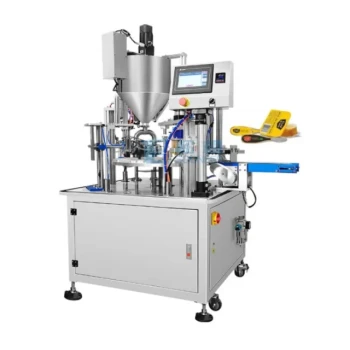
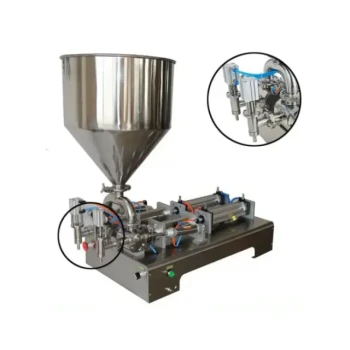
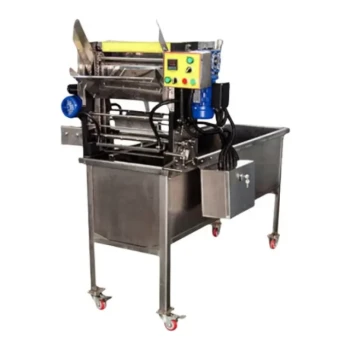
Automatic honey filling machines serve as the financial anchor for sustainable beekeeping operations. They utilize high-precision quantitative filling and automated sealing to drastically lower labor overhead and eliminate the risk of secondary contamination. This operational efficiency accelerates the flow of honey to market, generating the critical revenue required to maintain Western honeybees (Apis mellifera) for agricultural pollination.
Honey production is the economic engine that subsidizes crop pollination; automatic filling equipment maximizes the efficiency of this engine, ensuring beekeepers have the cash flow necessary to maintain hive health and food security.
Transforming By-Products into Primary Revenue
Unlocking High-Value Retail Markets
Beekeepers often face a choice between selling raw honey in bulk at low prices or packaging it for retail. Automatic filling machines facilitate the transition from bulk raw materials to retail-ready products.
By enabling the sale of branded, bottled products, apiaries can capture the added value that is usually lost to third-party packers. This shift significantly increases market share and profit margins compared to traditional bulk sales channels.
Precision and Cost Reduction
Manual filling is plagued by low efficiency, high labor costs, and frequent errors in weight. High-precision quantitative filling eliminates these inefficiencies by ensuring the exact net weight of every container.
This precise metering reduces material loss and lowers unit packaging costs. In an environment of rising labor expenses, replacing manual workflows with automated fluid control technology is essential for economic viability.
The Critical Link to Pollination Services
Funding Hive Management
While pollination is the priority for modern agriculture, the biological management of hives requires substantial investment. Honey acts as the primary economic driver that funds these operations.
Industrial-grade filling capacity ensures that honey products are processed quickly to generate cash flow. This revenue compensates beekeepers for the costs of maintaining Apis mellifera populations, which are then available for high-intensity pollination services.
The Dual-Revenue Model
Sustainable beekeeping relies on a "dual-revenue" approach: collecting service fees for pollination and selling honey by-products. Automated processing ensures the product side of this equation is profitable.
By maximizing the income from honey through efficient deep processing, the industry creates an economic incentive for operators to expand their scale. This directly supports broader food security goals by ensuring more bees are available for crops.
Elevating Quality and Compliance
Eliminating Contamination Risks
Manual handling of honey introduces significant hygiene risks. Automatic machines utilize sterile packaging technology and automated sealing to minimize the risk of secondary contamination.
This technological intervention ensures the final product meets rigorous food safety standards. It protects the brand's reputation and reduces the financial risk associated with product spoilage or recalls.
Meeting Commercial Standards
Supermarkets and international trade markets demand strict consistency in packaging aesthetics and weight. Standardized packaging processes provided by automation are the only way to reliably meet these requirements at scale.
Accessing these high-volume commercial markets is critical for the economic development of rural honey production regions. It allows local producers to compete on a global stage, further securing their financial stability.
Understanding the Trade-offs
Capital Investment vs. Long-Term Gain
While automation drives sustainability, it requires a significant upfront capital expenditure. Industrial-grade equipment represents a barrier to entry for smaller, hobbyist operations that lack the volume to justify the cost.
Maintenance and Technical Complexity
Transitioning to automated lines introduces a need for technical maintenance. Operators must manage the upkeep of precise metering systems and sealing mechanisms to prevent downtime, adding a layer of operational complexity not present in manual filling.
Making the Right Choice for Your Goal
To leverage automation for economic sustainability, align your equipment choice with your specific business objective:
- If your primary focus is maximizing profit margins: Prioritize machines that enable a transition from bulk sales to branded retail packaging to capture the full value-added potential of your harvest.
- If your primary focus is sustaining pollination services: Utilize high-speed automation to generate rapid cash flow from honey by-products, effectively subsidizing the overhead costs of hive management.
By integrating efficient processing hardware, you transform honey from a simple sweetner into the robust financial foundation required to feed the world.
Summary Table:
| Feature | Manual Filling | Automatic Filling | Economic Impact |
|---|---|---|---|
| Labor Efficiency | High labor intensity, slow speed | Minimal labor, high-speed output | Drastically reduces operational overhead |
| Precision | Frequent weight errors | High-precision quantitative filling | Eliminates product waste and ensures compliance |
| Contamination Risk | High (human contact) | Low (automated sealing/sterile) | Enhances food safety and brand reputation |
| Revenue Model | Primarily low-margin bulk sales | Retail-ready branded products | Captures value-added profit for hive maintenance |
| Pollination Support | Limited cash flow | Rapid cash flow generation | Funds the biological management of bee populations |
Scale Your Apiary Operations with HONESTBEE
At HONESTBEE, we empower commercial apiaries and distributors with the industrial-grade tools needed to thrive. From high-precision honey-filling machines and specialized hive-making machinery to a full spectrum of beekeeping consumables, our wholesale solutions are designed to maximize your efficiency and profitability.
Whether you are looking to transition from bulk sales to high-value retail or need to streamline your production to support global pollination services, we provide the technical expertise and hardware to secure your financial future.
Ready to transform your honey production?
Contact HONESTBEE Today for a Customized Quote
References
- Anna Szaciłło, Mzych Zych. KRYZYS ZAPYLEŃ A PSZCZOŁA MIODNA – LEK NA CAŁE ZŁO CZY NIEKONIECZNIE?. DOI: 10.36921/kos.2019_2531
This article is also based on technical information from HonestBee Knowledge Base .
Related Products
- Automatic Honey Filling and Filtering Machine for Beekeeping Bottle Filling
- Fully Automatic Honey Filling Packaging Machine for Processing Line
- Semi Automatic Small Honey Bottle Filling Machine Honey Filler
- Automatic Single-Dose Snap & Squeeze Honey Sachets Packing Machine
- Precision Durable Efficient HONESTBEE Rotary Honey Filling Machine
People Also Ask
- What process advantages do professional honey filtering and filling machines provide? Optimize Your Organic Honey Output
- How do honey filling and filtering machines increase product value? Turn Raw Honey into Premium Export-Grade Goods
- How do honey filtration and filling machinery contribute to industrialization? Scale Your Commercial Honey Production
- What specific issues do industrial filtration and automated filling machinery address? Ensure Honey Quality & Compliance
- How does the use of professional honey filtration and filling machinery facilitate international honey exports?