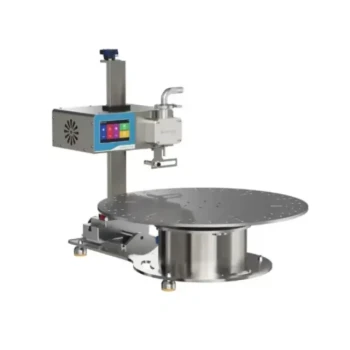
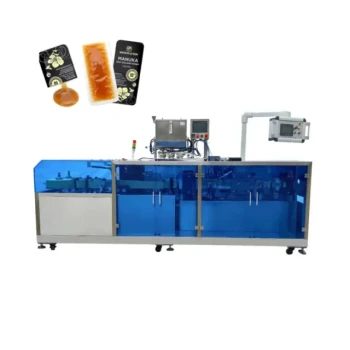
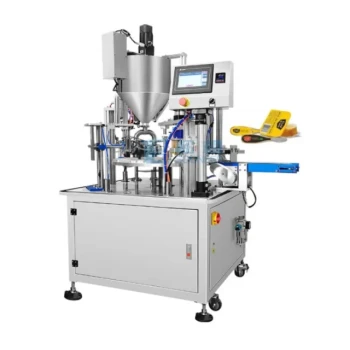
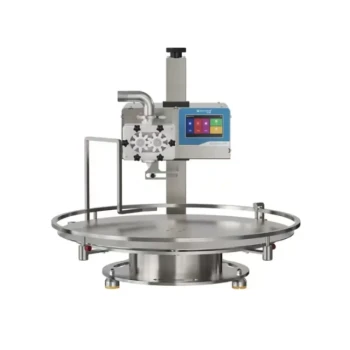
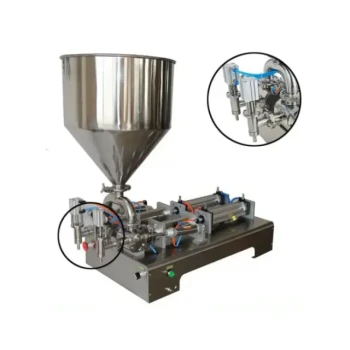
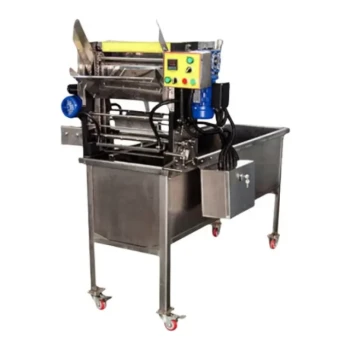
Automatic honey filling machines are the critical link between raw agricultural yield and high-value commercial brands, serving as the cornerstone of back-end processing. These machines add value by enforcing precise volumetric measurement and sterile filling environments, which are essential for transforming bulk honey into a standardized, shelf-ready commodity. By replacing manual handling with automated precision, producers significantly increase operational efficiency and eliminate secondary contamination risks, ensuring the final product meets the stringent safety and packaging standards of modern retail markets.
Transitioning to automatic filling is the definitive step in moving from a local agricultural product to a globally competitive brand. By guaranteeing hygiene, consistency, and throughput, this technology secures the product's integrity and unlocks access to formal retail distribution chains.
Elevating Product Integrity and Safety
Eliminating Contamination Risks
Manual packaging is the primary source of secondary contamination in food processing. Automatic filling machines create a sterile barrier between the operator and the product. This isolation ensures the honey remains pure and meets strict international food safety regulations.
Preserving Sensory Quality
Honey is sensitive to oxidation and environmental exposure, which can degrade its unique flavor and aroma profile. Automated equipment minimizes air exposure during the filling process. This preservation is vital for high-value, differentiated honey products derived from specific nectar plants.
Ensuring Regulatory Compliance
Modern food markets demand rigorous traceability and hygiene standards. Industrial-grade machines provide the standardized operations necessary to meet these regulatory requirements. This compliance is often a prerequisite for entering pharmaceutical, cosmetic, and high-end food sectors.
Standardization and Brand Authority
Achieving Uniform Packaging
Retailers and supermarkets require products to look identical on the shelf. Automatic machines ensure that every bottle is filled to the exact same level and sealed with professional consistency. This uniformity builds consumer trust and establishes a professional brand image.
High-Precision Volume Control
Inaccurate filling results in either product giveaway (financial loss) or regulatory fines (underfilling). Automated lines utilize high-precision quantitative pumps to ensure exact weight control. This precision maximizes yield from bulk supplies and ensures fair trade compliance.
Expanding Market Reach
Formal retail channels, such as supermarkets and exhibitions, rarely accept hand-packaged goods due to inconsistency. The standardization provided by automation allows honey producers to meet the entry criteria for these lucrative distribution networks. It effectively turns a local product into a scalable commercial asset.
Operational Efficiency and Technical Handling
Mastering Viscosity
Honey is a difficult fluid to package due to its high viscosity and tendency to drip. Industrial machines utilize temperature-regulated systems and anti-drip designs to manage flow without creating a mess. This specific technical capability prevents waste and ensures clean, market-ready packaging.
Reducing Production Costs
While the initial investment is higher, automation dramatically lowers long-term labor costs. It reduces the reliance on manual labor for repetitive tasks and minimizes product waste caused by spills or overfilling. This efficiency helps producers maintain price competitiveness in international markets.
Understanding the Trade-offs
High Initial Capital Expenditure
The transition to automation requires a significant upfront investment compared to manual packing. For very small or hobbyist operations, the return on investment may take time to materialize.
Maintenance and Cleaning Complexity
Honey is abrasive and sticky, which can clog machinery if not maintained perfectly. Operators must adhere to strict cleaning schedules to prevent equipment failure or cross-contamination between batches.
Flexibility Limitations
Highly automated lines are optimized for speed and consistency, often at the expense of flexibility. Changing bottle shapes or sizes may require downtime for retooling, which can be less agile than manual packing for small, custom runs.
Making the Right Choice for Your Goal
- If your primary focus is Mass Market Retail: Prioritize machines with high-precision quantitative pumps and anti-drip systems to ensure the uniformity and volume accuracy supermarkets demand.
- If your primary focus is Premium/Boutique Branding: Focus on equipment that emphasizes sterile environments and oxidation prevention to preserve the unique sensory notes of the honey.
- If your primary focus is Cost Optimization: Look for systems that offer high throughput speeds to maximize labor savings and minimize raw material waste.
Automation does not just package honey; it stabilizes quality and secures the consistency required to build a scalable, trusted business.
Summary Table:
| Value Addition Factor | Manual Filling Impact | Automatic Filling Benefit |
|---|---|---|
| Product Hygiene | High contamination risk | Sterile, closed-system processing |
| Volume Precision | Inconsistent (Product loss) | High-precision quantitative control |
| Packaging Uniformity | Irregular shelf appearance | Professional, standardized branding |
| Market Access | Limited to local sales | Meets supermarket & export standards |
| Viscosity Handling | Messy and slow | Temperature-regulated, anti-drip |
| Labor Efficiency | High long-term costs | Significant reduction in overhead |
Scale Your Honey Business with HONESTBEE Professional Solutions
Transitioning from local supply to a globally competitive brand requires precision and industrial-grade reliability. HONESTBEE specializes in empowering commercial apiaries and distributors with the tools needed to dominate the retail market.
Our comprehensive wholesale offering includes:
- Advanced Machinery: High-precision honey-filling and hive-making machines.
- Full Spectrum Equipment: Professional beekeeping tools and essential consumables.
- Cultural Merchandise: Unique honey-themed products to diversify your brand.
Whether you are looking to eliminate waste with anti-drip technology or achieve the sterile standards required for international distribution, our expert team is ready to help you optimize your production line.
Ready to elevate your operational efficiency? Contact HONESTBEE Today for a Customized Equipment Quote
References
- Dauro Mattia Zocchi, Michele Filippo Fontefrancesco. Expanding the reach: ethnobotanical knowledge and technological intensification in beekeeping among the Ogiek of the Mau Forest, Kenya. DOI: 10.1186/s13002-020-00409-w
This article is also based on technical information from HonestBee Knowledge Base .
Related Products
- Fully Automatic Honey Filling Packaging Machine for Processing Line
- Automatic Honey Filling and Filtering Machine for Beekeeping Bottle Filling
- Precision Durable Efficient HONESTBEE Rotary Honey Filling Machine
- Semi Automatic Small Honey Bottle Filling Machine Honey Filler
- Automatic Single-Dose Snap & Squeeze Honey Sachets Packing Machine
People Also Ask
- Why are fully automatic honey filling and packaging lines essential? Boost Your Honey's Market Value and Quality
- What is a fully-automatic honey filler? Streamline Your Production with High-Precision Automation
- How do automated honey filling and packaging machines affect profitability? Boost Margins with HONESTBEE Technology
- How do automated honey filling and packaging machines contribute to the market value of honey products? Maximize Your ROI
- How do industrial-grade automated honey filling and packaging machines mitigate the risk of physical contamination?