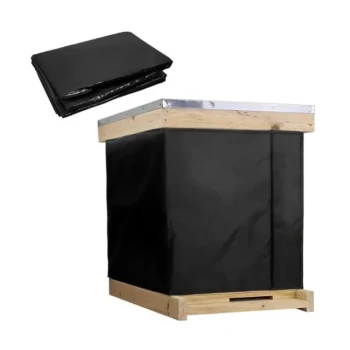
Environmentally Controlled Rooms (ECRs) provide a standardized wintering environment by utilizing industrial precision systems to strictly regulate atmospheric conditions. By maintaining a constant temperature of 4 ± 1 °C and relative humidity levels of 40–50%, these facilities eliminate the variables associated with outdoor weather fluctuations, allowing for a precise analysis of colony health.
By stabilizing the physical environment, ECRs remove external "noise" from the data, ensuring that overwintering survival rates are determined by genetic quality rather than random weather events.
Creating a Uniform Environment
Precision Temperature Control
The primary function of an ECR is to maintain a specific thermal baseline. Systems are set to hold the temperature at 4 ± 1 °C, a range optimized to keep the bee cluster tight and inactive without inducing freezing stress.
This stability prevents the colony from consuming excessive energy to generate heat, which is a common challenge in outdoor wintering.
Humidity Regulation
Alongside temperature, moisture control is critical for colony survival. ECRs maintain relative humidity (RH) between 40–50%.
Keeping humidity within this narrow window prevents the damp conditions that facilitate mold growth, while ensuring the air is not so dry that it dehydrates the bees.
The Impact on Genetic Selection
Eliminating Environmental Interference
In a traditional outdoor setting, a colony might fail due to poor insulation, wind direction, or sudden cold snaps, regardless of its genetic quality. ECRs eliminate these extreme outdoor weather fluctuations.
This ensures that every candidate colony is subjected to the exact same "low-stress" physical conditions.
Objective Trait Assessment
Because the environment is uniform for all colonies, researchers can conduct an objective assessment of biological factors.
If a colony fails in an ECR, the cause can be more confidently attributed to genetic traits or disease susceptibility rather than environmental bad luck. This clarity is essential for selecting breeding lines with superior overwintering mortality and survival quality.
Understanding the Trade-offs
Operational Complexity vs. Traditional Management
While ECRs offer precision, they represent a significant departure from standard beekeeping practices. Traditional wintering relies on passive protection, such as ensuring the hive is well-insulated, ventilated, and protected from harsh weather.
Monitoring Methodology
In outdoor settings, beekeepers often use thermal imaging cameras to monitor the bee cluster without opening the hive to preserve heat.
In an ECR, the environment is already temperature-controlled, potentially changing the protocols for monitoring. The reliance on industrial systems means that a mechanical failure could impact all colonies simultaneously, unlike the individual risks faced by outdoor hives.
Making the Right Choice for Your Goal
To determine whether an Environmentally Controlled Room is the right approach for your apiary or research project, consider your primary objectives:
- If your primary focus is genetic research or breeding: Prioritize ECRs to isolate genetic traits and eliminate weather variables for objective mortality data.
- If your primary focus is commercial honey production: Focus on traditional management techniques like monitoring honey stores, proper insulation, and thermal imaging to ensure survival in natural conditions.
True genetic progress requires distinguishing between a colony that got lucky with the weather and a colony that is biologically superior.
Summary Table:
| Feature | ECR Specifications | Traditional Outdoor Wintering |
|---|---|---|
| Temperature Control | Precise 4 ± 1 °C | Subject to weather fluctuations |
| Humidity Levels | Maintained at 40–50% | Variable; risk of dampness/mold |
| Selection Accuracy | High (isolates genetic traits) | Lower (affected by environmental noise) |
| Energy Expenditure | Low (bees remain inactive) | High (bees consume stores to heat cluster) |
| Primary Use Case | Breeding & Genetic Research | Commercial Honey Production |
Maximize Your Colony Survival and Genetic Performance with HONESTBEE
At HONESTBEE, we understand that precision is the foundation of successful commercial beekeeping and breeding. Whether you are a large-scale commercial apiary or a global distributor, our comprehensive wholesale solutions provide the tools you need to master wintering challenges.
We offer a full spectrum of beekeeping machinery and specialized equipment, from industrial-grade hive-making tools to honey-processing units, as well as essential consumables. Our high-performance systems help you eliminate environmental variables and secure your colony's future.
Ready to upgrade your apiary’s efficiency? Contact us today to explore our wholesale machinery and professional equipment tailored for industry leaders.
References
- Ségolène Maucourt, Pierre Giovenazzo. Genetic Parameters of Honey Bee Colonies Traits in a Canadian Selection Program. DOI: 10.3390/insects11090587
This article is also based on technical information from HonestBee Knowledge Base .
Related Products
- Professional Insulated Winter Hive Wrap for Beekeeping
- Langstroth Solid Bottom Board for Beekeeping
- Yellow Plastic Bucket Pail Perch for Beekeeping
People Also Ask
- What are the steps to properly wrap a beehive for winter? Ensure Your Colony Survives the Cold
- When is the best time to wrap a beehive for winter? A Guide to Perfect Winterization Timing
- How do professional insulation wraps provide protection for bee colonies? Optimize Winter Survival & Energy Efficiency
- What are the technical benefits of using winter wraps for beehive insulation? Boost Colony Survival & Hive Health
- What are the benefits of using insulated covers for hives? Ensure Colony Survival and Health