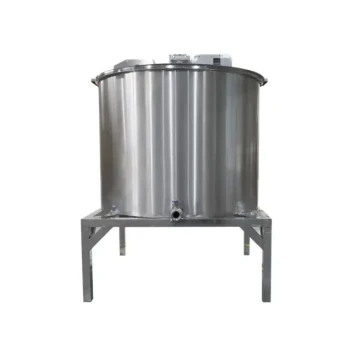
Professional honey extraction and post-processing equipment serve as the critical foundation of a robust quality assurance system by transforming raw hive material into a standardized, high-value commodity. This machinery utilizes centrifugal force and multi-stage physical filtration to separate honey from beeswax and impurities while operating under strict sanitary protocols. By preventing external contamination and stabilizing moisture levels, these systems ensure the final product meets the rigorous chemical and biological standards required for global distribution and high-end retail.
Core Takeaway: Professional extraction and processing equipment stabilize the honey’s nutritional profile and physical purity, directly increasing market valuation and ensuring consistent, compliant supply chain reliability for B2B stakeholders.
Safeguarding Biological and Nutritional Integrity
Preservation of Natural Compounds
Modern extraction equipment uses physical centrifugal force to separate honey from the comb without damaging the beeswax structure or the honey's delicate chemistry. This mechanical approach ensures that bioactive components, including phenolic compounds, enzymes, and vitamins, remain intact. Preservation of these elements is vital for distributors targeting the "natural health" segment of the market.
Prevention of External Contamination
A key component of quality assurance is the elimination of external risks during the harvesting stage. High-precision machinery provides an isolated environment that prevents the introduction of antibiotic residues, dust, or environmental pollutants. By maintaining a closed-loop process, wholesalers can guarantee a product that meets strict food safety entry requirements for international markets.
Maintenance of Sensory Profiles
The use of specialized equipment ensures that the honey’s natural flavor, aroma, and color are not compromised by oxidation or improper handling. Rapid processing immediately after harvest captures the sensory characteristics that define specific floral varieties. This consistency is essential for brands that rely on a signature taste profile to maintain customer loyalty.
Achieving Market-Ready Purity and Stability
Multi-Stage Filtration and Clarification
Post-processing equipment, such as filtration devices and settling tanks, removes wax debris, larval fragments, and other suspended solids. This physical clarification process results in higher transparency and visual purity, which are primary factors in grading and pricing. Clean honey reduces the risk of fermentation and improves the product's shelf-life in retail environments.
Precision Moisture Control
Industrial dehydration and processing modules allow for the stabilization of moisture content to prevent quality stratification. Standardizing moisture levels is critical for ensuring the honey does not ferment during long-distance shipping or storage in varying climates. This level of control allows distributors to provide a consistent, shelf-stable product regardless of the initial harvest conditions.
Scaling Through One-Stop Sourcing
For wholesalers and resellers, the ability to source a comprehensive portfolio of extraction and filling machinery streamlines the supply chain. Efficient equipment reduces harvesting times and increases fulfillment speed, allowing for a rapid response to market fluctuations. Utilizing a single, expert source for machinery ensures that all components of the production line are technically compatible and meet the same high standards.
Understanding the Trade-offs
Heat Exposure vs. Processing Speed
While heat is often used in industrial processing to reduce viscosity and speed up filtration, excessive temperatures can degrade diastase activity and increase HMF (Hydroxymethylfurfural) levels. Distributors must balance the need for rapid throughput with the preservation of biological markers that define premium honey. High-end systems utilize precise temperature controls to mitigate this risk.
Maintenance Complexity and Hygiene
Advanced automated systems offer superior purity but require rigorous maintenance schedules to prevent microbial buildup in valves and seals. Inadequate cleaning of complex machinery can lead to secondary contamination, negating the benefits of the equipment. Choosing equipment designed for "easy-clean" protocols is a critical decision for long-term quality assurance.
Initial Investment vs. Market Access
The capital expenditure required for professional-grade stainless steel machinery is higher than traditional methods, yet it is often the only way to meet international market access standards. For resellers, the trade-off involves weighing higher upfront costs against the ability to command premium prices and enter more regulated, lucrative regions.
How to Apply This to Your Portfolio
Strategic Recommendations for Distributors
- If your primary focus is entering high-end retail markets: Invest in multi-stage filtration and moisture stabilization equipment to ensure the highest visual clarity and shelf stability.
- If your primary focus is supply chain efficiency and volume: Prioritize high-capacity centrifugal extractors and automated filling lines to maximize throughput and ensure rapid order fulfillment.
- If your primary focus is product authenticity and health claims: Select machinery that emphasizes low-heat processing and food-grade contact surfaces to preserve the honey's natural enzyme and antioxidant counts.
By integrating professional-grade extraction and processing technology, you secure a verifiable quality standard that protects your brand reputation and maximizes the market value of every harvest.
Summary Table:
| Equipment Type | Role in Quality Assurance | Key Benefit for B2B/Wholesale |
|---|---|---|
| Centrifugal Extractors | Physical separation without chemical damage | Preserves bio-active enzymes and natural compounds |
| Multi-stage Filtration | Removes wax debris and suspended solids | Higher visual purity and premium grading/pricing |
| Dehydration Modules | Precise moisture level stabilization | Prevents fermentation; ensures long-distance shelf stability |
| Automated Filling Lines | Closed-loop isolated environment | Eliminates secondary contamination; meets export standards |
Scale Your Honey Business with HONESTBEE’s One-Stop Sourcing
Maximize your profit margins and supply chain reliability with HONESTBEE. As a dedicated partner for commercial apiaries and distributors, we offer a comprehensive wholesale portfolio—from specialized hive-making and honey-filling machinery to essential industry consumables and cultural merchandise.
Why choose HONESTBEE?
- Full-Spectrum Portfolio: Everything from extraction to final packaging.
- Rapid Fulfillment: Ultra-fast delivery to keep your operations running.
- B2B Expertise: Deep professional insights with OEM/ODM support and certification compliance.
- Exceptional Service: Dedicated support to ensure your equipment meets global quality standards.
Ready to enhance your product quality and dominate the market? Contact our expert team today for a tailored wholesale solution!
References
- Kozeta Vaso, Landi Dardha. HONEY PRODUCTION AND CONSUMPTION IN ALBANIA: ALIGNING CONSUMER PERCEPTIONS, BEEKEEPER PRACTICES, AND POLICY. DOI: 10.31407/ijees15.605
This article is also based on technical information from HonestBee Knowledge Base .
Related Products
- Electric Double Wall Honey Filtering Machine Purifier Equipment for Honey Processing Plant
- HONESTBEE 2 Frame Manual Acrylic Honey Extractor Beekeeping Equipment
- Honey Concentrating and Filtering Dehumidifier Machine 2T Capacity for Honey
- Electric 8 Frame Honey Spinner Extractor Equipment for Beekeeping
- Professional Honey Filter with Tripod Support Stand
People Also Ask
- What types of equipment are used in honey filtering? Build an Efficient System for Pure, Marketable Honey
- What is the process of filtering honey? A Guide to Clean, Pure, and Market-Ready Honey
- What is the overall importance of using the right equipment in honey filtering? Boost Quality & Marketability
- Why is filtering important in honey processing, and what equipment is used? A Guide to Quality & Efficiency
- What steps are involved in maintaining honey filtering equipment? A Guide to Protecting Your Honey Quality