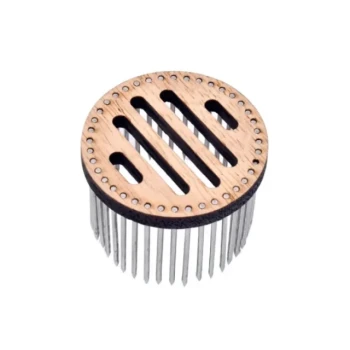
Specialized queen rearing equipment and nucleus (nuc) boxes serve as the infrastructure for transforming a commercial apiary from a simple honey farm into a diversified biological breeding operation. By utilizing these tools, beekeepers can capture the natural reproductive growth of their colonies and sell it as high-value commodities—specifically local queens and established nucleus colonies—rather than relying solely on the volatile honey market.
Core Takeaway: While honey production is strictly seasonal and weather-dependent, utilizing specialized propagation equipment allows apiaries to monetize the bees themselves. This creates a stable, secondary cash flow by converting biological surplus into inventory that often commands higher margins than bulk honey.
Transforming Biological Growth into Inventory
Monetizing the Reproductive Cycle
The primary value of this equipment is the ability to channel the natural reproductive energy of bees into salable assets. Instead of simply suppressing swarming to maximize honey, nuc boxes allow you to split strong colonies into multiple smaller units. Each unit becomes a marketable product (a nucleus colony) that leverages the hive's biological productivity.
Creating Consistent Cash Flow
Honey harvests are typically singular, end-of-season events that leave the business vulnerable to weather anomalies. In contrast, queen rearing and nuc production follow a predictable schedule throughout the spring and summer. This ensures liquidity during the active season, bridging the financial gap between honey harvests.
Enhancing Value Through Genetic Control
Capitalizing on Local Adaptation
Professional rearing tools, such as grafting equipment and mating nucs, allow for the selection of genetics tailored to specific local climates. By breeding for traits like cold resistance or high productivity, you produce a premium product that outperforms generic imported stock.
Reducing Biosecurity Liabilities
Reliable rearing equipment eliminates the need to import queens, which often carry high costs and biosecurity risks. producing your own stock creates a closed-loop system, reducing the introduction of external pathogens and offering customers a "clean," verifiable source of livestock.
Operational Scalability and Efficiency
Standardizing Complex Workflows
Standardized tools convert the complex "art" of breeding into manageable, technical workflows. By using uniform mating nucs and rearing frames, apiaries can implement strict schedules for grafting and harvesting, significantly increasing the output-to-time ratio.
Facilitating Large-Scale Management
For operations managing over 150 colonies, specialized equipment reduces labor intensity through mechanization and consistency. Industrial-grade designs help maintain colony health across diverse conditions, ensuring that scaling up operations does not lead to a drop in management quality.
Understanding the Trade-offs
The Skill Gap
Unlike honey production, queen rearing requires precision and strict timing. The equipment provides the hardware, but the operator must possess advanced knowledge of biology and grafting techniques; a mistake in timing can result in the loss of an entire batch of queens.
Resource Allocation
Focusing on nucs and queens requires diverting resources—specifically brood and nurse bees—away from honey production. You must balance the trade-off between honey yields and livestock sales, as aggressive splitting will reduce the foraging workforce available for the honey flow.
Making the Right Choice for Your Goal
To effectively diversify your revenue, match your equipment strategy to your specific business objective:
- If your primary focus is Revenue Stability: Invest heavily in nucleus mating nucs to create a product that sells early in the season, offsetting the risk of a poor honey harvest.
- If your primary focus is Cost Reduction: Prioritize grafting and queen rearing tools to achieve self-sufficiency, eliminating the annual expense of purchasing replacement queens.
- If your primary focus is Premium Branding: Focus on genetic selection tools to breed locally adapted queens that can be sold at a premium price point due to their superior survival rates.
Success in diversification comes not just from buying the boxes, but from systematically integrating them into your workflow to turn biological growth into a standardized product.
Summary Table:
| Diversification Strategy | Primary Equipment Needed | Key Financial Benefit | Operational Impact |
|---|---|---|---|
| Nucleus Sales | Nuc Boxes, Division Boards | Early-season liquidity | Offsets honey harvest volatility |
| Queen Production | Grafting Tools, Mating Nucs | High-margin commodity sales | Reduces reliance on external stock |
| Genetic Breeding | Rearing Frames, Incubators | Premium price positioning | Enhances colony health and survival |
| Self-Sufficiency | Specialized Rearing Kits | Drastic reduction in OPEX | Creates a closed-loop biosecurity system |
Scale Your Apiary Operations with HONESTBEE
Transitioning from honey production to a high-yield breeding operation requires more than just skill—it requires industrial-grade reliability. HONESTBEE specializes in supporting commercial apiaries and distributors by providing a comprehensive wholesale catalog of premium beekeeping equipment.
Whether you are scaling up with specialized hive-making and honey-filling machinery or diversifying your inventory with professional queen rearing tools and nuc boxes, we deliver the specialized hardware and consumables you need to succeed. Our mission is to provide the infrastructure that turns your biological surplus into a standardized, profitable product.
Ready to enhance your revenue streams? Contact HONESTBEE today to discuss our wholesale solutions and see how our global supply chain can empower your beekeeping business.
References
- Miriam Bixby, Nuria Morfín. British Columbia beekeeping revenues and costs: survey data and profit modeling. DOI: 10.1093/jisesa/iead070
This article is also based on technical information from HonestBee Knowledge Base .
Related Products
- Portable Bee Mating Hive Boxes Mini Mating Nucs 8 Frames for Queen Rearing
- Twin Queen Styrofoam Honey Bee Nucs Mating and Breeding Box
- Automatic Heat Preservation 6 Frame Pro Nuc Box for Honey Bee Queen Mating
- Professional Multi-Functional Queen Bee Cage
- Premium Nicot Style Queen Rearing Kit with Hair Roller Bee Cages
People Also Ask
- How do specialized queen-rearing frames and mating boxes boost off-season bee production? Optimize Your Apiary's Output
- What are the approximate weights of different types of 8-frame beehive boxes? Lift Smarter for Your Apiary
- What role does the structural configuration of beekeeping mating boxes play? Optimize Queen Mating Success
- What is an 8 frame box and why is it popular? A Lighter, More Ergonomic Hive Solution
- What role do portable mating nucs play in geographic isolation breeding? Secure Genetic Purity in Remote Locations