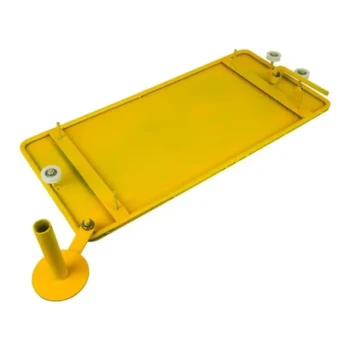
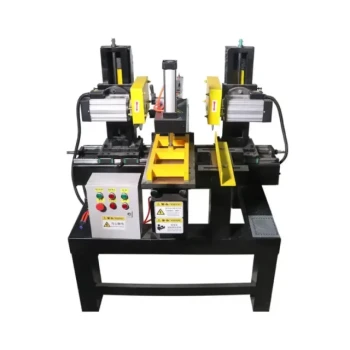
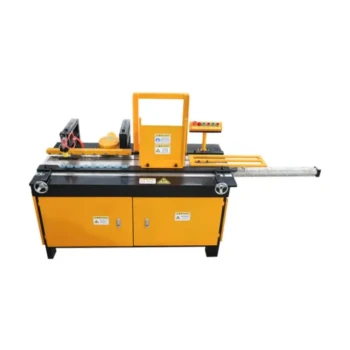
Specialized woodworking machinery acts as the foundational hardware for industrial apiculture, enabling the shift from artisanal management to mass-scale operation. By strictly adhering to technical specifications, this equipment produces hive components that are uniformly interchangeable and weather-resistant, providing the consistent infrastructure necessary to support large-scale apiaries and beekeeping parks.
Industrial woodworking equipment solves the primary bottleneck of expansion by automating the production of standardized, high-precision hive components. This mechanical consistency reduces maintenance overhead, ensures compatibility with automated harvesting systems, and secures the structural integrity needed for migratory pollination.
The Pillars of Scalable Infrastructure
Achieving Absolute Interchangeability
For a beekeeping operation to scale, every frame must fit into every box, regardless of when or where it was manufactured. Industrial-grade machinery uses CNC milling and standardized molds to produce components with extremely tight dimensional tolerances.
This precision ensures that frames, hive bodies, and bases are fully interchangeable. This eliminates the labor-intensive process of customizing or forcing ill-fitting parts, which is a major barrier to efficiency in large apiaries.
Enabling Mechanized Management
Standardization is the prerequisite for automation. Modern honey extraction machinery and colony management tools require inputs with uniform specifications to function correctly without jamming or damaging the comb.
By guaranteeing physical consistency, specialized woodworking machinery allows commercial beekeepers to utilize automated harvesting equipment. This significantly reduces labor intensity and counteracts rising labor costs, making rapid expansion economically viable.
Optimizing Migratory Logistics
Large-scale operations often rely on cross-regional migratory pollination, which involves physically transporting thousands of hives. Industrial machinery produces hives that stack securely and withstand the mechanical stress of transport.
Precise cutting ensures tight seals and uniform dimensions, which simplifies loading and logistics. This structural uniformity minimizes the risk of hive collapse or bee loss during transit, protecting the operation's biological assets.
Enhancing Colony Resilience and Health
Maintaining Critical Bee Space
In scientific colony management, maintaining the correct "bee space" (the precise gap bees need to move) is vital to prevent bees from gluing frames together with propolis. Specialized machinery ensures this dimension is cut to exact specifications every time.
This precision prevents structural issues within the hive. It facilitates easier inspections and frame manipulation, which is critical for maintaining high hygiene standards and efficiency during mass check-ups.
Weather Resistance and Durability
Primary references highlight that industrial machinery produces weather-resistant components. By ensuring tight joinery and proper material processing, these machines create hives that effectively seal out elements.
This durability protects the colony from environmental stress and drastically reduces the rate of infrastructure depreciation. Beekeepers spend less capital replacing rotted or warped boxes, improving the long-term ROI of the operation.
Disease Control and Quarantine
The ability to easily swap frames between hives is essential for biological security. When components are uniform, beekeepers can isolate diseased frames or split colonies for quarantine without struggling with hardware incompatibility.
This modularity reduces the risk of disease transmission across the apiary. It allows for swift management interventions that are impossible if hive parts are unique or irregular.
Understanding the Trade-offs
Initial Capital vs. Long-Term Savings
Implementing industrial-grade machinery requires a significant upfront capital investment compared to traditional carpentry tools or purchasing pre-made lower-quality hives.
While this equipment lowers long-term depreciation and labor costs, the initial barrier to entry is higher. Operations must have sufficient volume to amortize the cost of the machinery or the higher cost of purchasing premium, machine-milled components.
Rigidity of Standardization
Once an operation commits to a specific machine-tooled standard (e.g., Langstroth dimensions produced by specific CNC settings), switching systems becomes difficult.
The efficiency gained by standardization creates a rigid infrastructure. Adopting new hive innovations or alternative dimensions later may render a massive inventory of woodenware obsolete.
Making the Right Choice for Your Expansion
To leverage woodworking technology effectively, align your equipment strategy with your operational goals:
- If your primary focus is Rapid Scaling: Prioritize machinery that guarantees high-volume output and absolute interchangeability to support automated honey harvesting lines.
- If your primary focus is Migratory Pollination: Select equipment known for producing tight joint tolerances and structural durability to minimize mechanical loss during transport.
- If your primary focus is Cost Reduction: Focus on the longevity and weather resistance of the output to lower annual depreciation and replacement costs.
Standardized, machine-milled infrastructure is not just wood; it is the reliable platform upon which modern, profitable beekeeping is built.
Summary Table:
| Key Feature | Benefit for Large-Scale Beekeeping | Impact on ROI |
|---|---|---|
| CNC Precision | Absolute interchangeability of frames and boxes | Reduces labor & maintenance costs |
| Standardized Molds | Compatibility with automated harvesting equipment | Accelerates production & honey extraction |
| Tight Joint Tolerances | Structural integrity for migratory pollination transport | Minimizes colony loss & hardware damage |
| Weather-Resistant Cutting | Superior sealing and protection against elements | Lowers infrastructure depreciation rates |
| Modular Design | Rapid isolation of frames for disease control | Enhances biological security & colony health |
Scale Your Apiculture Business with HONESTBEE
Transitioning from artisanal methods to industrial-scale operations requires more than just wood—it requires precision engineering. At HONESTBEE, we empower commercial apiaries and distributors with the foundational hardware needed for global success.
Our comprehensive wholesale portfolio includes:
- Specialized Machinery: High-precision hive-making and honey-filling machines designed for mass production.
- Premium Tools & Equipment: A full spectrum of beekeeping hardware and essential industry consumables.
- Growth Support: Specialized solutions tailored for large-scale operations and cultural merchandise for brand expansion.
Ready to eliminate production bottlenecks and secure your infrastructure? Contact us today to explore our wholesale solutions and see how our expertise can drive your operational efficiency.
References
- Kosyo Vladimirov. POTENTIAL OF THE BEEKEEPING SECTOR FOR DEVELOPMENT OF BEE TOURISM IN THE NORTHEASTERN REGION OF BULGARIA. DOI: 10.36997/ara2021.170
This article is also based on technical information from HonestBee Knowledge Base .
Related Products
- Stainless Steel J Hook Hive Tool for Beekeeping
- Wholesales Dadant Size Wooden Bee Hives for Beekeeping
- HONESTBEE 15-in-1 Beekeeper Multi-Tool with Hammer and Pliers for Beekeeping
- Ergonomic Plastic Frame Spacer Tool for Rapid Hive Management Beekeeping
- Heavy-Duty Ergonomic Grip Galvanized Pollen Shovel
People Also Ask
- What specific challenges do beekeeping hive tools address during hive maintenance? Essential Solutions for Apiaries
- What are the features of a J-hook hive tool? Effortlessly Lift Frames with Superior Leverage
- What is a J-hook hive tool and why is it favored by some beekeepers? Master Gentle Frame Handling
- What is the purpose of the J-hook hive tool? Effortlessly Lift Frames with Superior Leverage
- How is a J-hook hive tool designed and what is its primary use? Master Effortless Hive Inspections