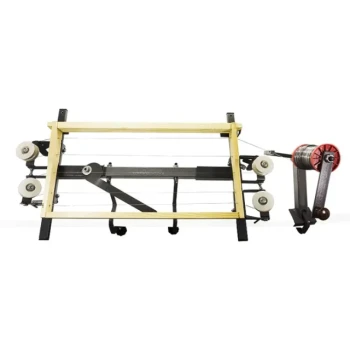
Standardized movable frame hives make commercial beekeeping more inspectable, scalable, and efficient. They allow beekeepers to remove and examine individual frames without destroying comb, manage colonies with greater control, and harvest honey through repeatable processes. For Apis mellifera and Apis cerana, precision hive-making machinery is critical because exact bee space and consistent comb dimensions reduce burr comb, colony disturbance, and incompatibility between hive components.
The commercial value of a movable frame hive depends on manufacturing precision. Standardized components turn individual hives into a coordinated operating system, allowing inspections, colony movement, mechanical extraction, and replacement-frame management to work efficiently across a large apiary.
Why Movable Frame Hives Changed Commercial Apiculture
Non-Destructive Inspection
Fixed-comb and traditional pot hives limit access to the colony. A movable frame hive allows beekeepers to inspect brood patterns, food stores, queen activity, and colony health while preserving usable comb.
This reduces the need for disruptive interventions and makes routine management more systematic.
Controlled Colony Management
Removable frames give commercial beekeepers greater control over queen laying patterns, colony splitting, frame replacement, and colony consolidation. These tasks become repeatable procedures rather than improvised operations.
That repeatability is essential when one beekeeper or field team must manage hundreds or thousands of colonies.
More Efficient Honey Harvesting
Movable frames can be transferred to extraction equipment without destroying the comb. Honey can therefore be removed mechanically and the frames returned to colonies for reuse.
Compared with fixed-comb structures, this reduces labor per hive and supports higher-throughput honey collection.
How Standardization Improves Apiary Operations
Interchangeable Frames Reduce Downtime
Uniform frame dimensions allow beekeepers to move frames between compatible hives. A replacement frame can be installed quickly, and usable brood or honey frames can be reassigned when colonies are merged or relocated.
For distributors and commercial operators, interchangeability also simplifies inventory planning because components can serve a broader portion of the apiary.
Consistent Components Support Mechanization
Mechanical lifting, transport, and extraction systems depend on predictable dimensions and structural strength. Standardized hive bodies, frames, partitions, and related components make those systems more reliable.
This creates a direct connection between hive manufacturing quality and field productivity.
Operations Become Easier to Scale
A machine-manufactured hive system supports standardized inspection routines, frame handling, harvesting, and maintenance. Training becomes simpler because workers follow the same procedures across the apiary.
For wholesalers and B2B resellers, a full-spectrum product portfolio is more valuable when its components are compatible and supplied consistently.
Why Precision Matters for Apis Mellifera and Apis Cerana
Bee Space Is a Biological Requirement
Honeybees naturally maintain specific passage dimensions within the nest. If the gap between frames or between a frame and the hive wall is too large, bees may fill it with burr comb; if it is too small, movement and inspection can become difficult.
Precision machinery helps manufacturers maintain the intended bee space consistently across every hive component.
Burr Comb Increases Labor and Disturbance
Improper spacing encourages bees to attach comb where the beekeeper does not want it. Removing that comb complicates inspections, damages colony structure, and increases handling time.
Consistent internal dimensions reduce these avoidable interventions and help preserve orderly comb development.
Species-Specific Compatibility Requires Accuracy
Apis mellifera and Apis cerana are manageable in standardized hive systems, but their hive components still need to match the dimensions and management practices appropriate to the operation. A frame system that is inconsistent or poorly specified can create problems even when the general hive design is correct.
Precision manufacturing provides the repeatability needed to produce compatible components for the selected species and hive format.
The Commercial Benefits of Machine-Manufactured Hives
Lower Labor Cost per Hive
Standardized frames make inspection, replacement, movement, and extraction faster. Over a large apiary, small time savings per hive can produce a substantial improvement in labor productivity.
The benefit is especially important during time-sensitive periods such as honey flows, colony splitting, and seasonal preparation.
Improved Structural Durability
Precision processing helps maintain consistent joints, frame geometry, and hive construction. Better structural consistency reduces failures caused by warped, poorly fitted, or defective components.
Durable hives also support repeated transport, inspection, and mechanical handling.
Better Environmental Control
Well-manufactured hive components can provide consistent enclosure quality while preserving the ventilation and temperature-control features required by the design. This helps colonies cope with external weather fluctuations and periods when hives must be isolated, closed, or relocated.
In situations such as nearby pesticide applications, reliable hive construction can support faster protective action and reduce secondary losses.
More Reliable Supply and Fulfillment
Commercial operators need replacement frames, hive bodies, partitions, and related equipment when demand is seasonal or when colonies expand rapidly. Suppliers that can provide compatible components from one source reduce procurement complexity.
For distributors and resellers, rapid response, dedicated technical service, and dependable order fulfillment are operational advantages, not merely sales features.
Understanding the Trade-Offs
Standardization Can Limit Specialty Production
Traditional pot hives and circular frame hives may remain appropriate for specialty pot honey or particular local practices. A standardized movable-frame system prioritizes inspection, reuse, mechanization, and volume rather than every traditional product characteristic.
The correct choice depends on whether the operation values specialty differentiation or scalable process control.
Precision Equipment Requires Upfront Investment
Hive-making machinery creates long-term efficiency, but it requires investment in equipment, tooling, quality control, and operator capability. The financial case becomes stronger as production volume and component demand increase.
Small producers may obtain better results by sourcing from an experienced manufacturer rather than purchasing a complete manufacturing line.
Standardization Does Not Replace Apiary Skill
Accurate hive components cannot compensate for poor nutrition, disease management, unsuitable placement, or inadequate seasonal planning. Machinery establishes the physical consistency of the system; beekeepers still determine how colonies are managed.
Manufacturers and suppliers should therefore pair products with clear specifications and practical technical support.
Compatibility Must Be Verified Before Ordering
“Standardized” does not mean that every frame, hive body, or accessory is universally interchangeable. Internal dimensions, frame formats, species requirements, and extraction equipment must be matched before procurement.
Distributors should confirm specifications across the complete product range to prevent costly incompatibility in the field.
Making the Right Choice for Your Goal
A commercial hive system should be selected according to operational scale, target bee species, harvesting method, and expected supply requirements.
- If your primary focus is large-scale honey production: Prioritize standardized movable frames and precision-made components that support rapid inspection, mechanical extraction, and frame reuse.
- If your primary focus is managing Apis mellifera or Apis cerana: Verify bee-space specifications, frame dimensions, and hive compatibility before purchasing machinery or components.
- If your primary focus is distribution or wholesale supply: Build a compatible, full-spectrum product portfolio supported by dependable inventory, rapid response, and technical customer service.
- If your primary focus is specialty or traditional honey: Retain pot or fixed-comb systems where their product characteristics justify the additional labor and reduced mechanization.
- If your primary focus is apiary resilience: Choose structurally consistent hives that support ventilation, temperature control, transport, closure, and rapid relocation when conditions change.
Precision manufacturing turns movable frame hive design from a useful concept into a dependable commercial operating system.
Summary Table:
| Impact Area | Benefits of Standardized Movable Frame Hives | Role of Precision Machinery |
|---|---|---|
| Inspection | Non-destructive access to frames preserves comb and reduces disruption | Consistent bee space minimizes burr comb and inspection time |
| Management | Controlled colony splitting, merging, and queen management | Uniform dimensions ensure components fit seamlessly across hives |
| Harvesting | Mechanical extraction without comb destruction supports high throughput | Precision frames integrate reliably with extraction equipment |
| Scalability | Interchangeable parts reduce downtime and simplify inventory | Reliable supply of compatible components enables efficient scaling |
| Durability | Structural consistency extends hive lifespan and withstands transport | High-quality manufacturing prevents warping and defects |
| Environmental Control | Consistent enclosure supports ventilation and temperature regulation | Accurate machined parts enhance hive insulation and protection |
Ready to upgrade your apiary with precision-built movable frame hives? At HONESTBEE, we provide a full-spectrum wholesale offering for commercial apiaries and distributors, including specialized hive-making machinery, beekeeping tools, and industry consumables. Our precision equipment ensures consistent bee space and durable construction, maximizing your efficiency and honey yield. As a trusted B2B partner, we offer rapid response, dedicated customer service, and ultra-fast delivery to keep your operations running smoothly. For distributors, our OEM/ODM support and certified quality guarantee reliable supply chains and healthy margins. Contact us today to explore how our tailored solutions can transform your beekeeping operations. Get in touch with our team for a personalized consultation!
Related Products
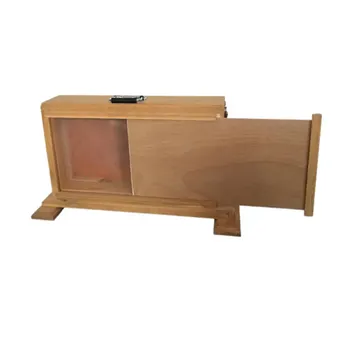
- Professional Observation Hive: The Ultimate Portable Solution for Beekeeping Education, Exhibitions, and Colony Displays
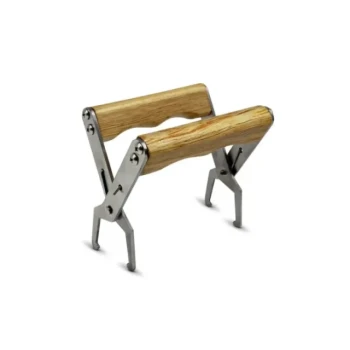
- Professional Grade Foldable Beehive Handles
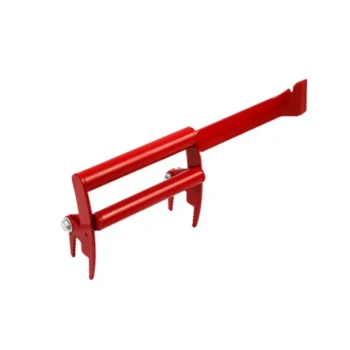
- Professional Multi-Function Stainless Steel Hive Tool
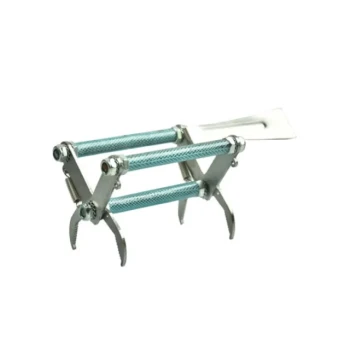
- Heavy-Duty Lever-Action Frame Grip with Hive Tool
- Wooden Bee Hive Frames for Beekeeping and Wholesale
People Also Ask
- How does transitioning to modern hives boost honey yield? Increase production and product quality for your commercial apiary
- How do Langstroth and Dadant standard beehives compare regarding brood chamber management and component compatibility? Find the Perfect Fit for Your Apiary
- What are the primary differences between Langstroth, horizontal top bar, and Warré hive box designs when selecting beekeeping equipment? Choose the Right Hive for Your Apiary
- Why do commercial apiary operators transition from traditional hive structures, such as clay cylinders, to standardized Langstroth hive boxes? Discover Scalable Beekeeping Solutions
- What is the recommended frame and box setup for a standard Langstroth hive configuration? Discover the optimal Hive Configuration for Best Results