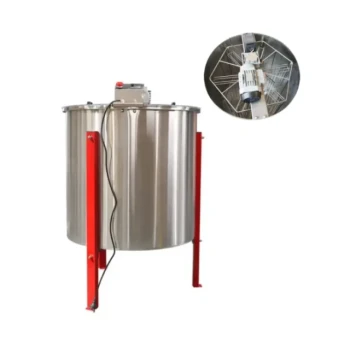
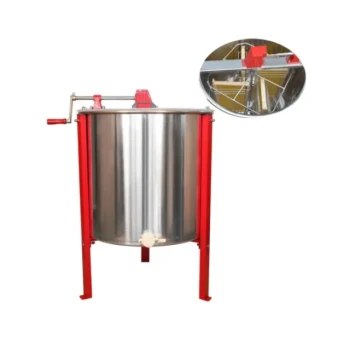
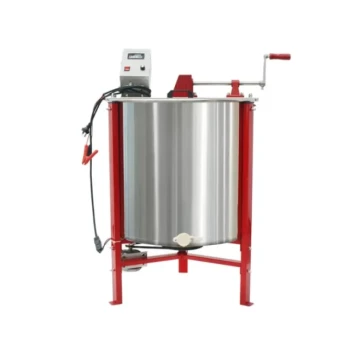
Generally, using soap to clean a honey extractor is not recommended. The primary risk is that soap residue can cling to the interior surfaces, contaminating future batches of honey and potentially rendering them inedible. If you find it necessary to use soap—specifically for long-term storage or heavy sanitization—you must use a very mild detergent in small quantities and rinse the equipment with extreme thoroughness to ensure absolutely no chemical traces remain.
Core Takeaway While soap aids in sanitization, it introduces a high risk of flavor contamination that outweighs the benefits for routine cleaning. Pure water and mechanical cleaning are usually sufficient, reserving soap only for end-of-season deep cleaning where rinsing can be exhaustive.
The Risks of Chemical Cleaning agents
To maintain the quality of your harvest, you must understand why standard cleaning agents are often detrimental to honey extraction equipment.
The Contamination Hazard
The interior of an extractor is a food-contact surface that is difficult to rinse perfectly. Any soap residue left behind will taint your honey.
Unlike other food products, honey has a delicate flavor profile that is easily compromised. Even a microscopic amount of dried detergent can degrade the quality of your next batch, potentially making it unsafe or unpleasant to consume.
Product Quality vs. Sterility
Honey is naturally antibacterial. Therefore, the hospital-level sterility that soap provides is often unnecessary for the honey itself.
The goal of cleaning is to remove physical debris (wax, propolis) and sugar residues that could ferment, rather than chemically sterilizing the surface.
Effective Soap-Free Alternatives
For routine maintenance and cleaning between batches, you should rely on physical and natural cleaning methods.
The Clean Water Method
The most common and safest method involves using clean water and rags.
Warm water is effective at dissolving sugar residues. For the exterior of the machine, a damp cloth with cold water is sufficient to wipe away dust and sticky spills.
The "Bee Method"
Before applying water, many beekeepers allow the bees to clean the extractor.
By placing the extractor outdoors (secured against pests other than bees), bees will reclaim the leftover honey. This reduces waste and minimizes the amount of sticky residue you have to scrub off manually.
High-Pressure Options
For more stubborn residues, using a pressure washer or taking the unit to a self-service car wash is effective.
If using a car wash, you must ensure you are using the rinse-only setting (plain water) and never the wax or soap cycles.
When Soap May Be Necessary
There are specific scenarios where the Primary Reference's warning against soap may need to be carefully weighed against hygiene requirements, particularly regarding storage.
Long-Term Storage and Maintenance
When putting the extractor away for the season, the risk of mold and bacterial growth increases.
Leftover honey residues can ferment or attract pests. In this specific context, washing the interior and frames with warm water and a mild detergent can help prevent mold and rust.
Heavy Wax and Propolis Buildup
Water alone may not remove heavy wax or propolis deposits.
First, scrape these materials away using a honey uncapping knife. If a mild detergent is used to remove the final greasy film, the rinsing process becomes the most critical step of the operation.
Understanding the Trade-offs
The Rinse Factor
If you choose to use soap, the standard for "rinsed" changes. You cannot simply spray it off; you must rinse until you are certain no chemical film remains.
Longevity vs. Purity
Regular cleaning extends the life of your equipment by preventing corrosion from acidic honey residues.
However, you must balance this against purity. Over-cleaning with chemicals risks the product; under-cleaning risks the equipment. The middle ground is frequent usage of hot water, and rare usage of mild soap.
Making the Right Choice for Your Goal
Select your cleaning method based on your immediate operational status:
- If your primary focus is immediate re-use: Avoid soap entirely and use warm water or a pressure washer to preserve honey flavor purity.
- If your primary focus is end-of-season storage: Use a mild detergent to prevent mold growth, but triple-rinse the unit to ensure it is neutral for the next harvest.
Prioritize the purity of your honey by using water first, and introduce soap only when strictly necessary for equipment preservation.
Summary Table:
| Cleaning Scenario | Recommended Method | Reason for Method |
|---|---|---|
| Routine Maintenance | Warm Water & Rags | Effectively dissolves sugar without leaving chemical residues. |
| Pre-Cleaning | The "Bee Method" | Bees reclaim leftover honey, reducing waste and sticky buildup. |
| Stubborn Residue | Pressure Washer | High-pressure water removes wax/propolis without soap contamination. |
| End-of-Season | Mild Soap + Triple Rinse | Prevents mold and rust during storage; requires exhaustive rinsing. |
Elevate Your Beekeeping Operation with HONESTBEE
Maintaining equipment is just one part of a successful harvest. At HONESTBEE, we specialize in supporting commercial apiaries and distributors with high-performance tools and machinery. Whether you need specialized honey-filling machines, durable extractors, or professional hive-making equipment, our comprehensive wholesale catalog has you covered.
From industrial-grade machinery to essential consumables and honey-themed merchandise, we provide the quality you need to scale your business. Ready to upgrade your apiary’s efficiency?
Contact HONESTBEE Today to discuss our wholesale offerings and discover how we can streamline your production!
Related Products
- HONESTBEE 72 Frame Industrial Electric Honey Extractor for Beekeeping
- Commercial Electric 12 Frame Honey Extractor Spinner Motorized Honey Extractor
- HONESTBEE 3-Frame Manual Acrylic Honey Extractor
- electric honey extractor honey centrifuge 3 frame honey extractor stainless steel honey frame extractor
- HONESTBEE 6 Frame Self Reversing Electric Honey Extractor for Beekeeping
People Also Ask
- What is the importance of balancing honeycomb frames within a honey extractor? Ensure Stability and Protect Machinery
- How is honey separated from the frames after they are uncapped? Efficient Extraction Methods for High Yields
- What are the main benefits of using a honey extractor? Maximize Yields and Protect Your Honeycomb
- What are the recommended methods for removing honey from the honeycomb? Top Extraction Techniques for Maximum Efficiency
- How do manual honey extractors compare to electric honey extractors? Choosing the Right Tool for Your Apiary Growth