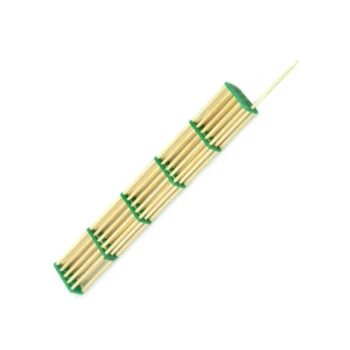
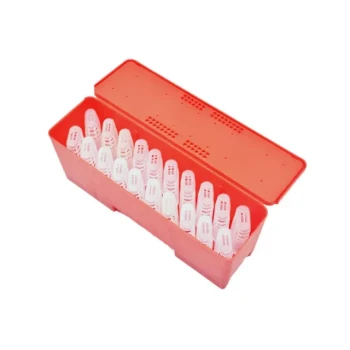
Common problems during queen introduction typically stem from mechanical failures or biological rejection. The most frequent issues include the queen escaping due to loose installation, worker aggression driven by resource scarcity or overcrowding, and the colony killing the queen immediately upon release because she has not yet begun to lay eggs.
Core Takeaway The success of queen introduction relies on managing the colony's defensive instincts and the queen's physiological status. The highest risk occurs when a non-laying queen is released into a resource-poor environment, making patience and proper cage security the deciding factors for acceptance.
Physical and Mechanical Failures
Premature Escape
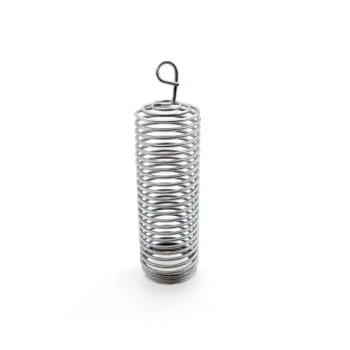
The most basic failure mode is the queen escaping her confinement before the colony is ready to accept her. This is often caused by poor installation of the cage.
If the cage is not securely attached, the queen may flee the hive. An escaped queen is liable to fly away, suffer injury, or be attacked by defensive bees outside the safety of the cage.
Structural Instability and Inspection Issues
When embedding a cage directly into the comb (to position the queen deep in the brood area), specific physical risks arise. The cage may fall out when the frame is handled or reinserted.
Furthermore, this method often requires destroying existing brood to fit the cage. It also makes it difficult to visually verify if the queen has been released without removing the frame entirely, which causes unnecessary disturbance.
Biological Rejection and Aggression
Rejection at the Moment of Release
Even if the confinement period seems calm, the moment of release is statistically the most dangerous phase.
A queen in a standard cage has not been laying eggs. Most colonies remain suspicious of a non-laying queen. When she is released, the combination of her non-laying status and the general disturbance of the hive can trigger the workers to turn on her and kill her instantly.
Resource-Driven Hostility
The temperament of the colony is directly tied to environmental resources. Inadequate nectar flow is a primary driver of aggression toward new queens.
When resources are scarce, bees become defensive. Conversely, a strong nectar flow (or simulated flow via feeding) minimizes this risk, making the colony more receptive to a new monarch.
Timing and Overcrowding
Introducing a queen too quickly is a common mistake. If the colony is overcrowded or if the introduction is rushed before the bees have realized they are queenless and desperate, aggression is likely.
Understanding the Trade-offs: Cage Types
To solve the "non-laying" rejection problem, beekeepers often must choose between convenience and acceptance rates.
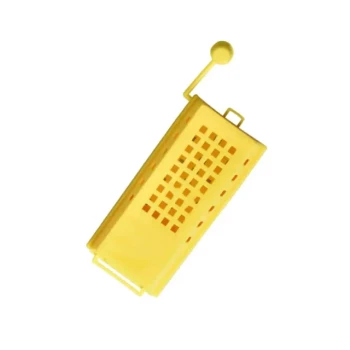
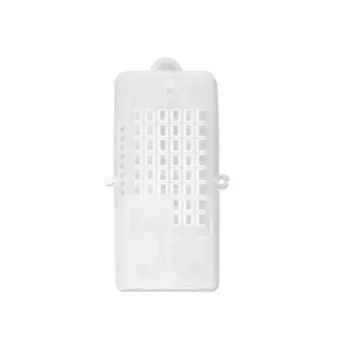
The Standard Cage
- Pros: Quick to install; minimal equipment required.
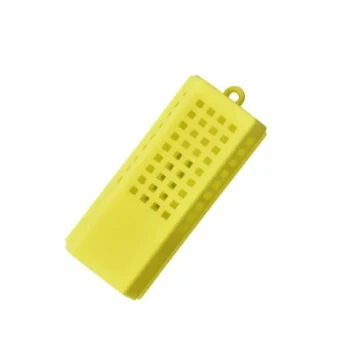
- Cons: The queen cannot lay eggs while confined. Upon release, she is still viewed as "suspicious" by the workers, keeping rejection risks high.
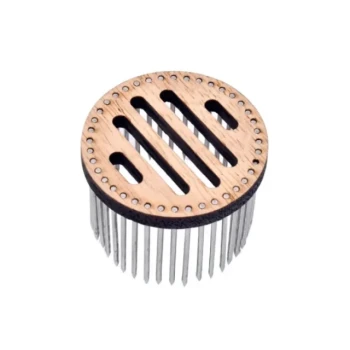
The Press-In (Push-In) Cage
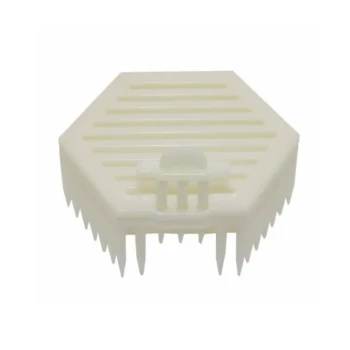
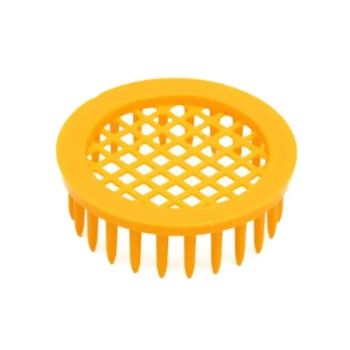
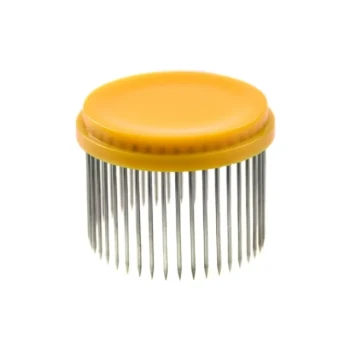
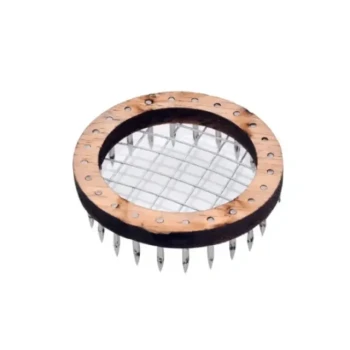
- Pros: This 4x4 inch screen box is pressed over emerging brood and honey. It allows the queen to lay eggs and be tended by newly hatched (non-aggressive) workers.
- Cons: Requires more skill to install. You must ensure no adult bees are trapped inside and place it on a comb without holes to prevent premature entry.
- The Verdict: The press-in cage is significantly safer because a laying queen is biologically more desirable to the colony than a confined, non-laying one.
Making the Right Choice for Your Goal
To maximize your success rate, align your method with the current hive conditions.
- If your primary focus is safety and high acceptance: Use a press-in cage over emerging brood to allow the queen to start laying eggs before full release.
- If your primary focus is speed using a standard cage: ensure you introduce the queen during a heavy nectar flow (or feed syrup heavily) to reduce worker aggression.
- If your primary focus is preventing mechanical failure: Double-check that the cage is securely wedged or attached so it cannot dislodge, and avoid embedding it so deeply that it destroys viable brood unnecessarily.
Patience is the ultimate tool; a queen released one day too late is safe, but a queen released one hour too early is often lost.
Summary Table:
| Problem Type | Common Causes | Risk Level | Mitigation Strategy |
|---|---|---|---|
| Mechanical | Poor installation, loose cages | High (Escape) | Secure cage firmly between frames |
| Biological | Non-laying status, rush release | Extreme (Death) | Use press-in cages or delay release |
| Environmental | Nectar dearth, overcrowding | Moderate | Feed syrup to simulate nectar flow |
| Procedural | Brood destruction, inspection stress | Low | Minimize hive disturbance during acclimation |
Scale Your Apiary Success with HONESTBEE
Don't let queen introduction failures stall your honey production. At HONESTBEE, we empower commercial apiaries and distributors with the professional-grade tools needed for precision beekeeping. From specialized queen cages and hive-making machinery to comprehensive consumables and honey-themed cultural merchandise, we provide the full spectrum of equipment to ensure your colonies thrive.
Our value to you:
- Wholesale Excellence: Bulk supplies designed for industrial-scale efficiency.
- Machinery Experts: High-performance honey-filling and woodworking solutions.
- Trusted Partnership: Quality hardware that minimizes risk and maximizes yield.
Ready to upgrade your equipment inventory? Contact us today to explore our wholesale catalog!
Related Products
- Durable Galvanized Steel Spring Queen Bee Cage
- Professional Queen Cage with Sliding Gate and Feeder Plug
- Professional Queen Bee Introduction and Transport Cage
- Professional Multi-Functional Queen Bee Cage
- Premium Wood and Steel Push In Queen Cage
People Also Ask
- Why are specialized queen bee cages used for the banking of mated queen bees? Maximize Commercial Apiary Storage Efficiency
- What is the mechanism of action for using temporary queen bee cages? Master Successful Queen Introduction
- What is the step-by-step process for installing a queen bee's cage onto a frame? Ensure Hive Acceptance Safely
- What is the optimal placement for a queen bee cage? Essential Strategies for Successful Re-queening
- What are the advantages and disadvantages of introducing a queen bee by embedding the cage? Boost Your Queen Acceptance