Honey supers are the specific hive boxes added to the upper portion of a beehive to collect harvestable honey. While the lower boxes (the brood chamber) serve as the colony's nursery and living quarters, the supers are strictly for storing the surplus nectar that beekeepers intend to extract.
The Core Distinction A beehive is divided into two functional zones: the bottom for the bees' survival (brood) and the top for your harvest (supers). Honey supers are designed to be modular and removable, allowing you to collect the "extra" honey without disturbing the queen or the developing bee larvae in the main hive body.
The Functional Role of the Super
"Super" Means Above
The term "honey super" is derived from the box's position: it is superimposed (placed above) the main hive body.
By stacking these boxes vertically, you mimic the natural tendency of bees to store honey reserves above their brood nest.
The Critical Separation
To ensure the honey harvested is pure and free of bee larvae, supers are typically placed on top of a queen excluder.
This grid allows worker bees to pass through and store nectar in the supers, but is too small for the queen to traverse. This keeps the queen confined to the lower brood chamber, ensuring the frames in your supers contain only honey.
Modular Expansion
Supers act as the hive's expansion pack during the honey flow season.
When nectar is abundant, beekeepers stack additional supers on top of the hive. Once the flow ends and the honey is capped, these specific boxes are removed for harvest, leaving the bottom boxes intact for the colony's winter survival.
Physical Characteristics and Sizing
Depth and Weight
While they hold standard frames (17 5/8 inches long), honey supers often differ in height compared to the main brood boxes.
Because honey is dense, a large box full of it is incredibly heavy. To make lifting manageable, supers are frequently medium or shallow depth, rather than the deep size used for the brood nest.
The Frame Structure
Inside the super, beeswax comb is suspended within wooden or plastic frames.
These frames are the fundamental structural component where bees build comb to cap and store the surplus honey. Standard dimensions for these frames vary (9 1/8, 7 1/4, 6 1/4, or 5 3/8 inches) to match the depth of the box you have chosen.
Understanding the Trade-offs
Weight vs. Capacity
The primary trade-off with honey supers is volume versus manageability.
A deep box holds more honey but creates a significant physical burden. A full 10-frame honey super can easily weigh over 30 lbs, and deeps weigh significantly more. Choosing smaller "shallow" supers reduces the weight you must lift but requires you to buy and store more boxes to achieve the same total volume.
Cleanliness and Quality
Because these boxes are for food production, hygiene is non-negotiable.
Maintaining a clean, pest-free honey super is essential for high-quality honey. Unlike brood boxes which naturally darken with use and travel, supers should be protected from pests to ensure the final product remains pure.
Making the Right Choice for Your Apiary
The type of super you choose dictates your workflow during harvest season.
- If your primary focus is Ease of Handling: Opt for shallow supers, as they remain lighter when full and reduce the risk of back strain during inspections and harvest.
- If your primary focus is Equipment Standardization: You may choose medium supers for both brood and honey storage, allowing you to interchange frames between all parts of the hive, though they will be heavier to lift.
- If your primary focus is Purity: Always utilize a queen excluder between your brood box and your first honey super to guarantee no eggs are laid in your harvest frames.
Ultimately, the honey super is the bridge between the bees' biological drive to hoard food and the beekeeper's goal of a successful harvest.
Summary Table:
| Feature | Deep Super | Medium Super | Shallow Super |
|---|---|---|---|
| Primary Use | Brood / Heavy Storage | Versatile / Harvest | Easiest Harvesting |
| Typical Weight (Full) | 70 - 90 lbs | 40 - 55 lbs | 30 - 35 lbs |
| Frame Height | 9 1/8" | 6 1/4" | 5 3/8" |
| Manageability | Low (Very Heavy) | Moderate | High (Lighter) |
Scaling Your Commercial Apiary?
At HONESTBEE, we specialize in empowering commercial apiaries and distributors with the heavy-duty tools required for a professional harvest. From high-capacity honey-filling machines to modular supers and frames, we supply the full spectrum of beekeeping hardware and consumables.
Maximize your honey production efficiency with our industrial-grade equipment. Contact us today to discuss wholesale pricing and customized solutions for your business.
Related Products
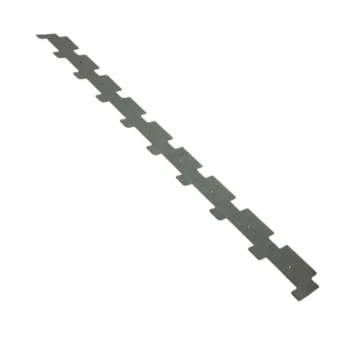
- Heavy Duty Castellated Iron Frame Spacer for Honey Supers
- Durable 16 Way Circular Bee Escape for Efficient Honey Harvesting
- Digital Honey Refractometer for Precision Measurement of Optimal Honey Quality
- Precision Honey Refractometer Instrument for Quality Assessment
- Professional Plastic Honey Dipper for Easy Honey Drizzling
People Also Ask
- What are honey super frames and what foundation options are available? Choose the Best Support for Your Bees
- What are the reasons and drawbacks of using nine frames in a ten-frame honey super? Boost Extraction Speed Today
- What are honey super frames and how many are needed per box? A Beekeeper's Essential Guide
- What are honey super frames and their foundation options? Choose the Best Support for Your Hive's Honey Production
- Why might a beekeeper use fewer than the standard number of frames in a honey super? Boost Extraction Efficiency