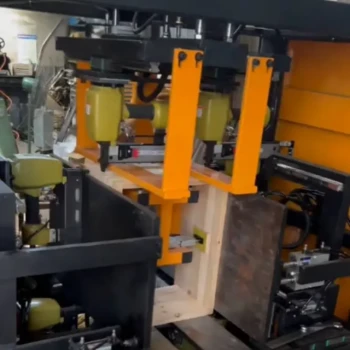
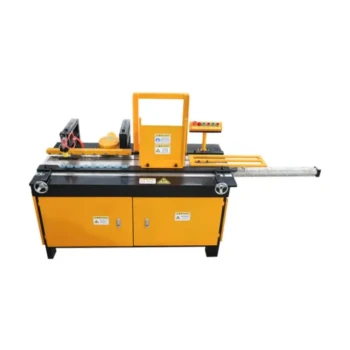
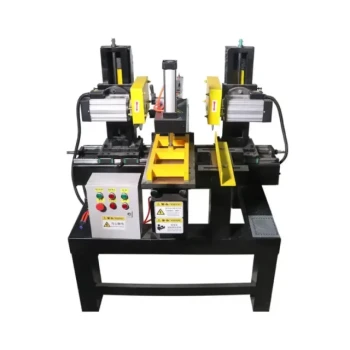
Automated hive-making machines fundamentally transform apiary operations by utilizing high-precision woodworking to create strictly standardized hive components. This standardization is not merely cosmetic; it creates a stable biological environment that reduces bee mortality while acting as a physical prerequisite for advanced downstream mechanization.
By replacing manual variability with industrial precision, automated hive-making ensures the structural uniformity required for scalable honey harvesting and royal jelly production, effectively bridging the gap between biological needs and industrial efficiency.
Precision Engineering and Colony Health
Eliminating Structural Variability
Automated machines utilize high-precision woodworking technology to manufacture hives with exact dimensions.
Unlike manual construction, which introduces slight irregularities, machine-made hives achieve a level of standardization that is impossible to replicate by hand.
Reducing Environmental Stress
This structural precision directly impacts the biological success of the colony.
Standardized hives provide a consistent, sealed, and stable breeding environment.
By minimizing drafts or structural flaws, these hives reduce the environmental stress placed on the colony, which is a primary factor in lowering bee mortality rates.
Facilitating Advanced Mechanization
The Foundation for Automated Harvesting
The value of a machine-made hive extends beyond the housing of the bees; it is the "key" that unlocks other industrial processes.
Subsequent operations, such as honey harvesting and larval grafting for royal jelly, increasingly rely on automated machinery.
These downstream machines require uniform input to function correctly.
Streamlining Production Workflows
If a hive varies in size by even a fraction of an inch, automated harvesters may jam or damage the frames.
Precisely manufactured hives ensure seamless compatibility with these industrial-grade tools.
This integration allows apiaries to overcome the efficiency limitations of traditional manual methods, enabling significant increases in production scale.
Understanding the Strategic Implications
The Shift to Industrial Consistency
Adopting automated hive-making signals a move away from artisanal variability toward industrial consistency.
This shift is critical for commercial operations where scalability is the primary objective.
It allows for the management of massive pollination events and single-crop yields where manual equipment cannot compete on cost or speed.
Standardization as a Constraint
It is important to note that automation commits the apiary to a specific standard.
Once you integrate high-precision hives, your entire operation—from frame replacement to extraction equipment—must align with those specific dimensions.
Flexibility is sacrificed for the sake of efficiency and speed.
Making the Right Choice for Your Goal
To determine if automated hive-making aligns with your apiary management strategy, consider your specific end goals:
- If your primary focus is Colony Health: Prioritize automation for its ability to create a stable, standardized breeding environment that reduces mortality rates.
- If your primary focus is Commercial Scalability: Leverage automated hive-making to ensure your equipment is compatible with industrial harvesting and larval grafting machinery.
Ultimately, the integration of automated hive-making is the critical step that evolves beekeeping from a craft into a scalable, data-driven industry.
Summary Table:
| Feature | Manual Hive Construction | Automated Machine Construction |
|---|---|---|
| Dimensional Accuracy | Variable/Artisanal | High-Precision/Standardized |
| Colony Health | Higher stress from structural flaws | Stable environment; reduced mortality |
| Downstream Compatibility | Difficult to mechanize | Seamless integration with auto-harvesters |
| Production Scale | Limited by labor | Highly scalable for commercial use |
| Primary Benefit | Flexibility & low initial cost | Industrial efficiency & speed |
Revolutionize Your Beekeeping Operation with HONESTBEE
Transitioning from traditional craft to industrial-scale efficiency requires the right partner. HONESTBEE specializes in empowering commercial apiaries and distributors with high-performance beekeeping tools and machinery. Whether you need automated hive-making machines to ensure structural precision or honey-filling equipment to streamline your output, we provide the full spectrum of industrial solutions.
Why partner with us?
- Comprehensive Wholesale Offering: From specialized hardware to essential industry consumables.
- Scalable Solutions: Equipment designed to reduce bee mortality and maximize honey/royal jelly yields.
- End-to-End Support: We cater to the unique needs of large-scale distributors and professional beekeepers.
Ready to scale your production and achieve industrial consistency? Contact our experts today to explore our comprehensive hardware and machinery portfolio.
References
- Mohammad Kazem Rahimi, Ali Akbar Azimi Dezfouli. Sustainability criteria of apicultural industry: evidence from Iran. DOI: 10.1080/20964129.2020.1818630
This article is also based on technical information from HonestBee Knowledge Base .
Related Products
- Automatic High-Speed Bee Hive Box Stapling Machine
- High-Efficiency Pneumatic Bee Hive Making Machine for Rapid Box Assembly
- Mini Desktop Bee Hive Frame Forming Making Machine
- Beehive Handle and Frame Rest Cutting Machine: Your Specialized Hive Machine
- Beehive Machine Double End Saw for Precision Hive Component Manufacturing
People Also Ask
- How is the Bee Box machine adjusted for different box sizes? Maximize Your Woodworking Versatility and Precision
- How is the Bee Box machine operated? Optimize Your Commercial Hive Production with Scalable Staffing Solutions
- How was the Bee Box machine designed? Industrial Engineering for High-Volume Beekeeping Production
- What is the production capacity of the Bee Box machine? Boost Output up to 1,000 Boxes Daily
- What are the power requirements and control system for the Bee Box machine? Optimize Your Apiary Equipment Production