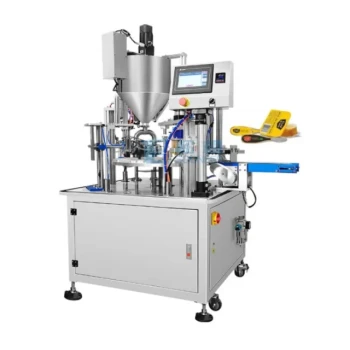
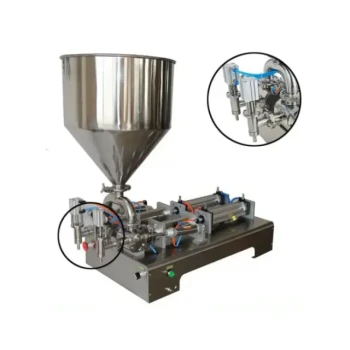
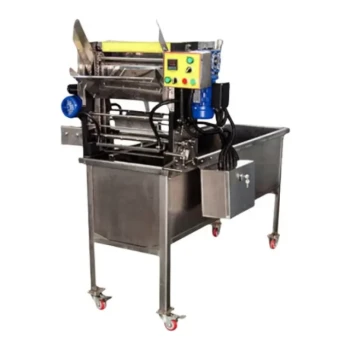
Automating honey filling is the critical pivot point between artisanal beekeeping and industrial commerce. For large-scale processing centers, automatic machinery ensures precise quantitative dispensing to verify that every unit strictly adheres to net weight trade standards. By removing manual variability, this equipment significantly reduces spill losses and eliminates the risks of secondary contamination, making it the essential infrastructure for scaling output to meet commercial demands.
Core Takeaway: Automatic honey filling machinery transforms processing from a variable manual task into a standardized science. It creates a closed-loop system that guarantees hygiene, eliminates product waste, and ensures every bottle meets the rigorous weight and safety standards required for international export.
Optimizing Production Efficiency
Precision Quantitative Dispensing
In manual processing, overfilling leads to revenue loss, while underfilling leads to regulatory fines. Automatic machinery utilizes precision metering controls to ensure exact volumetric filling. This guarantees that every container meets the specific net weight required for trade standards.
Scaling Output Capacity
Manual labor has a hard physical ceiling; automation removes it. Utilizing industrial-grade machinery is the only viable method for meeting the volume demands of large commercial orders. It streamlines metering, filling, sealing, and labeling into a continuous, high-speed workflow.
Reducing Operational Costs
While the initial investment is higher, automation significantly lowers long-term operational costs. By minimizing spill losses and reducing reliance on manual labor, processing centers can achieve economic self-sufficiency and improved market competitiveness.
Ensuring Hygiene and Quality Standards
Eliminating Secondary Contamination
Human contact is the primary vector for contamination in food processing. Automated machines operate in fully enclosed environments, minimizing human interaction with the product. This creates a sterile filling process that prevents the introduction of external bacteria or foreign particles.
Preserving Physical and Chemical Integrity
Honey and royal jelly are heat-sensitive and susceptible to oxidation. High-specification machinery is designed to handle these properties carefully. It fills containers under conditions that protect the honey from oxidation, preserving its natural nutritional and physical characteristics.
Handling High Viscosity
Honey varies greatly in thickness and viscosity. Industrial machines are engineered to process high-viscosity products efficiently without stalling or creating air pockets. This ensures a consistent flow and fill rate that manual pouring cannot replicate.
Meeting International Market Demands
Standardization and Homogenization
Large-scale apiaries often gather honey from multiple sources. Advanced machinery allows for the homogenization and filtration of these various inputs. This results in a product with consistent appearance, texture, and quality—a requirement for building a reliable brand.
Export-Grade Compliance
International markets impose stringent physicochemical and safety standards. The standardized processes provided by automation ensure that the final product consistently meets the hygiene and quality benchmarks required for global distribution and export.
Operational Considerations and Trade-offs
Infrastructure Requirements
Implementing this level of automation requires a robust technical infrastructure. Facilities must be equipped to handle high-specification machinery, including appropriate power supplies and floor space for integrated packaging lines.
Complexity of Maintenance
Unlike manual tools, automated systems require specialized maintenance. To maintain precision metering and sterile conditions, operators must adhere to strict cleaning protocols and regular calibration of the equipment.
Making the Right Choice for Your Goal
To maximize the return on your investment, align the equipment choice with your specific operational focus:
- If your primary focus is Profit Margins: Prioritize machinery with high-precision metering to eliminate product giveaway (overfilling) and drastically reduce spill waste.
- If your primary focus is Export Markets: Select equipment that offers a fully enclosed, sterile filling environment to meet the most stringent international food safety certifications.
Automation is not just about moving faster; it is about establishing the consistency required to turn a raw agricultural product into a global commodity.
Summary Table:
| Key Advantage | Impact on Production | Benefit to Commercial Centers |
|---|---|---|
| Precision Dispensing | Eliminates overfilling and underfilling | Ensures trade compliance & reduces product loss |
| Scaling Capacity | Continuous, high-speed automated workflow | Meets high-volume commercial and export demands |
| Hygiene Control | Enclosed sterile environment | Eliminates contamination & preserves product integrity |
| Operational Efficiency | Reduces reliance on manual labor | Lowers long-term costs & boosts market competitiveness |
| Viscosity Management | Engineered for thick, heavy liquids | Consistent flow rate without air pockets or stalls |
Elevate Your Beekeeping Enterprise with HONESTBEE
Transitioning from artisanal production to industrial-scale commerce requires more than just tools—it requires the right infrastructure. HONESTBEE specializes in empowering commercial apiaries and distributors with high-performance beekeeping machinery and equipment. From precision honey-filling machines and hive-making hardware to a full spectrum of industry consumables, we provide the end-to-end solutions necessary to meet global export standards.
Why partner with HONESTBEE?
- Maximize Profit: Precision metering reduces waste and eliminates product giveaway.
- Scale Effortlessly: High-speed automation helps you meet massive commercial orders.
- Ensure Quality: Our equipment maintains the strict hygiene required for international trade.
Ready to transform your processing center into a world-class facility? Contact our expert team today to discuss your wholesale needs and custom machinery solutions.
References
- Shakespear Hamauswa, Mr. Mpheteli J. Malunga. Promoting micro, small and medium enterprises in beekeeping in Zambias Central Province: Making a case for the adoption of business incubation strategy. DOI: 10.5897/ajar2017.12449
This article is also based on technical information from HonestBee Knowledge Base .
Related Products
- Fully Automatic Honey Filling Packaging Machine for Processing Line
- Automatic Honey Filling and Filtering Machine for Beekeeping Bottle Filling
- Precision Durable Efficient HONESTBEE Rotary Honey Filling Machine
- Automatic Single-Dose Snap & Squeeze Honey Sachets Packing Machine
- Semi Automatic Small Honey Bottle Filling Machine Honey Filler
People Also Ask
- Why are fully automatic honey filling and packaging lines essential? Boost Your Honey's Market Value and Quality
- What is a fully-automatic honey filler? Streamline Your Production with High-Precision Automation
- How do automated honey filling and packaging machines affect profitability? Boost Margins with HONESTBEE Technology
- How do automated honey filling and packaging machines contribute to the market value of honey products? Maximize Your ROI
- How do industrial-grade automated honey filling and packaging machines mitigate the risk of physical contamination?