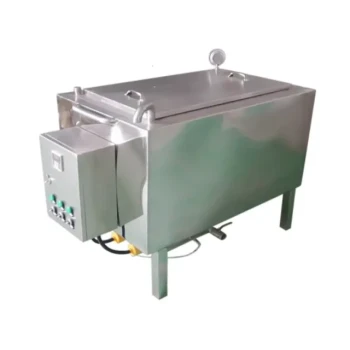
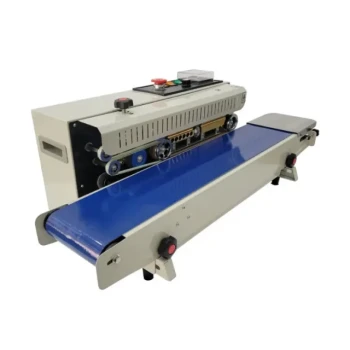
The adoption of industrial-grade microwave generators offers a decisive efficiency advantage over traditional steam heating. By utilizing a volumetric heating mechanism, this technology reduces energy consumption by 25–30%, increases beeswax yield by 14–18%, and shortens melting times by more than four times compared to conventional methods.
The Core Insight Traditional steam heating relies on thermal conductivity, heating from the outside in. Microwave technology utilizes volumetric heating to penetrate the material instantly, driving the significant gains in yield, speed, and energy efficiency that define modern beeswax purification.
The Mechanics of Volumetric Efficiency
To understand why the performance metrics differ so drastically, you must look at the heating mechanism itself.
The Power of Volumetric Heating
Traditional steam equipment heats the surface of the beeswax, relying on the material's thermal conductivity to transfer heat to the center. This is inherently slow.
Industrial microwave generators employ volumetric heating. This means energy is delivered directly to the volume of the material, heating the entire mass simultaneously rather than waiting for heat to travel from the outside in.
Breaking the Thermal Lag
This mechanism eliminates the "thermal lag" found in steam processes. Because the heat is generated internally, the beeswax reaches its melting point rapidly and uniformly, preventing the bottlenecks common in conductive heating.
Quantifiable Production Gains
The shift in heating mechanism results in three specific, high-impact improvements for continuous purification lines.
1. Drastically Reduced Melting Time
Speed is the most immediate advantage. Microwave technology shortens the melting time by more than four times.
For a continuous process, this reduction removes the melting stage as a production bottleneck, allowing for significantly higher throughput rates without increasing the facility's physical footprint.
2. Significant Yield Increase
The efficiency of the separation process is directly tied to how the material is heated. The data indicates a beeswax yield increase of 14–18%.
This suggests that the volumetric process allows for a more complete separation of the wax from impurities, maximizing the recovery of the final product and reducing waste.
3. Lower Energy Consumption
Despite the high speed, the process is less energy-intensive. Unit energy consumption is reduced by approximately 25–30%.
Because energy is applied directly to the material rather than heating a transfer medium (steam) and then a vessel wall, the thermal losses are minimized.
Understanding the Operational Shift
While the advantages are clear, it is important to view this as a change in methodology, not just a hardware swap.
moving Beyond Conductive Heating
Transitioning from steam to microwave represents a move away from conductive thermodynamics. The trade-off is often in the adaptation of process control.
Operators accustomed to managing steam pressure and jacket temperatures must adapt to managing electromagnetic field intensity and volumetric temperature rise. The efficiency gains are inherent to the technology, but realizing them requires acknowledging that the fundamental physics of your production line have changed.
Making the Right Choice for Your Goal
When evaluating an upgrade to your purification line, align the technology with your primary business objective.
- If your primary focus is Profit Margins: The 14–18% increase in yield directly boosts revenue per batch, maximizing the value extracted from raw materials.
- If your primary focus is Throughput: The 4x reduction in melting time eliminates thermal bottlenecks, allowing you to process significantly more volume in the same timeframe.
- If your primary focus is Sustainability or OpEx: The 25–30% drop in energy consumption provides an immediate reduction in utility costs and lowers the carbon footprint of production.
By leveraging volumetric heating, you are not just heating wax faster; you are fundamentally optimizing the physics of recovery.
Summary Table:
| Feature | Traditional Steam Heating | Industrial Microwave Generator | Performance Gain |
|---|---|---|---|
| Heating Mechanism | Thermal Conductivity (Outside-in) | Volumetric Heating (Instant/Internal) | Uniform Efficiency |
| Melting Speed | Baseline Speed | 4x Faster | >400% Improvement |
| Product Yield | Standard Recovery | 14–18% Increase | Maximized Output |
| Energy Use | High (Thermal Loss) | 25–30% Reduction | Lower OpEx |
| Process Flow | Frequent Bottlenecks | Continuous & Seamless | Optimized Throughput |
Revolutionize Your Beeswax Production with HONESTBEE
Are you ready to eliminate production bottlenecks and maximize your profit margins? At HONESTBEE, we specialize in empowering commercial apiaries and distributors with cutting-edge technology. By upgrading to our industrial-grade purification solutions, you can achieve up to 18% higher yields and slash energy costs by nearly a third.
Beyond specialized honey-filling and hive-making machinery, HONESTBEE provides a comprehensive wholesale portfolio of beekeeping tools, equipment, and essential industry consumables. Partner with us to optimize your facility's physics and scale your operations effectively.
Unlock your facility's full potential—contact our specialists today!
References
- A. V. Shevelev, G M Toboev. Optimization of structural and technological modes of operation of the microwave wax melter. DOI: 10.32634/0869-8155-2022-364-11-88-93
This article is also based on technical information from HonestBee Knowledge Base .
Related Products
- Electric Commercial Beeswax Melter for Factory Use
- Steam Beeswax Melter Wax Warmer for Wax Processing
- Solar Beeswax Melter Easy Solar Wax Melter for Beeswax
- Electric Beeswax Foundation Machine With Operating Tray and Wax Foundation Roller
- Beeswax Melter for Candle Making Honey Bee Wax Melter
People Also Ask
- Why might a commercial beekeeper prefer an electric beeswax melter? Maximize Profit with Speed & Scale
- What safety precautions should be taken when melting beeswax? A Guide to Flammable Wax Handling
- What types of beeswax melters are available for different scales of beekeeping? Solar vs. Electric Melters Compared
- What are the three popular methods for melting beeswax? Safely Process Your Wax with Ease
- How do you melt beeswax without making a mess? Master Safe & Clean Techniques