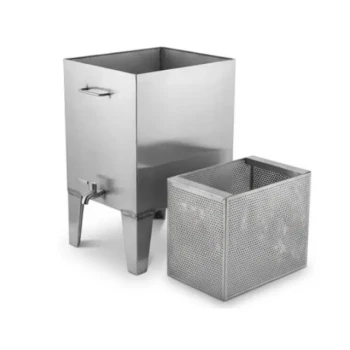
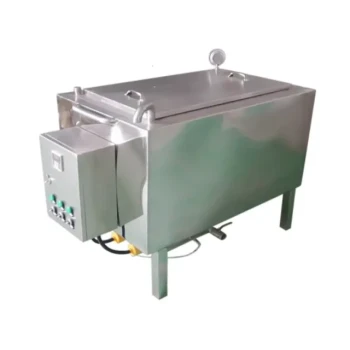
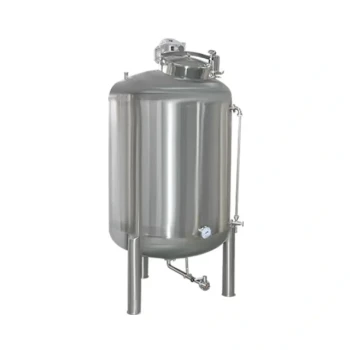
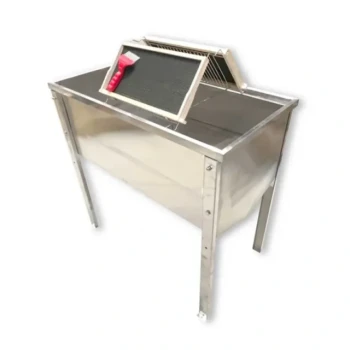
The primary design advantage of a double-jacketed beeswax melting tank is its ability to provide consistent, indirect heating through a circulating thermal layer. By utilizing a water-filled jacket to transfer heat rather than a direct flame or element, the system prevents the localized overheating that damages wax quality, ensuring a uniform melt essential for industrial processing.
By decoupling the heat source from the raw material, the double-jacketed design prioritizes material integrity over raw speed. It creates a stable thermal environment that preserves the chemical properties of the beeswax while facilitating the mechanical separation of impurities.
The Mechanics of Indirect Heating
Uniform Temperature Distribution
The core architectural feature of these tanks is the thermal jacket, a cavity surrounding the inner vessel. This jacket is filled with circulating hot water, which envelops the beeswax processing chamber.
Because water distributes heat more evenly than metal alone, this creates a uniform thermal environment. Every square inch of the inner tank wall radiates the same amount of heat, eliminating the cold spots common in single-walled vessels.
Prevention of Localized Overheating
Direct heating methods often create "hot spots" where the heating element touches the tank. This can scorch beeswax, darkening its color and altering its chemical composition.
The double-jacketed design acts as a thermal buffer. Since the heating medium is hot water, the temperature applied to the wax is naturally regulated and gentle. This makes it virtually impossible to scorch the material, even during long processing cycles.
Operational Efficiency in Processing
Smooth Phase Conversion
Industrial processing often involves melting down old combs and residues. The indirect heating method allows for a slow, controlled conversion from solid to liquid.
This gradual melting process is superior to rapid heating for raw beeswax. It prevents the wax from boiling or becoming turbulent, which allows the operator to maintain better control over the batch consistency.
Initial Impurity Separation
One of the distinct advantages of this gentle melting profile is its impact on filtration. Because the wax melts slowly and without violent convection currents, it allows for the initial removal of large-particle impurities.
Heavier debris naturally separates from the liquid wax rather than being churned back into the mixture. This "settling" effect reduces the load on downstream filtration systems.
Understanding the Trade-offs
Processing Speed vs. Quality
The primary reference notes that this method involves "slowly melting beeswax." While this is excellent for quality, it introduces a trade-off regarding throughput speed.
Operators must account for a longer ramp-up time compared to direct-fire methods. The thermal mass of the water jacket creates a lag in temperature changes, meaning the system is less responsive to rapid adjustments.
Complexity of Design
Utilizing a circulating hot water system introduces more variables than a standard pot. It requires maintenance of the jacket integrity and monitoring of the water circulation system to ensure the heating environment remains uniform.
Making the Right Choice for Your Goal
When integrating a melting tank into your production line, consider your specific processing priorities:
- If your primary focus is Product Quality: The double-jacketed design is essential to prevent discoloration and preserve the natural aroma of the beeswax.
- If your primary focus is Pre-Filtration: Use this tank to settle out large debris from old combs before passing the liquid wax through fine filters.
The double-jacketed tank is the industry standard for professionals who view beeswax as a delicate chemical compound rather than just a bulk commodity.
Summary Table:
| Feature | Design Advantage | Industrial Benefit |
|---|---|---|
| Heating Method | Indirect Water-Jacketed Thermal Layer | Eliminates hot spots and prevents wax scorching. |
| Temperature Control | Uniform Thermal Distribution | Preserves chemical integrity and natural wax aroma. |
| Impurity Management | Low-Turbulence Melting Profile | Facilitates natural settling of heavy debris for easier filtration. |
| Processing Stability | Thermal Buffering | Ensures consistent batch quality during long processing cycles. |
Scale Your Industrial Wax Processing with HONESTBEE
Maintaining material integrity is critical for commercial apiaries and beeswax distributors. HONESTBEE specializes in providing professional-grade beekeeping machinery, including high-efficiency beeswax melting tanks, honey-filling machines, and specialized hive-making equipment.
Our comprehensive wholesale offering is designed to help you streamline production while ensuring the highest product quality. Whether you are upgrading your filtration line or stocking essential industry consumables, our team is ready to support your business growth with expert hardware solutions.
Ready to optimize your production? Contact us today to discuss our full spectrum of industrial beekeeping tools!
References
- Sahin Aydin, Serhat Solmaz. An Ontology for Apiculture Practices (Onto4API): Towards Semantic Interoperability and Knowledge Sharing in the Apiculture Community. DOI: 10.18615/anadolu.1749470
This article is also based on technical information from HonestBee Knowledge Base .
Related Products
- Heavy Duty Stainless Steel Honey Processing Machine Decrystallizing Tank
- Beeswax Melter for Candle Making Honey Bee Wax Melter
- Steam Beeswax Melter Wax Warmer for Wax Processing
- Stainless Steel Honey Storage and Settling Tank with Double Strainer
- Solar Beeswax Melter Easy Solar Wax Melter for Beeswax
People Also Ask
- What are the features of the processing tanks offered? Engineered for Purity and Efficiency
- What types of stainless steel processing tanks are used for honey? Essential Equipment for Quality Honey Production
- What design options are available for honey processing tanks? Optimize Efficiency with Custom Geometries
- What types of stainless steel are used for honey processing? Ensure Food Safety with 304 & 316 Grade Equipment
- Why is industrial-grade stainless steel processing equipment required for honey harvesting? Ensure Purity & Compliance