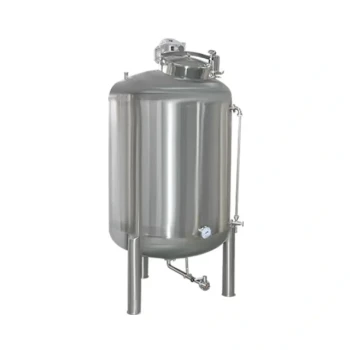
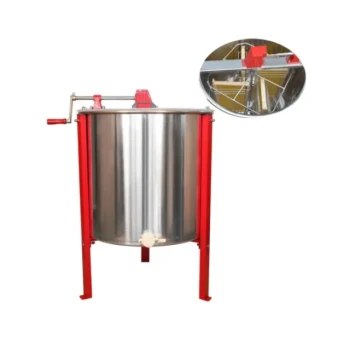
Modern hygiene standards generally mandate the use of non-porous, food-grade materials for all equipment involved in honey extraction and storage. Specifically, this requires replacing traditional porous containers—such as clay or straw—with stainless steel or certified food-grade alternatives. Adhering to these material standards is critical for preventing environmental impurities and ensuring the biological safety required for commercial distribution.
Core Takeaway The transition to food-grade equipment is not just an operational upgrade; it is a fundamental requirement for market compliance. By eliminating porous surfaces that harbor contaminants, producers ensure biological safety and meet the strict standardization criteria necessary for high-end markets and long-distance transport.
The Imperative of Material Integrity
The Shift to Stainless Steel
Modern beekeeping protocols explicitly require the use of stainless steel or equivalent food-grade materials for harvesting, filtration, and storage.
These materials are chemically inert, meaning they do not react with the honey's acidic composition.
This stability is essential for maintaining the chemical purity and flavor profile of the final product.
Eliminating Porous Contaminants
Traditional containers made of woven straw, clay, or hollow logs are highly porous.
These surfaces trap moisture and residues, creating a breeding ground for bacteria and mold that is nearly impossible to sterilize.
Modern food-grade equipment provides smooth, non-porous surfaces that can be thoroughly cleaned and sanitized between uses.
Process Control and Contamination Prevention
Mechanization Reduces Human Contact
Manual processing is a significant source of "secondary contamination," where impurities are introduced during handling.
Modern industrial-grade extractors utilize centrifugal force in a closed system.
This mechanized approach isolates the honey from the environment and human contact, drastically lowering the risk of introducing pathogens or debris.
Filtration and Hermetic Sealing
Hygiene extends beyond the extraction phase into the final bottling process.
Advanced machinery integrates high-standard filtration systems to remove physical impurities like wax particles without degrading the honey.
Following filtration, equipment must be capable of hermetic sealing (airtight closure). This prevents re-contamination during storage and ensures the product remains safe during long-distance transport.
Understanding the Trade-offs
Capital Investment vs. Market Access
The primary challenge in adopting these hygiene standards is the initial cost.
Stainless steel extractors, mechanized bottling lines, and food-grade storage tanks represent a significant financial leap compared to traditional tools.
However, this cost must be weighed against market limitation. Honey processed in non-compliant equipment typically fails to meet the entry requirements for commercial, high-end, or export markets.
Standardization vs. Traditional Methods
Adopting modern hygiene equipment forces a standardization of the product.
While this ensures safety and uniformity, it moves production away from artisanal, manual methods that some niche markets may value culturally.
Nevertheless, for scale and safety, the trade-off favors standardized, mechanized hygiene protocols to ensure a biologically safe product.
Making the Right Choice for Your Goals
To align your equipment choices with your production targets, consider the following:
- If your primary focus is reaching commercial or high-end markets: You must invest exclusively in stainless steel extraction and storage systems to meet strict biological safety and standardization requirements.
- If your primary focus is reducing product loss and waste: Prioritize mechanized bottling equipment with hermetic sealing to eliminate secondary contamination and prevent spoilage.
Investing in hygiene is not just about cleanliness; it is the prerequisite for transforming honey from a raw material into a viable commercial commodity.
Summary Table:
| Hygiene Category | Modern Requirement | Benefit |
|---|---|---|
| Material | Stainless Steel / Food-Grade Plastic | Non-porous, chemically inert, easy to sanitize |
| Extraction | Mechanized Centrifugal Systems | Minimizes human contact and environmental debris |
| Processing | Integrated High-Standard Filtration | Removes wax and particles without product degradation |
| Storage | Hermetically Sealed Containers | Prevents re-contamination and moisture absorption |
| Surface Type | Non-porous & Smooth | Eliminates breeding grounds for bacteria and mold |
Elevate Your Honey Production to Global Standards
Transitioning to modern hygiene protocols is the key to unlocking high-end commercial markets and ensuring long-distance transport safety. HONESTBEE supports commercial apiaries and distributors worldwide with a comprehensive suite of professional solutions. From industrial-grade stainless steel extractors and precise honey-filling machines to advanced hive-making equipment and essential industry consumables, we provide everything you need to scale your operations safely.
Ready to upgrade your beekeeping infrastructure? Contact HONESTBEE today to explore our wholesale equipment range and see how our expertise can drive your business success.
References
- Veronica Ibitola Makinde, Pius Olanrewaju Ogunjobi. Counselling Farmers on Improving the Yield of Flowering Crops through Integrated Apicultural Farming for Wealth Creation. DOI: 10.22624/aims/humanities/v11n2p3
This article is also based on technical information from HonestBee Knowledge Base .
Related Products
- Stainless Steel Honey Storage and Settling Tank with Double Strainer
- Professional Honey Storage Tank with Agitation System
- Stainless Steel Honey Storage Tank with Lid for Honey
- Stainless Steel Honey Press Wax Press with Tank
- HONESTBEE 2 Frame Manual Acrylic Honey Extractor Beekeeping Equipment
People Also Ask
- What economic role do honey storage tanks play? Boost Your Revenue Through Strategic Inventory Management
- What roles do industrial honey storage tanks and filtration meshes play in processing? Ensure Purity & Consistency
- What is the purpose of a honey storage tank? Streamline Your Honey Processing for Quality & Efficiency
- What role do settling tanks play in honey production? Achieve Pure, High-Clarity Honey Naturally
- Why are large settling tanks used in the honey clarification process? Achieve Natural Purity & Batch Consistency