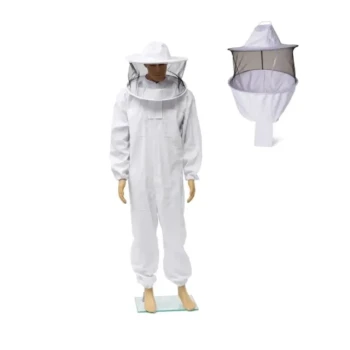
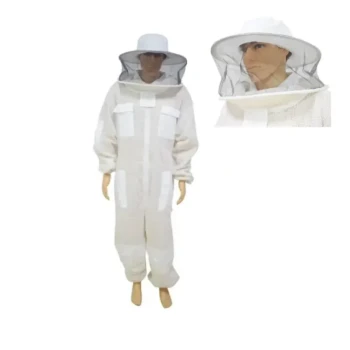
The jacket and pants of a beekeeping suit are typically engineered as a unified, single-piece garment—similar to overalls—to create a sealed barrier against insects. This seamless design minimizes the number of potential entry points, relying on heavy-duty closures and specific sizing to ensure safety during hive inspections.
Core Takeaway The primary function of the jacket and pants component is to create a gap-free enclosure around the beekeeper's body. While sting-resistant fabric provides the barrier, the effectiveness of the suit relies heavily on the quality of its seals—specifically at the wrists, ankles, and neck—and its ability to accommodate movement through generous sizing.
Maximizing Protection Through Design
Seamless Integration
To provide the highest level of security, the jacket and pants are often connected as a single-piece suit. This design eliminates the gap at the waist that can occur when bending or stretching, effectively reducing the number of entry points where bees could potentially crawl inside.
Sealing the Extremities
The most critical features for preventing stings are the closures at the wrists and ankles. High-quality suits utilize elasticated cuffs and ankles to create a tight seal against the skin or boots.
Secondary Barriers
Beyond simple elastic, many suits incorporate Velcro closures or adjustable drawstrings at the waist and limbs to reinforce the seal. Thumb loops are a specific feature often attached to the jacket cuffs; these prevent the sleeves from riding up and exposing the wrists when you lift your arms to work with hive frames.
The Neck and Veil Connection
The jacket usually features a collar designed to integrate securely with a protective veil. This connection is typically achieved via a zipper to ensure no gaps exist at the neck. A vital safety feature in this area is a Velcro-secured flap that covers the zipper ends, preventing bees from squeezing through the tiny opening where the zipper sliders meet.
Operational Usability and Comfort
Generous Sizing and Fit
A proper beekeeping suit is not designed to fit like standard clothing; it should be chosen in a size larger than your actual measurements. This loose fit serves two purposes: it creates an air gap that prevents stingers from reaching your skin, and it allows enough room to wear comfortable clothing underneath without restricting movement.
Accessibility Features
Putting on a full-body suit can be cumbersome, so accessibility features are essential. Look for extra-long leg zippers that allow you to step into the suit without removing your shoes or boots. Front zippers on the jacket section are standard for ventilation and ease of wear, often equipped with large pull rings for easy operation while wearing gloves.
Storage and Utility
Beekeeping requires various tools, such as hive tools and queen cages. The jacket and pants component typically includes multiple pockets for holding this equipment. These pockets are often sealable (using Velcro or zippers) to prevent bees from entering them or tools from falling out.
Material Composition and Durability
Fabric Density and Ventilation
The fabric used for the jacket and pants must be dense enough to prevent a stinger from penetrating. Common materials include thick cotton or cotton/polyester blends. Alternatively, ventilated suits use layers of polyester or vinyl mesh to allow airflow while maintaining enough thickness to keep the stinger away from the skin.
Reinforced High-Wear Areas
Durability is key for a garment used in outdoor, agricultural environments. High-quality suits often feature reinforced knees, providing double layers of fabric in areas prone to wear and tear when kneeling to inspect lower hive boxes.
Understanding the Trade-offs
While a full, single-piece suit offers maximum protection, it introduces specific trade-offs regarding comfort and agility.
Heat vs. Protection
The dense, sting-proof fabrics required for safety can retain significant body heat. While ventilated, multi-layer fabrics mitigate this, they are often heavier and more expensive than standard cotton. You must balance your local climate against the thickness of the material.
Mobility vs. Bulk
The recommended "loose fit" ensures safety but can make fine motor movements clumsier. Excess fabric at the cuffs or legs can snag on hive equipment or vegetation. A suit that is too tight allows stingers to reach the skin, while a suit that is too loose can become a hazard in itself.
Making the Right Choice for Your Goal
Selecting the right suit configuration depends on your experience level and environmental conditions.
- If your primary focus is maximum safety: Prioritize a single-piece suit with redundant closures (elastic plus Velcro) and thumb loops to guarantee a sting-proof seal.
- If your primary focus is ease of use: Look for a suit with extra-long leg zippers and large zipper pull rings to simplify the process of suiting up and down.
The most effective beekeeping suit is one that provides a confident seal without restricting the movement required to work the hive gently.
Summary Table:
| Feature | Key Function | Benefit for Beekeepers |
|---|---|---|
| Single-Piece Design | Eliminates waist gaps | Prevents bees from crawling inside while bending |
| Elasticated Cuffs | Seals wrists and ankles | Creates a tight barrier against skin or boots |
| Thumb Loops | Anchors jacket sleeves | Prevents sleeves from riding up during hive work |
| Extra-Long Zippers | Step-in accessibility | Allows suiting up without removing shoes/boots |
| Reinforced Knees | Double-layered fabric | Increases durability for kneeling during inspections |
| Velcro Zipper Flap | Seals neck connection | Closes the gap where zipper sliders meet |
Upgrade Your Apiary with Professional-Grade Gear
At HONESTBEE, we understand that safety and efficiency are the foundations of a successful beekeeping operation. We cater specifically to commercial apiaries and distributors, offering a comprehensive wholesale portfolio designed to withstand the rigors of industrial use.
From sting-proof suits and specialized hardware to advanced honey-filling machinery, our products ensure your team stays protected and your production remains seamless.
Ready to scale your beekeeping business? Contact us today to discuss wholesale solutions and discover how our equipment can drive your success.
Related Products
- White Cotton Beekeeping Jacket and Veil for Bee Keepers
- Economy Polyester Beekeeping Jacket with Veil and Hat
- Beekeeping Jacket with Hood and Veil for Beekeepers
- Vented Beekeeping Jacket with Hood and Veil for Beekeepers
- Premium Cotton Beekeeper Suit with Reinforced Fencing Veil
People Also Ask
- What are the features of an economical beekeeping jacket? Essential Protection for Budget-Conscious Beekeepers
- What are the pros of using a beekeeping jacket? Unlock Superior Comfort and Mobility for Your Apiary
- What factors should a new beekeeper consider when choosing between a jacket and a full suit? Security vs. Comfort
- What are the advantages of a beekeeping jacket? Superior Mobility & Comfort for Routine Hive Inspections
- When is a beekeeping jacket considered a more suitable choice than a full suit? Optimize Your Apiary Mobility