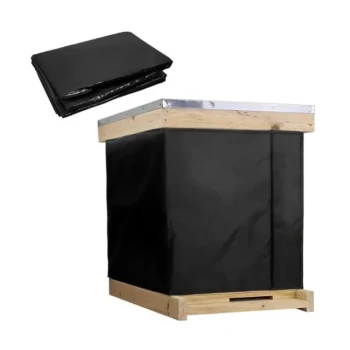
Foam plastic dividers and cotton insulation pads function primarily as a high-efficiency thermal resistance barrier. When installed on the sides and top of a wooden beehive, respectively, these materials work in tandem to retain internal heat and dampen the shock of rapid external temperature changes. Crucially, they simultaneously facilitate minimal gas exchange to prevent moisture buildup, ensuring a dry and stable microclimate for the colony.
While thermal retention is the obvious benefit, the critical mechanical function is the creation of a stable microclimate that balances heat with dryness. This stability minimizes the metabolic energy bees must expend to survive, directly lowering winter mortality rates.
The Mechanics of Thermal Regulation
Creating a Thermal Barrier
The primary mechanical function of these materials is to isolate the colony from the harsh exterior environment. Foam plastic dividers on the sides and cotton pads on top act as a high-performance shield. This barrier significantly reduces the rate at which heat escapes from the hive interior.
Dampening Temperature Fluctuations
External temperatures can swing wildly during winter months, stressing the colony. The insulation system functions as a buffer that dampens these rapid changes. By slowing the rate of temperature transfer, the hive maintains a more consistent internal environment regardless of outside spikes or drops.
Energy Conservation for the Colony
The mechanical retention of heat has a direct biological impact. When the internal temperature is stable, bees are not forced to consume excessive honey stores to generate body heat. This conservation of energy is vital for keeping the cluster alive until spring.
Moisture Management and Gas Exchange
Facilitating Minimal Gas Exchange
Insulation must not hermetically seal the hive. The mechanical structure of the foam and cotton combination allows for minimal, controlled gas exchange. This "breathing" capability is essential for allowing stale air to escape without venting precious heat.
Preventing Condensation
A major threat to overwintering bees is the accumulation of moisture, which creates freezing conditions inside the box. By regulating gas exchange, these materials prevent excessive moisture condensation. This ensures the bees remain dry, which is just as critical for survival as staying warm.
Understanding the Trade-offs
The Balance Between Heat and Humidity
The most common pitfall in overwintering is prioritizing heat retention to the point of suffocating the hive. If the insulation materials are impermeable or installed too tightly, they eliminate the necessary gas exchange.
The Risk of Trapped Moisture
Without the minimal gas exchange provided by the cotton and foam arrangement, moisture from the bees' respiration will get trapped. This leads to a damp environment that creates mold and freezes the colony. The mechanical function relies on the materials being permeable enough to vent moisture while dense enough to stop drafts.
Optimizing Your Overwintering Strategy
To apply these principles effectively, you must assess your specific environmental challenges.
- If your primary focus is extreme cold: Prioritize the thickness of the foam dividers to maximize the thermal resistance barrier and reduce caloric burn.
- If your primary focus is high humidity: Ensure your cotton top insulation is breathable and not compressed, maximizing its ability to facilitate gas exchange and prevent condensation.
Success lies in using these materials not just to trap heat, but to engineer a dry, stable environment where the colony can conserve energy.
Summary Table:
| Component | Primary Mechanical Function | Key Benefit for Colony |
|---|---|---|
| Foam Plastic Dividers | High-efficiency thermal resistance barrier | Reduces caloric burn by retaining internal hive heat |
| Cotton Insulation Pads | Regulated gas exchange & top insulation | Prevents moisture buildup and lethal condensation |
| Combined System | Temperature fluctuation dampening | Maintains a stable microclimate regardless of external weather |
Maximize Your Colony’s Survival with HONESTBEE
Protect your investment and ensure your bees thrive through the harshest winters. HONESTBEE specializes in supporting commercial apiaries and distributors with high-performance beekeeping solutions. From essential consumables like insulation materials to advanced hive-making machinery and specialized hardware, we provide the full spectrum of tools needed for professional success.
Why partner with HONESTBEE?
- Wholesale Excellence: Comprehensive inventory tailored for large-scale operations.
- Industry Expertise: Quality equipment designed to optimize hive microclimates and colony health.
- Complete Support: We supply everything from honey-filling machines to honey-themed cultural merchandise.
Ready to upgrade your commercial beekeeping equipment? Contact us today to discuss your wholesale needs!
References
- M. A. Mollaev, Z. Kh. Gemyeva. SOME FEATURES OF WINTERING OF CARPATHIAN AND GRAY MOUNTAIN CAUCASIAN BREEDS OF BEES ON THE TERRITORY OF KABARDINO-BALKARIA. DOI: 10.18470/1992-1098-2013-3-133-136
This article is also based on technical information from HonestBee Knowledge Base .
Related Products
- Professional Insulated Plastic Bee Hives
- Professional Insulated Winter Hive Wrap for Beekeeping
- Beehive Entrance Discs Plastic Bee Entrance Disc for Bee Hives
- Inner Beehive Cover for Beekeeping Bee Hive Inner Cover
- Assembled Wooden Bee Frames with Plastic Foundation for Durability and Convenience by HONESTBEE
People Also Ask
- What are the advantages of plastic bee hives? Boost Efficiency & Durability for Your Apiary
- Are plastic bee hives any good? Unlock Durability & Efficiency for Your Apiary
- How do plastic bee hives compare to wooden hives in handling? Reduce Strain & Boost Efficiency
- Are plastic bee hives good? Durable, Low-Maintenance Hives for Modern Apiaries
- What are the disadvantages of plastic beehives? Key Operational and Environmental Risks Exposed