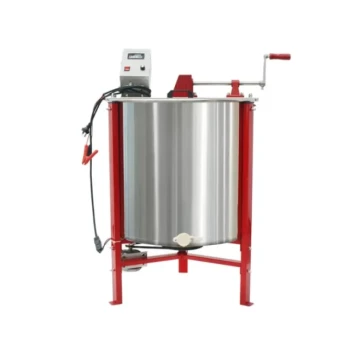
The primary function of industrial-grade high-speed stirring is to achieve homogenization, specifically for creating products with uniform consistency like creamed honey. While mixers operating at speeds up to 1000 rpm effectively standardize texture, this mechanical intensity introduces significant shear forces and frictional heat that can degrade the honey's biological quality.
Core Takeaway Achieving the smooth texture of creamed honey through high-speed mechanical stirring often comes at a steep biological cost. The process creates friction and heat that can reduce vital Invertase enzyme activity by approximately 54.7%, forcing producers to carefully balance physical uniformity against the preservation of active substances.
The Role of High-Speed Homogenization
Achieving Uniform Consistency
In an industrial setting, consistency is the primary driver for using high-speed equipment. Mixers running at speeds reaching 1000 rpm are utilized to thoroughly blend the honey.
Production of Creamed Honey
This equipment is particularly essential for the production of creamed honey. The high-speed action breaks down crystals and ensures a smooth, spreadable texture that manual processing cannot replicate at scale.
The Biological Impact of Mechanical Processing
Reduction in Enzyme Activity
The most significant downside of high-speed stirring is the degradation of biological active substances. Data indicates that this process can cause Invertase activity to drop by an average of approximately 54.7 percent.
The Mechanism of Damage
The loss of enzymatic activity is not caused by the stirring motion alone, but by the byproducts of that speed. High-velocity mixing generates intense shear forces and frictional heat within the honey matrix.
Heat Generation
Even without external heating sources, the friction from the blades moving at 1000 rpm warms the honey. Since honey enzymes are heat-sensitive, this internal temperature rise directly contributes to the reduction of Invertase.
Understanding the Trade-offs
Texture vs. Bio-activity
Producers face a distinct trade-off when employing this technology. High speeds guarantee the attractive, uniform physical appearance consumers expect from commercial creamed honey. However, this directly compromises the chemical profile that defines high-quality raw honey.
The Risk of Over-Processing
Optimizing processing techniques is critical to avoid "dead" honey. If the equipment is run without precise controls, the manufacturer risks creating a product that is visually perfect but biologically inferior due to excessive enzyme loss.
Making the Right Choice for Your Goal
To maximize the value of your processing line, you must define your priority between physical texture and biological integrity.
- If your primary focus is Commercial Uniformity: Utilize high-speed mixers (1000 rpm) to ensure a perfectly smooth, marketable creamed texture, acknowledging the trade-off in enzyme levels.
- If your primary focus is Biological Preservation: Lower the mixing speed or implement cooling protocols to minimize frictional heat and retain higher levels of Invertase activity.
Success in industrial honey processing lies in finding the precise operational threshold where physical consistency meets biological preservation.
Summary Table:
| Feature | Impact of High-Speed Stirring (1000 RPM) | Biological Consequence |
|---|---|---|
| Texture | Achieve complete homogenization and smooth creamed honey | Enhanced marketability and consistency |
| Enzyme Activity | Invertase activity reduced by ~54.7% | Loss of honey's biological value |
| Heat Source | Intense frictional heat and shear forces | Thermal degradation of active substances |
| Operational Goal | Commercial uniformity and scale | Risk of creating biologically "dead" honey |
Elevate Your Honey Production with HONESTBEE
At HONESTBEE, we understand the delicate balance between industrial efficiency and biological preservation. As a leading supplier to commercial apiaries and distributors, we provide a comprehensive range of beekeeping machinery—from advanced honey-filling systems to precision mixing equipment designed for optimal results.
Whether you are scaling your creamed honey production or seeking to preserve vital Invertase levels, our wholesale tools and specialized hardware offer the control you need. Maximize your product value today.
Contact our experts for tailored equipment solutions
References
- O. V. Serebryakova, T M Rusakova. Improvements in monofloral honey quality control. DOI: 10.1088/1755-1315/624/1/012149
This article is also based on technical information from HonestBee Knowledge Base .
Related Products
- Double Wall Honey Heating Stirring Homogenizer Mixing Machine with Various Capacity
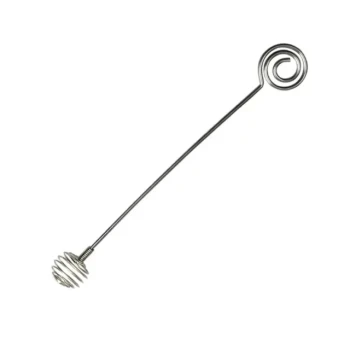
- Modern Stainless Steel Honey Dipper Stirrer
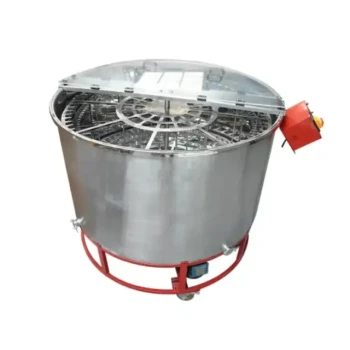
- Economy Honey Homogenizer Mixer and Melting Machine for Beekeeping
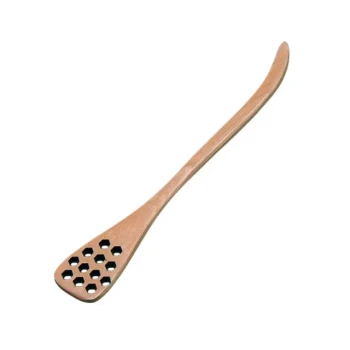
- Modern Honeycomb Pattern Wooden Honey Dipper for Stirring and Drizzling
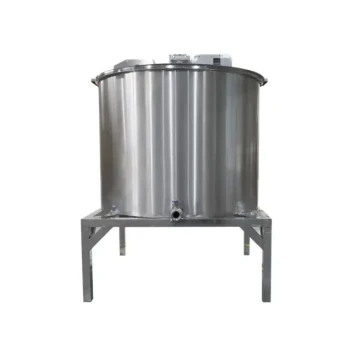
- Heavy Duty Stainless Steel Honey Processing Machine Decrystallizing Tank
People Also Ask
- What impact do homogenizers or oscillating equipment have on honey microbial detection? Ensure Testing Accuracy
- Why is thorough mechanical stirring and homogenization emphasized in honey processing? Ensure Sample Accuracy
- How do heating equipment and homogenizers liquefy crystallized honey? Expert Guide to Professional Honey Processing
- How does the honey mixer handle different types of honey? Master Viscosity for Perfect Blends
- What are the main components of the honey mixer? Engineered for Gentle, Efficient Honey Processing