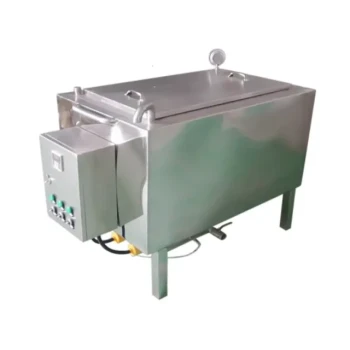
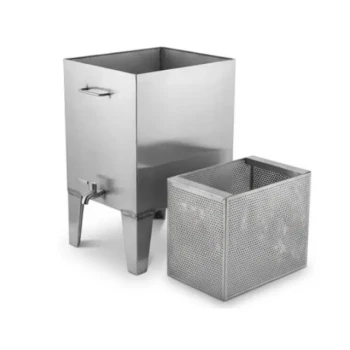
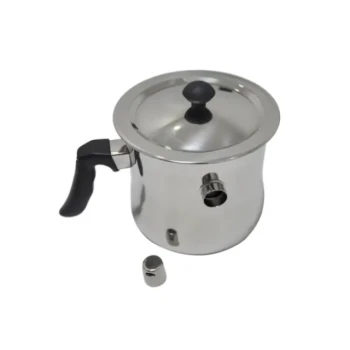
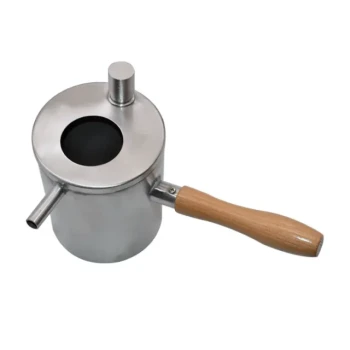
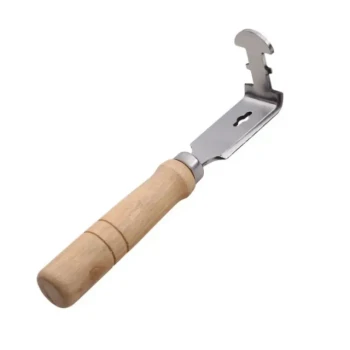
Refining and purification equipment serves the critical function of transforming raw, contaminated hive byproducts into high-value commercial material. Through a combination of precise heating, melting, and multi-stage filtration, this machinery removes impurities, pigments, and biological residues to produce high-purity beeswax suitable for specialized applications.
The core value of this equipment lies in its ability to convert raw wax (cera cruda) into fine wax (cera fina) through strictly controlled thermodynamic conditions. It ensures the removal of physical contaminants without triggering oxidative degradation, preserving the wax's natural properties for use in high-end cosmetics, pharmaceuticals, and industrial manufacturing.
The Mechanics of Purification
Controlled Thermodynamic Processing
The primary mechanism involves constant-temperature heating to melt the beeswax. This is not a simple melting process; it requires precise regulation.
Equipment is often calibrated to maintain water temperatures between 65 and 70 degrees Celsius. This specific range allows the wax to melt fully and separate from the honeycomb structure.
Crucially, this temperature control prevents overheating. Excessive heat causes oxidative degradation, which would compromise the chemical stability and economic value of the wax.
Multi-Stage Filtration and Separation
Once melted, the wax undergoes multi-stage filtration. This step is designed to mechanically separate physical contaminants from the liquid wax.
The system targets specific debris, including cocoons, bee parts, and colony residues. More advanced setups may also use pressure to assist in this separation.
Beyond solids, the process also handles pigment removal. This results in a decolorized, clean product required for applications where visual purity is essential, such as in white cosmetic creams or medical polishes.
Strategic Value of Refined Wax
Meeting High-End Market Standards
Raw wax is generally considered a low-value waste product. Refining equipment upgrades this material to meet strict export and industrial standards.
The resulting high-purity blocks are suitable for sensitive applications, including food-grade packaging, waterproof cosmetics, and high-end candles.
Preservation of Bio-Active Properties
A key function of high-quality refining equipment is the preservation of the wax's inherent biological characteristics.
The process is designed to retain the wax's natural antibacterial activity and film-forming properties.
By avoiding thermal damage during processing, the equipment ensures the final product retains the specific physical and chemical traits required for medical polishes and pharmaceutical binders.
Understanding the Trade-offs
The Risk of Thermal Degradation
While heat is the engine of purification, it is also its greatest threat. If the equipment fails to maintain the tight 65-70°C window, the wax can suffer from oxidative stress.
Overheated wax loses its natural biological benefits and can become brittle or discolored. The equipment must balance the heat required for flow with the coolness required for preservation.
Complexity vs. Throughput
Achieving "fine wax" (cera fina) requires a more complex, slower process than simple melting.
Multi-stage filtration introduces potential bottlenecks. Operators must balance the need for extreme purity—removing microscopic pigments—against the speed of processing bulk raw materials.
Making the Right Choice for Your Goal
To select the right refining approach, assess your end-product requirements:
- If your primary focus is Pharmaceutical or Cosmetic Applications: Prioritize equipment with precise temperature modulation (65-70°C) to preserve antibacterial activity and prevent oxidation.
- If your primary focus is Industrial or Candle Manufacturing: Focus on equipment with robust multi-stage filtration capable of efficiently removing pigments and physical debris for a visually clean product.
Successful beeswax processing relies on technology that cleans the material aggressively while handling its chemical structure gently.
Summary Table:
| Feature | Function | Benefit |
|---|---|---|
| Thermodynamic Control | Maintains 65-70°C melting range | Prevents oxidative degradation & preserves chemical stability |
| Multi-Stage Filtration | Removes cocoons, bee parts, and debris | Produces a clean, high-purity product (Cera Fina) |
| Pigment Removal | Decolorizes the liquid wax | Meets visual standards for white cosmetics and medical polishes |
| Bio-Active Preservation | Retains natural antibacterial properties | Ensures wax is suitable for pharmaceutical and food-grade use |
Elevate Your Wax Production with HONESTBEE
Transform low-value hive byproducts into premium, export-grade beeswax with HONESTBEE. As a leading provider for commercial apiaries and distributors, we offer a comprehensive wholesale range of beekeeping machinery—from precision refining and honey-filling equipment to specialized hive-making machines.
Whether you are supplying the cosmetics industry or the pharmaceutical sector, our tools are designed to maximize purity while preserving the essential biological properties of your wax. HONESTBEE supports your growth with reliable hardware and essential industry consumables tailored for professional scale operations.
Ready to upgrade your processing capabilities? Contact us today to explore our full machinery portfolio!
References
- Biodiversity and Challenges of Honey Bee Population in Pakistan. DOI: 10.47262/sl/12.1.132023950
This article is also based on technical information from HonestBee Knowledge Base .
Related Products
- Beeswax Machine Press Embosser Wax Foundation Mold Printer Bee Hive Equipment Making Sheet
- Electric Flatting and Embossing Machine with Tray for Beekeeping
- Fully Automatic Beeswax Embossing Machine Foundation Mill
- Manual Beeswax Flat Sheet Machine for Beeswax Processing
- Electric Beeswax Flat Sheet Machine with Operating Tray for Wax Processing
People Also Ask
- What equipment is needed to make beeswax foundation? A Guide to DIY Wax Sheet Production
- What miscellaneous equipment is needed for making foundation? A Guide to the Essential Tools
- What miscellaneous equipment is useful when making beeswax foundation? Essential Support Tools for Beekeepers
- What specific equipment is required for making beeswax foundation? Essential Tools for High-Quality Production
- What is the recommended temperature for melting beeswax to make foundation sheets? Master the 70°C-80°C Ideal Range