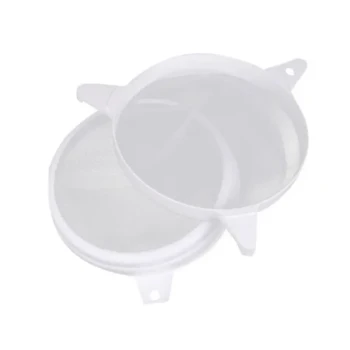
Honey purification equipment functions as the critical technical bridge between raw agricultural extraction and consumer-ready food products. Its primary objective is to systematically remove physical contaminants—specifically wax debris, bee parts, and excess pollen—through controlled filtration and sedimentation mechanisms. This ensures the final product meets the rigorous purity and aesthetic standards required for commercial distribution.
The core value of purification lies in enhancing clarity and marketability while preserving the honey's essence. By removing impurities and crystallization nuclei, producers transform a raw variable input into a stable, high-value commodity suitable for premium retail channels.
Achieving Physical Refinement
Elimination of Contaminants
Raw honey harvested directly from the hive naturally contains unwanted particulates. Purification equipment utilizes multi-stage precision filtration to mechanically separate wax debris, larval fragments, and other solids introduced during harvesting. This is the baseline requirement for food safety and hygiene.
Enhancing Sensory Quality
Consumers associate high-quality honey with visual purity. By removing suspended particles, purification systems significantly improve the transparency and clarity of the honey. This aesthetic upgrade is essential for products intended for high-end markets where visual appeal drives purchasing decisions.
Preserving Nutritional Integrity
Advanced purification systems are designed to refine the product without degrading it. The goal is to achieve clarity while maintaining the honey's natural flavor profile and nutritional content. Proper calibration ensures that while debris is removed, the essential characteristics that define the honey's variety remain intact.
Commercial Viability and Stability
Increasing Shelf-Life Stability
Beyond visible debris, purification equipment targets microscopic elements like crystallization nuclei. By filtering out excess pollen and fine impurities, the equipment delays the natural crystallization process. This results in a product that remains liquid and shelf-stable for longer periods, a key requirement for supermarket retail chains.
Meeting Industry Standards
Commercial supply chains demand consistency that raw honey cannot provide on its own. Purification transforms honey from a raw agricultural product into a refined food item. This standardization is necessary to comply with strict food safety regulations and to secure placement in professional retail channels.
Understanding the Trade-offs
While purification is vital for commercial scale, it presents a delicate technical balance. Aggressive filtration improves clarity but risks removing too much pollen, which is often used to verify the honey's botanical and geographical origin.
Furthermore, traditional processing for certain specialty "raw" honeys intentionally avoids fine filtration. Operators must understand that while purification increases mass-market value, excessive processing can strip the product of specific bioactive toxins and properties sought after by niche health markets.
Making the Right Choice for Your Goal
Selecting the intensity of your purification process depends entirely on your target consumer and distribution channel.
- If your primary focus is Mass Retail Distribution: Prioritize fine filtration to maximize clarity and delay crystallization, ensuring the product looks consistent on the shelf for months.
- If your primary focus is Artisan or "Raw" Markets: Utilize coarse filtration (sedimentation) to remove only macro-debris (wax/bee parts) while retaining pollen and bioactives to validate the "raw" label.
Ultimately, successful honey processing is not just about cleaning the product, but about tuning the refinement level to match market expectations.
Summary Table:
| Objective | Key Mechanism | Primary Benefit |
|---|---|---|
| Physical Refinement | Multi-stage precision filtration | Removes wax, debris, and bee parts for food safety. |
| Sensory Enhancement | Particle separation | Increases transparency and visual appeal for premium retail. |
| Shelf-Life Stability | Nuclei removal | Delays crystallization, keeping honey liquid on shelves longer. |
| Market Standardization | Controlled processing | Ensures compliance with food safety and retail supply chain standards. |
| Preservation | Calibrated filtration | Maintains natural flavor and nutritional integrity while refining. |
Elevate Your Honey Production with HONESTBEE Solutions
Transition from raw extraction to premium retail excellence with HONESTBEE. As a dedicated partner to commercial apiaries and distributors, we provide the specialized machinery needed to master the honey purification process.
Our Value to You:
- Comprehensive Wholesale Catalog: Access a full spectrum of beekeeping tools, from hive-making to honey-filling machines.
- Precision Engineering: Our equipment is designed to balance clarity and purity while preserving the honey’s natural essence.
- Scalable Machinery: We supply everything from essential consumables to advanced processing hardware tailored for industrial growth.
Whether you are scaling a commercial apiary or expanding your distribution network, HONESTBEE offers the technical expertise and high-performance equipment to drive your success.
Contact HONESTBEE Today to Discuss Your Equipment Needs
References
- K. Beula, A Anandhy. A Study on Honey Production and Marketing by the Marthandam Beekeepers’ Co-Operative Society in Kanniyakumari District. DOI: 10.34293/economics.v8i2.1632
This article is also based on technical information from HonestBee Knowledge Base .
Related Products
- Electric Double Wall Honey Filtering Machine Purifier Equipment for Honey Processing Plant
- Professional Stainless Steel Honey Filtering Machine with Water Bath Heating for Beekeeping
- 0.5T Capacity Honey Dehumidifier Dryer with Vacuum Heating and Thickening Filtering Machine
- Honey Concentrating and Filtering Dehumidifier Machine 2T Capacity for Honey
- High Quality Honey Dehumidifier Dryer Thickening Machine for Beekeeping
People Also Ask
- What is the process of filtering honey? A Guide to Clean, Pure, and Market-Ready Honey
- What types of equipment are used in honey filtering? Build an Efficient System for Pure, Marketable Honey
- What is the overall importance of using the right equipment in honey filtering? Boost Quality & Marketability
- What role do professional honey harvesting and filtering equipment play in meeting honey market quality standards? Boost ROI
- How should honey filtering equipment be properly maintained? Extend Equipment Life & Protect Honey Purity