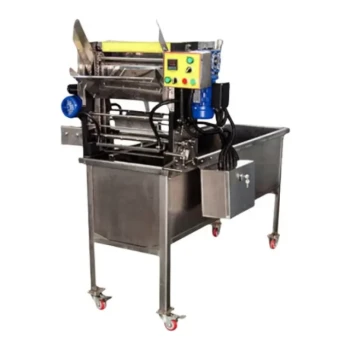
Automated honey-filling machines fundamentally transform the processing workflow by utilizing precise liquid level sensing and sealing technologies to achieve aseptic, high-efficiency transfer from bulk storage to retail packaging. Beyond simple speed, these systems eliminate the inconsistencies of manual labor, preventing secondary contamination while ensuring the natural flavor profile and net weight of the final product remain strictly consistent.
Core Takeaway: The strategic value of automation lies in replacing variable manual processes with a standardized, closed-loop system. This transition is the critical technological foundation required to scale from artisanal production to high-volume, export-grade commercial operations.
Elevating Hygiene and Product Safety
Preventing Secondary Contamination
Manual honey handling is the primary vector for introducing bacteria or foreign particles into the product. Automated machines utilize closed production environments and aseptic transfer methods.
This "enclosed operation" significantly drastically reduces the risk of microbial contamination. It ensures that the product remains hygienic from the storage tank to the final seal.
Preserving Natural Flavor Profiles
Honey is a sensitive product that can degrade with excessive handling or exposure. By streamlining the filling process, automation ensures the natural flavor profile is preserved.
The technology minimizes the time honey spends in transition. This retains the sensory qualities that are often lost during slower, more invasive manual packaging methods.
Maximizing Production Efficiency
Handling Seasonal Surges
Honey production is inherently seasonal, often requiring rapid processing windows. Industrial-grade filling machines significantly increase packaging efficiency and throughput.
This allows apiaries to manage large-volume orders during peak harvest times without the bottlenecks associated with manual labor.
Reducing Labor Dependencies
Manual filling is labor-intensive and prone to human error. Automation reduces long-term labor energy requirements and costs.
By mechanically handling the metering and sealing, producers can reallocate human resources to other critical areas of the business, such as quality control or logistics.
Precision and Market Standardization
High-Precision Volumetric Control
Consistency is key to profitability. Automated machines offer precise metering control to ensure every unit meets commercial net weight standards.
This precision minimizes raw material loss and waste. It ensures you are not overfilling containers, which directly impacts the bottom line over thousands of units.
Meeting Premium and Export Requirements
To enter premium or international markets, products must meet rigorous standardization criteria. Automation guarantees high consistency in filling volumes and aesthetic presentation.
This level of specification standardization is essential for export markets. It creates a professional, uniform product capable of competing with global brands.
Unlocking Retail Value
Automation facilitates the conversion of low-margin bulk honey into high-value retail formats, such as 0.33kg or 0.5kg units.
By efficiently packaging into smaller, consumer-ready sizes, producers can capture higher unit price premiums compared to bulk wholesale trade.
Understanding the Trade-offs
The Necessity of Volume
While automation offers speed, it is most effective when throughput is high. The transition to industrial-grade equipment implies a move toward large-scale operations.
For extremely small, boutique apiaries, the capacity of these machines may exceed production supply, making the investment difficult to justify solely on efficiency grounds.
Operational Complexity
Moving from manual methods to "specialized equipment" introduces a new layer of technical requirements.
Operators must maintain these complex systems to ensure the precise liquid level sensing and sealing technologies continue to function correctly. The focus shifts from manual skill to machine maintenance and calibration.
Making the Right Choice for Your Goal
To determine if automated filling is the right step for your workflow, consider your specific market objectives:
- If your primary focus is Export and Safety: Automation is non-negotiable for ensuring the aseptic conditions and standardized packaging required to meet international quality regulations.
- If your primary focus is Profit Margins: Use automation to convert bulk raw honey into smaller retail units, minimizing waste and capturing the price premium of consumer-packaged goods.
Automation is not merely a method of speeding up work; it is the mechanism that stabilizes your product quality to enable commercial growth.
Summary Table:
| Key Advantage | Impact on Production | Business Benefit |
|---|---|---|
| Hygiene & Safety | Closed-loop aseptic transfer | Eliminates contamination & meets health standards |
| Filling Precision | Volumetric metering control | Minimizes product waste & ensures net weight accuracy |
| Labor Efficiency | High-throughput automation | Reduces manual labor dependency & scales for peak seasons |
| Market Value | Retail-ready packaging (0.33kg/0.5kg) | Captures higher margins compared to bulk wholesale |
| Consistency | Standardized sealing & presentation | Essential for premium branding and international export |
Scale Your Honey Production with HONESTBEE
Transitioning from manual labor to automation is the definitive step toward high-volume, export-grade success. At HONESTBEE, we empower commercial apiaries and distributors with the specialized machinery needed to thrive in the global market.
From high-precision honey-filling machines to advanced hive-making hardware and essential industry consumables, our comprehensive wholesale portfolio is designed to enhance your operational efficiency and product value. Whether you are looking to optimize your processing facility or expand your retail reach, we provide the industrial-grade tools to make it happen.
Ready to upgrade your workflow? Contact our experts today to find the perfect equipment solution for your business.
References
- Beekeeping In The Mediterranean, From Antiquity To The Present. DOI: 10.1080/0005772x.2014.11417596
This article is also based on technical information from HonestBee Knowledge Base .
Related Products
- Fully Automatic Honey Filling Packaging Machine for Processing Line
- Automatic Honey Filling and Filtering Machine for Beekeeping Bottle Filling
- Precision Durable Efficient HONESTBEE Rotary Honey Filling Machine
- Semi Automatic Small Honey Bottle Filling Machine Honey Filler
- Precision Automated Packaging Turntable Honey Spoon Filling Sealing Packing Machine
People Also Ask
- Why are fully automatic honey filling and packaging lines essential? Boost Your Honey's Market Value and Quality
- What is a fully-automatic honey filler? Streamline Your Production with High-Precision Automation
- How do automated honey filling and packaging machines affect profitability? Boost Margins with HONESTBEE Technology
- How do automated honey filling and packaging machines contribute to the market value of honey products? Maximize Your ROI
- How do industrial-grade automated honey filling and packaging machines mitigate the risk of physical contamination?