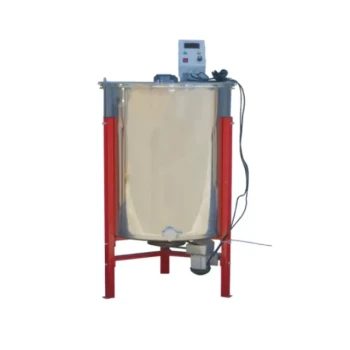
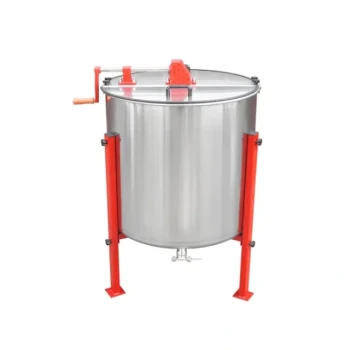
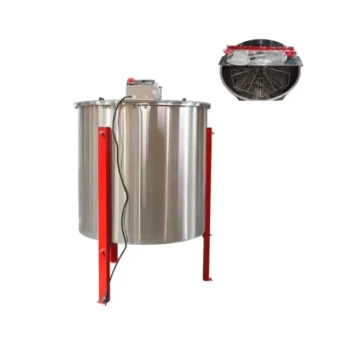
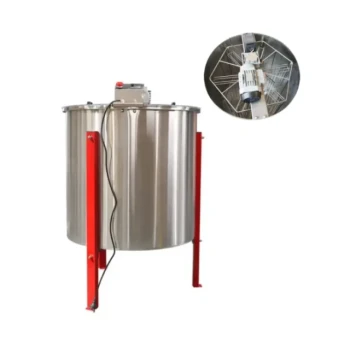
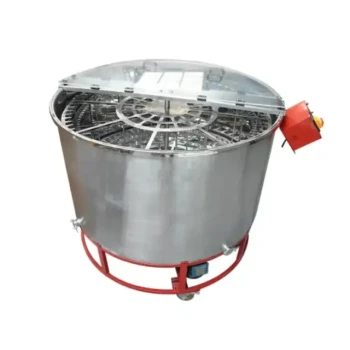
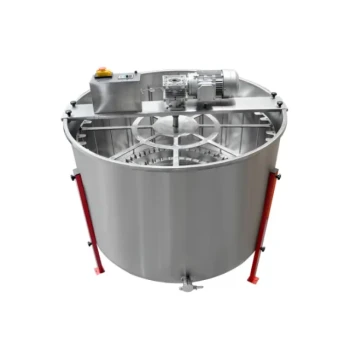
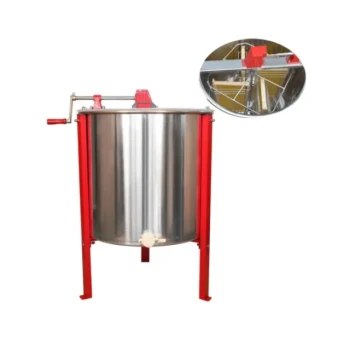
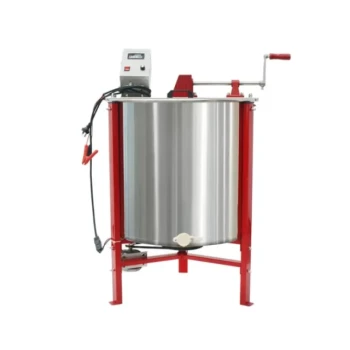
The primary technical advantage of a centrifugal honey extractor is its ability to separate liquid honey from the frame without destroying the physical structure of the honeycomb. Unlike manual squeezing methods, which require crushing the wax cells to release their contents, centrifugal extraction uses high-speed rotational force to eject the honey while leaving the comb intact for immediate reuse.
Core Insight: The value of a centrifugal extractor extends beyond simple harvesting speed; it functions as a resource conservation tool. By preserving the drawn comb, you eliminate the bees' need to secrete new wax, shifting their energy expenditure from infrastructure rebuilding to pure honey production.
Preserving Hive Infrastructure
Non-Destructive Extraction
Manual squeezing inherently destroys the honeycomb, reducing it to a mash of wax and liquid. Centrifugal extractors utilize rotational force to pull honey out of the cells, leaving the delicate wax walls undamaged. This allows the physical frame to be returned to the hive in a "ready-to-fill" state.
The Energy Conservation Principle
Wax secretion is biologically expensive for a colony. Bees consume significant amounts of honey and energy to produce the wax scales needed to build comb. By recycling intact frames, you bypass this reconstruction phase entirely, allowing the colony to focus its resources immediately on foraging and nectar storage.
Shortened Production Cycles
Because the bees do not need to rebuild the comb, the turnaround time between harvest and the next honey flow is drastically reduced. This efficiency is critical for maximizing yield during short or intense blooming seasons.
Enhancing Quality and Hygiene
Superior Liquid-Solid Separation
Manual pressing inevitably introduces high levels of solid impurities, such as wax particles and debris, into the honey. Centrifugal extraction achieves high-efficiency separation, resulting in cleaner honey with greater clarity directly out of the extractor.
Improved Moisture Control
Mechanical extraction is particularly effective at separating mature honey from the comb. This helps prevent the accidental mixing of high-moisture, immature nectar into the final batch, which is a common risk with indiscriminate manual squeezing.
Reduction of Contamination
Modern mechanical extraction minimizes human contact with the honey. This automated process reduces the risk of introducing environmental pollutants or foreign debris that often occurs during the extensive handling required by manual pressing.
Understanding the Trade-offs
Oxidation and Air Contact
While centrifugal extraction offers superior physical purity, it does expose the honey to more air during the spinning process compared to pressing. The Trade-off: The pressing method minimizes air contact, which can better preserve oxygen-sensitive antibacterial components. If your specific goal is medical-grade honey where biochemical activity is the sole priority, the aeration from centrifugation is a technical factor to consider.
Making the Right Choice for Your Goal
To select the correct extraction method, you must weigh production volume against your specific biochemical requirements.
- If your primary focus is Production Efficiency and Volume: Use a centrifugal extractor, as preserving the comb significantly increases annual yield and reduces colony stress.
- If your primary focus is Visual Clarity: Use a centrifugal extractor, as it mechanically prevents wax debris from clouding the final product.
- If your primary focus is Medical-Grade Enzymatic Activity: Consider controlled pressing methods, as minimizing oxidation may be necessary to preserve specific oxygen-sensitive compounds.
By choosing centrifugal extraction, you are effectively investing in the long-term energy economy of your apiary.
Summary Table:
| Feature | Centrifugal Extraction | Manual Squeezing |
|---|---|---|
| Comb Condition | Intact & Reusable | Destroyed/Crushed |
| Energy Cost | Low (Bees reuse wax) | High (Bees must rebuild) |
| Honey Clarity | High (Superior separation) | Low (High wax debris) |
| Production Cycle | Fast Turnaround | Slow (Requires reconstruction) |
| Primary Benefit | Volume & Efficiency | Minimum Oxidation |
Elevate Your Apiary Efficiency with HONESTBEE
Transitioning from manual harvesting to professional-grade mechanical extraction is the key to scaling your production. HONESTBEE specializes in serving commercial apiaries and distributors with high-performance centrifugal extractors, honey-filling machines, and specialized hardware designed to protect your colony's energy and maximize your harvest.
Why partner with HONESTBEE?
- Comprehensive Wholesale Offering: From hive-making machinery to essential industry consumables.
- Technical Excellence: Our equipment ensures superior liquid-solid separation and non-destructive harvesting.
- Scalable Solutions: We cater to large-scale operations and global distributors seeking reliable, high-volume equipment.
Ready to transform your honey harvesting process? Contact us today to explore our full spectrum of beekeeping tools and machinery.
References
- Stephen Petersen. The History Of Beekeeping In Alaska. DOI: 10.1080/0005772x.2014.11417574
This article is also based on technical information from HonestBee Knowledge Base .
Related Products
- electric honey extractor honey centrifuge 3 frame honey extractor stainless steel honey frame extractor
- Manual Hand Crank 4 Frame Honey Extractor Centrifuge for Beekeeping
- Professional 4 Frame Self Reversing Electric Honey Extractor for Beekeeping
- 24 Frame Honey Extractor Commercial Radial Honey Frame Extraction Machine
- Electric 4 Frame Tangential Honey Extractor
People Also Ask
- What are the characteristics of electric honey extractors? Boost Your Apiary Efficiency with Automated Technology
- What are the disadvantages of using an electric honey extractor? Weighing Cost, Power, and Comb Safety
- What are the advantages of an electric honey extractor? Boost Efficiency and Scale Your Honey Production
- What are the technical advantages of electric honey extractors? Maximize Yield and Protect Your Bee Colony
- How does an electric honey extractor affect the quality of honey? Preserve Flavor & Purity with Precision Extraction