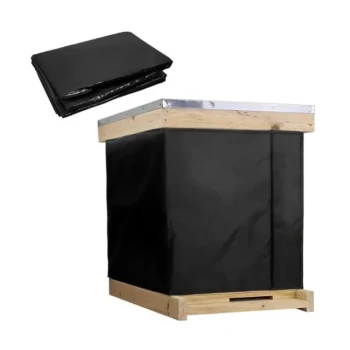
High-efficiency foam functions as a superior thermal barrier by utilizing extremely low thermal conductivity to drastically reduce heat transfer. This technical characteristic allows the material to decouple the hive's internal environment from external weather, maintaining internal temperatures significantly higher than ambient levels during severe winter conditions.
High-efficiency foam does not merely add warmth; it preserves the colony's metabolic energy by minimizing heat loss. This retention is essential for stabilizing the internal microclimate within the strict 30-36°C range required for biological viability.
The Physics of Thermal Regulation
Minimizing Thermal Conductivity
The core technical advantage of high-efficiency foam is its extremely low thermal conductivity. This physical property resists the flow of heat, effectively trapping thermal energy generated by the bees inside the structure.
By acting as a high-resistance barrier, the foam prevents the rapid dissipation of heat that typically occurs in standard wooden or uninsulated hives. This ensures that the energy the colony expends to generate warmth is not wasted.
Performance in Severe Winter Conditions
The value of high-efficiency foam is most pronounced under severe winter conditions. While standard materials may allow the internal temperature to track closely with dropping outside temperatures, foam insulation maintains a distinct differential.
Data indicates that foam-insulated setups sustain internal temperatures that are significantly higher than uninsulated counterparts. This provides a critical buffer against thermal shock during extreme cold snaps.
Biological Implications for the Colony
Maintaining the Vital Temperature Zone
Honeybee colonies operate within a narrow biological window. To ensure the health of the hive, the internal environment must be maintained at a constant 30-36°C.
High-efficiency foam makes achieving this stability physically possible with less energy input from the bees. It transforms the hive from a passive shelter into a thermally regulated enclosure.
Supporting Larval Development
The primary beneficiary of this thermal management is the brood. Healthy larval development is strictly dependent on maintaining that specific 30-36°C temperature range.
If the insulation fails to retain heat, the temperature drops below this threshold, halting development or killing the brood. Foam insulation ensures the consistency required for the colony to reproduce and grow, even when external conditions are hostile.
Understanding the Operational Differences
The Vulnerability of Uninsulated Setups
It is crucial to understand the comparative risk of foregoing high-efficiency insulation. The primary reference highlights that uninsulated setups fail to maintain the necessary temperature differential in winter.
In these scenarios, the colony must consume significantly more resources to combat heat loss. This increases metabolic stress on the bees and raises the risk of colony failure due to thermal stress.
The Necessity of the Thermal Barrier
Thermal management in beehives is not a linear curve; it is a binary requirement regarding brood health. You either sustain the 30-36°C window, or you do not.
High-efficiency foam provides the technical assurance needed to cross that threshold. It bridges the gap between the heat a colony can generate and the heat it retains.
Making the Right Choice for Your Colony
Selecting the correct insulation strategy is about matching the material's properties to the biological needs of the hive.
- If your primary focus is Winter Survival: Prioritize high-efficiency foam to utilize its low thermal conductivity, creating a barrier that withstands severe external cold.
- If your primary focus is Colony Growth: Focus on the material's ability to maintain the constant 30-36°C environment essential for uninterrupted larval development.
Effective thermal management turns the physics of insulation into a biological advantage, ensuring your colony thrives rather than just survives.
Summary Table:
| Feature | Technical Advantage | Impact on Bee Colony |
|---|---|---|
| Thermal Conductivity | Extremely low heat transfer rate | Traps metabolic heat inside the hive |
| Temperature Stability | Maintains 30-36°C microclimate | Essential for larval and brood development |
| Winter Performance | Decouples internal/external weather | Buffers against thermal shock and extreme cold |
| Energy Efficiency | Minimizes heat dissipation | Reduces bee metabolic stress and food consumption |
Elevate Your Beekeeping Operations with HONESTBEE
At HONESTBEE, we specialize in providing commercial apiaries and distributors with high-performance beekeeping solutions. Whether you need specialized hive-making machinery, high-efficiency insulation components, or industrial honey-filling machines, our comprehensive wholesale offering is designed to scale your success.
Our value to you:
- For Commercial Apiaries: Industrial-grade tools and consumables to ensure colony health and operational efficiency.
- For Distributors: A full spectrum of beekeeping hardware and honey-themed merchandise to expand your market reach.
Don't let thermal stress compromise your honey yield or colony growth. Contact HONESTBEE today to discover how our premium equipment and technical expertise can optimize your beekeeping business.
References
- B. Hemeida, AHAMED O. EL-ASHHAB. EFFECT OF THE INTERNAL SIZE AND THERMAL INSULATION OF THE HIVE ON BEE COLONIES STRINGTH AND PRODUCTIVITY. DOI: 10.21608/jssae.2015.41813
This article is also based on technical information from HonestBee Knowledge Base .
Related Products
- Professional Insulated Plastic Bee Hives
- Professional Insulated Winter Hive Wrap for Beekeeping
- Inner Beehive Cover for Beekeeping Bee Hive Inner Cover
- Styrofoam Mini Mating Nuc Box with Frames Feeder Styrofoam Bee Hives 3 Frame Nuc Box
- Stainless Steel Round Beehive Air Vents for Ventilation
People Also Ask
- What are the advantages of plastic bee hives? Boost Efficiency & Durability for Your Apiary
- Are plastic bee hives any good? Unlock Durability & Efficiency for Your Apiary
- How do plastic bee hives compare to wooden hives in handling? Reduce Strain & Boost Efficiency
- Are plastic bee hives good? Durable, Low-Maintenance Hives for Modern Apiaries
- What are the disadvantages of plastic beehives? Key Operational and Environmental Risks Exposed