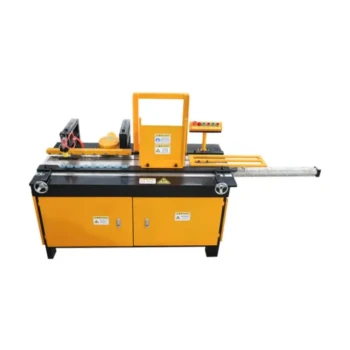
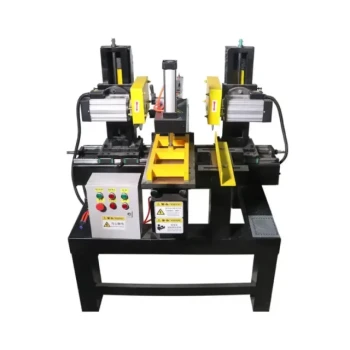
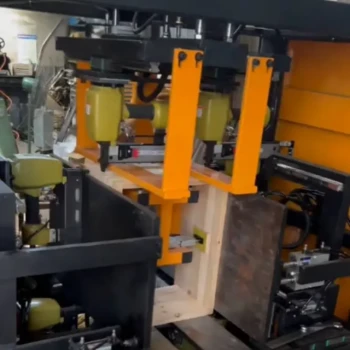
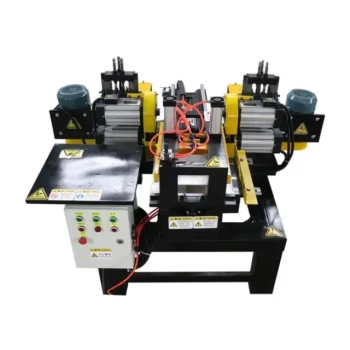
Industrial-grade hive-making machines represent the transition from craft to mass manufacturing in beekeeping. These systems utilize high-precision cutting and automated assembly to deliver a large-scale supply of structurally durable beehives. By standardizing production, they significantly reduce labor costs and serve as the core hardware foundation required for the rapid expansion of commercial apiaries.
Core Takeaway: The value of industrial hive-making machinery lies in standardization and precision. By ensuring every component is identical, these machines eliminate the inefficiencies of manual management, prevent biological issues caused by irregular dimensions, and enable the use of high-speed, automated extraction lines.
The Strategic Value of Standardization
Ensuring Component Interchangeability
For large-scale operations, the ability to swap parts between hives is non-negotiable. Industrial machinery produces components—frames, bottom boards, and covers—to exact dimensional standards.
This ensures that a frame from one hive fits perfectly into any other hive across thousands of colonies. This interchangeability streamlines logistics, as apiary managers do not need to match specific parts to specific boxes.
Streamlining Colony Management
Standardization directly impacts biological management, such as colony splitting and merging. When equipment is uniform, beekeepers can move resources (brood, honey, or pollen frames) between colonies instantly without physical obstruction.
This seamless compatibility allows operations to rapidly replenish colonies after annual losses, improving the resilience and continuity of the apiary.
Precision Engineering and Biological Health
Maintaining Critical "Bee Space"
The most vital technical benefit of machine-made hives is the accurate maintenance of bee space—the specific gap bees need to move freely. If this gap is too wide or too narrow due to manufacturing errors, bees will build "burr comb" or excess wax bridges.
Industrial machines hold tight tolerances that manual construction often misses. This prevents the buildup of unwanted wax, which simplifies inspections and reduces the time beekeepers spend cleaning frames.
Enhancing Durability and Disease Resistance
Automated assembly processes produce tighter joints and more structurally sound boxes than manual nailing. This durability extends the service life of the equipment, providing better protection for the colony during overwintering.
Furthermore, precise construction minimizes gaps where drafts or pests could enter. By providing a consistent, well-sealed environment, these hives help enhance the overall disease resistance and health of the bee population.
Operational Efficiency at Scale
Enabling Mechanized Extraction
Modern commercial beekeeping relies on automated processing lines for honey extraction. These lines require hives and frames that act as standardized "cartridges" for un-cappers and centrifuges.
Hives produced by industrial machines are compatible with standardized bottling and harvesting equipment. This compatibility eliminates jams or errors in the extraction line, significantly increasing processing speed and volume.
Facilitating Rapid Expansion
The primary reference highlights that these machines are the "core hardware foundation" for scaling up. Manual hive construction acts as a bottleneck during growth phases.
Automated machinery lowers the unit production cost and accelerates output. This allows commercial operations to deploy thousands of new hives quickly to exploit new forage areas or meet pollination contracts.
Understanding the Trade-offs
The Cost of Rigid Standardization
While standardization is a massive benefit, it creates a rigid infrastructure. Once an operation commits to a specific industrial dimension standard, deviating from it becomes difficult and costly.
Dependence on Capital Equipment
Transitioning to industrial hive manufacturing shifts the burden from skilled labor to capital maintenance. The operation relies heavily on the uptime of specialized woodworking and CNC molding equipment; if the machinery fails, the supply chain for new hardware halts immediately.
Making the Right Choice for Your Goal
Whether you are upgrading a mid-sized operation or managing an industrial apiary, your equipment choice dictates your workflow.
- If your primary focus is Rapid Expansion: Invest in industrial machinery to lower unit costs and remove hardware availability as a bottleneck for growth.
- If your primary focus is Operational Efficiency: Prioritize machine-made hives to ensure perfect compatibility with automated extraction lines and reduce labor during harvest.
- If your primary focus is Colony Health: Rely on the precision of industrial manufacturing to guarantee accurate "bee space," reducing burr comb and improving overwintering success.
Ultimately, industrial hive-making machines do not just build boxes; they enforce the precision required to turn beekeeping into a scalable, predictable industry.
Summary Table:
| Feature | Technical Benefit | Impact on Operation |
|---|---|---|
| Dimensional Precision | Guarantees exact "Bee Space" | Reduces burr comb and simplifies colony inspections |
| Standardization | Full component interchangeability | Streamlines logistics and rapid colony splitting |
| Structural Integrity | Tighter joints and automated assembly | Increases hive durability and overwintering success |
| Process Compatibility | Uniform frame and box dimensions | Enables high-speed automated honey extraction lines |
| Scalability | High-volume automated production | Removes hardware bottlenecks for rapid apiary expansion |
Elevate Your Commercial Operation with HONESTBEE
At HONESTBEE, we understand that for commercial apiaries and distributors, precision is the difference between profit and loss. We provide the industry's most comprehensive selection of industrial hive-making machines, honey-filling equipment, and specialized beekeeping tools designed to turn your craft into a scalable powerhouse.
Whether you are looking to source high-quality hardware for distribution or seeking to automate your own production line, our team delivers the expertise and machinery needed to optimize your workflow. From heavy-duty woodworking equipment to honey-themed cultural merchandise, we are your one-stop wholesale partner.
Ready to scale your production? Contact HONESTBEE Today to discuss our wholesale solutions and how our technology can drive your business forward.
References
- Tomas A. Bustamante, Mary Bammer. Keeping Bees in Florida. DOI: 10.32473/edis-aa264-2016
This article is also based on technical information from HonestBee Knowledge Base .
Related Products
- High-Efficiency Pneumatic Bee Hive Making Machine for Rapid Box Assembly
- Beehive Handle and Frame Rest Cutting Machine: Your Specialized Hive Machine
- Automatic Finger Joints Joint Making Machine for Bee Box and Hive Making
- Beehive Machine Double End Saw for Precision Hive Component Manufacturing
- Mini Desktop Bee Hive Frame Forming Making Machine
People Also Ask
- How does the introduction of professional beehive-making machinery benefit sustainable beekeeping? Scale Your Apiary
- Why is specialized beehive-making machinery critical for low-defense breeding? Enhance Selection with Precision Tools
- How does the introduction of specialized beehive making machinery contribute to increasing the scale of regional beekeeping industries?
- What is the importance of specialized beehive making machinery in a circular bio-economy? Build Local Sustainability
- Why is specialized beehive-making machinery essential? Scale Your Apiary with Precision Industrial Standards