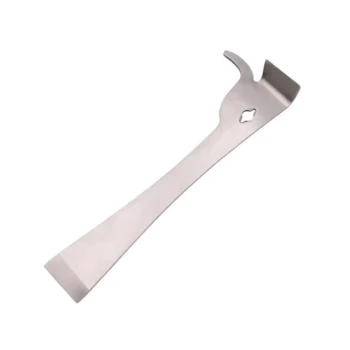
A hive tool is the beekeeper’s essential lever-and-scraper for opening, inspecting, and maintaining a hive. It breaks propolis seals, separates hive boxes and frames, lifts frames for inspection, and removes excess propolis, burr comb, wax, and debris. Used carefully, it improves inspection efficiency while helping protect hive components and reduce unnecessary disturbance to the colony.
A hive tool performs three core jobs: prying apart stuck hive components, lifting and positioning frames, and scraping away buildup. For routine apiary work, it is a basic maintenance tool rather than an optional accessory.
Why Hive Tools Are Essential During Inspections
Breaking Propolis Seals
Bees use propolis to seal gaps and secure hive components. Over time, this resin can bond covers, hive bodies, inner covers, and frames tightly together.
The hive tool provides controlled leverage to break these seals without forcing the components apart by hand or damaging the woodenware.
Separating Hive Boxes and Covers
A hive tool acts as a compact pry bar between hive boxes, honey supers, inner covers, and outer covers. This allows the beekeeper to open the hive even when propolis has created a strong bond.
Controlled prying is especially important during inspections because sudden or excessive force can damage box edges or disturb the colony.
Loosening Tight Frames
Frames often become fixed in place by propolis or burr comb along their edges and rests. The tool is used to loosen the frame before it is lifted from the brood chamber or honey super.
This creates enough working space to remove the frame with less risk of bending components, tearing comb, or crushing bees.
Lifting Frames for Inspection
Many hive tools include a hooked or specialized end that helps lift frame edges once they have been loosened. The beekeeper can then remove the frame for closer examination of brood, food stores, comb condition, and queen activity.
The tool should support careful handling rather than serve as a substitute for controlled manual movement.
How a Hive Tool Supports Hive Maintenance
Scraping Propolis from Hive Surfaces
Excess propolis can accumulate on frame top bars, hive walls, frame rests, and box edges. Scraping these surfaces keeps components accessible and makes future inspections easier.
Removing unnecessary buildup also helps hive parts fit together properly without excessive force.
Removing Burr Comb and Excess Wax
Bees may build unwanted burr comb between frames, beneath top bars, or along hive box surfaces. A hive tool can cut and scrape away this excess wax.
Removing burr comb helps preserve inspection space and reduces the chance of comb being torn when frames are separated.
Clearing Debris from the Hive
The scraper end can remove wax fragments, propolis deposits, and other accumulated debris from the bottom board and internal surfaces. Clean hive components support more orderly inspections and routine maintenance.
Scraping should be deliberate, since aggressive cleaning can damage comb or remove useful structures unnecessarily.
Supporting Honey Harvesting
During honey harvesting, frames and supers may be strongly secured by propolis. The hive tool provides the leverage needed to open these components and access the frames efficiently.
Its role is primarily mechanical: it separates and cleans the hive equipment so the beekeeper can handle the frames safely.
Using the Tool Without Unnecessary Disturbance
Apply Leverage Gradually
A hive tool should be used with steady, controlled pressure. Gradual movement reduces the likelihood of splitting wood, breaking frame parts, or suddenly collapsing components.
This approach also helps prevent bees from being crushed between tightly fitting hive parts.
Avoid Loud Snapping Movements
Hardened propolis can release suddenly when pried apart, creating sharp sounds and vibrations inside the hive. Sudden disturbances may agitate the colony.
Experienced operators work slowly and deliberately, using the tool to release resistance in stages.
Keep the Scraping Edge Clean
Propolis and wax can accumulate on the tool during use. Periodically clearing the edge helps maintain effective leverage and scraping performance.
For distributors and professional users, a durable, easy-to-clean tool is generally more practical for repeated apiary work.
Understanding the Trade-offs
Leverage Versus Component Damage
The rigid metal construction that makes a hive tool effective can also damage hive boxes or frames if excessive force is applied. The tool should loosen components, not force them beyond their natural movement.
A suitable design balances strength, edge durability, grip, and control.
Cleaning Versus Over-Manipulation
Scraping away excess buildup improves access and cleanliness, but removing too much wax or propolis can disrupt useful comb structure. Maintenance should focus on obstructions and unwanted accumulation.
The goal is a functional hive, not a completely stripped interior.
Versatility Versus Specialized Performance
A standard hive tool can pry, scrape, and lift, making it suitable for most routine inspections. However, different designs may prioritize scraping, frame lifting, grip comfort, or compact storage.
For wholesale and reseller portfolios, offering multiple practical designs can serve both general beekeepers and high-frequency professional users.
Durability Versus Handling Comfort
High-strength metal supports repeated prying and scraping, while a comfortable handle improves control during long inspections. A tool that is exceptionally rigid but difficult to grip may reduce practical usability.
Product selection should therefore consider both material strength and ergonomic handling.
Selecting Hive Tools for Apiary and Distribution Needs
For Routine Beekeeping
A general-purpose tool should provide reliable leverage, a durable scraping edge, and a design suitable for loosening and lifting frames. It should also be easy to clean after use.
For Professional Apiaries
High-frequency users benefit from robust construction, comfortable handling, and consistent performance across repeated inspections and harvest operations.
Availability and replacement supply are also important when tools are used across multiple apiaries or field teams.
For Wholesalers and Resellers
A strong product range can include standard hive tools, scraper-focused designs, hook-ended frame tools, and other inspection accessories. This supports one-stop sourcing for beekeepers who also require smokers, protective clothing, and hive-management equipment.
Reliable stock, rapid response, and efficient fulfillment are practical advantages when serving seasonal or time-sensitive demand.
Making the Right Choice for Your Goal
A hive tool should be selected according to the work it must perform and the frequency of use.
- If your primary focus is routine hive inspection: Choose a durable multi-purpose tool that can pry apart components, loosen frames, lift frame edges, and scrape buildup.
- If your primary focus is hive cleanliness: Prioritize a strong, sharp scraping edge for removing propolis, burr comb, wax, and debris.
- If your primary focus is professional apiary work: Select an ergonomic, high-strength tool designed for repeated use and easy cleaning.
- If your primary focus is wholesale or resale: Build a complementary range of hive tools and inspection accessories supported by dependable supply and fast order fulfillment.
The right hive tool improves inspection control, protects hive equipment, and makes routine colony management more efficient.
Summary Table:
| Function | Purpose | Benefit |
|---|---|---|
| Breaking Propolis Seals | Separate components bonded by propolis | Controlled opening without damage |
| Separating Boxes & Covers | Pry apart hive parts | Safe and easy access |
| Loosening & Lifting Frames | Release and lift frames for inspection | Efficient colony examination |
| Scraping Propolis & Burr Comb | Remove excess wax and resin | Cleaner equipment, easier future inspections |
| Clearing Debris | Remove wax fragments and dirt | Maintains hygiene and order |
| Supporting Harvest | Open supers and frames during extraction | Streamlined honey collection |
Equip your apiary with top-quality hive tools and beekeeping supplies from HONESTBEE. We offer a comprehensive range of hive tools for every need, from standard models to professional-grade designs. Partner with us for reliable sourcing, fast delivery, and dedicated support. Contact us today to discuss your requirements!
Related Products
- HONESTBEE Professional Long Handled Hive Tool with Precision Cutting Blade
- Professional Multi-Function Stainless Steel Hive Tool
- HONESTBEE Premium Italian Style Hive Tool with Hardwood Handle
- Ergonomic Plastic Frame Spacer Tool for Rapid Hive Management Beekeeping
- Professional Grade Foldable Beehive Handles
People Also Ask
- Why are professional hive tools considered indispensable? Master Beekeeping Maintenance with Precision Leverage
- What is the role of professional hive tools in routine apiary maintenance? Expert Tips for Hive Health and Longevity
- What is a bee hive tool? Discover Why It’s the Most Essential Hand Tool for Every Beekeeper
- How do hive tools and queen rearing equipment facilitate the bee colony splitting process? Restore Your Apiary Faster
- Why are professional hive tools & observation equipment necessary for queen rearing evaluation? Master Your Quality