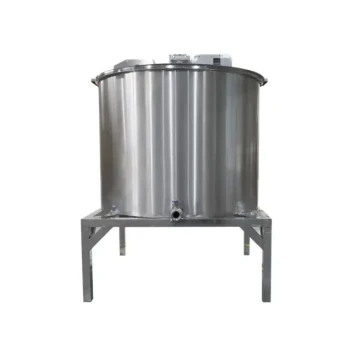
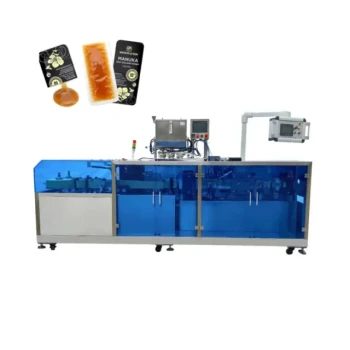
The introduction of automated equipment dramatically lowers labor costs per unit by mechanizing the most time-consuming stages of honey production. Specifically, automation replaces manual effort in extraction, filtering, and filling, allowing producers to handle large-scale volumes with greater speed and fewer personnel.
Core Takeaway While the immediate impact is a sharp reduction in per-unit labor expenses, automation effectively transforms variable labor costs into fixed asset efficiency. This shift is essential for achieving the high-volume, standardized production necessary to compete on price in international markets.
The Mechanics of Cost Reduction
Targeting Labor-Intensive Stages
Honey production contains several bottlenecks that traditionally require significant manpower. Automation primarily targets extraction, filtering, and filling. By replacing manual workers in these specific areas, producers can reallocate human resources to higher-value tasks.
Accelerating Production Velocity
Automated systems are designed to complete large-scale tasks much faster than human crews. High-speed packaging technology and industrial-grade filling lines significantly increase throughput. This rapid processing speed directly correlates to a lower labor cost per jar of honey produced.
Achieving Economies of Scale
To maintain price competitiveness, particularly in global markets, unit costs must be minimized. Automated equipment enables large-scale, standardized production that manual labor cannot sustain. This capability is often the deciding factor in overcoming low productivity barriers that limit market reach.
Indirect Financial Benefits
Reducing Secondary Contamination Risks
Manual handling during post-processing poses a significant risk of secondary contamination. Automated filling and processing equipment minimizes human contact with the product. This ensures the honey remains additive-free and pure, reducing financial losses associated with spoiled batches or recalls.
Ensuring Compliance and Standardization
International markets demand rigorous adherence to quality and hygiene standards. Automated systems enforce standardized processing workflows that manual labor struggles to replicate consistentl. Meeting these high-end commercial requirements opens up lucrative export markets that would otherwise be inaccessible.
Understanding the Trade-offs
Capital Expenditure vs. Operational Savings
While labor costs decrease, the financial burden shifts to upfront capital investment. Producers must weigh the immediate reduction in payroll against the cost of purchasing and maintaining industrial-grade machinery.
Maintenance and Skill Requirements
Moving to automation changes the nature of the labor required. While you need fewer manual laborers, the operation may require personnel skilled in managing high-precision filling controls and equipment maintenance.
Making the Right Choice for Your Goal
To determine if automation is the right strategic move for your apiary or distribution business, consider your specific end-goals:
- If your primary focus is cost leadership: Implement automation in the filling and packaging stages first to maximize volume and minimize per-unit costs for competitive pricing.
- If your primary focus is export market expansion: Prioritize automated systems that offer high-precision controls and traceability to meet strict international hygiene and organic standards.
Automation is not just a labor-saving tool; it is the infrastructure required for scalable, export-grade honey production.
Summary Table:
| Impact Category | Manual Production | Automated Production | Strategic Benefit |
|---|---|---|---|
| Labor Intensity | High (Extraction & Filling) | Minimal (Mechanized) | Lower per-unit labor expense |
| Production Speed | Limited by human pace | High-speed industrial output | Rapid scaling and throughput |
| Quality Control | Variable consistency | Standardized workflows | Reduced contamination & recalls |
| Cost Structure | Variable (High payroll) | Fixed (Equipment asset) | Improved long-term margins |
| Market Reach | Local/Small-scale | Global/Export-grade | Compliance with international standards |
Scale Your Honey Business with HONESTBEE Industry Solutions
Transitioning to automation is the key to transforming your apiary into a global competitor. HONESTBEE specializes in empowering commercial apiaries and distributors with the tools needed for high-volume, standardized success. We offer a comprehensive wholesale portfolio, including:
- High-Precision Machinery: Advanced honey-filling and hive-making machines designed for maximum throughput.
- Beekeeping Essentials: A full spectrum of professional tools, equipment, and industry consumables.
- Brand Growth: Unique honey-themed cultural merchandise to diversify your market appeal.
Ready to eliminate production bottlenecks and reduce your labor overhead? Let HONESTBEE provide the industrial-grade hardware and expertise your business deserves.
References
- Economic Effects of Introduction of Modern Technologies in Beekeeping. DOI: 10.35945/gb.2024.17.011
This article is also based on technical information from HonestBee Knowledge Base .
Related Products
- Fully Automatic Honey Filling Packaging Machine for Processing Line
- 32 Frame Commercial Electric Honey Extractor for Beekeeping and Honey Production
- Automatic Single-Dose Snap & Squeeze Honey Sachets Packing Machine
- Automatic Honey Filling and Filtering Machine for Beekeeping Bottle Filling
- Manual Honey Filling Machine Bottling Machine for Honey
People Also Ask
- Why are fully automatic honey filling and packaging lines essential? Boost Your Honey's Market Value and Quality
- What is a fully-automatic honey filler? Streamline Your Production with High-Precision Automation
- How do automated honey filling and packaging machines affect profitability? Boost Margins with HONESTBEE Technology
- How do automated honey filling and packaging machines contribute to the market value of honey products? Maximize Your ROI
- How do industrial-grade automated honey filling and packaging machines mitigate the risk of physical contamination?