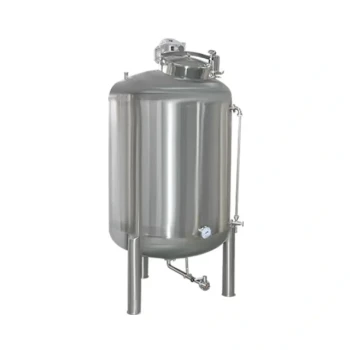
A specialized honey extraction unit, or "Honey House," serves as a dedicated facility designed to separate honey from hives within a controlled, hygienic environment. Its primary function is to mechanize the extraction process while acting as a critical physical barrier that safeguards honey quality against contamination and fermentation.
While mechanical extraction is the visible task, the true purpose of a Honey House is to standardize production under food safety protocols, enabling beekeepers to secure certifications required for formal market access.
The Pillars of Professional Honey Processing
Ensuring Food Safety and Hygiene
The Honey House provides the specific infrastructure necessary to meet strict food safety standards. By isolating the extraction process from the outside world, it prevents environmental contaminants from affecting the final product.
This "physical barrier" is essential for maintaining the biological stability of the honey. A controlled environment regulates humidity and temperature, which is critical for preventing the fermentation of the harvest.
Mechanization and Sustainability
These facilities utilize specialized honey extractors to separate honey from the comb, typically using centrifugal force. This mechanization increases processing speed significantly compared to manual methods.
Crucially, this equipment is designed to extract honey without damaging the wax comb structure. This allows beekeepers to return the intact combs to the hive, enabling bees to reuse them for future production rather than expending energy building new wax.
Market Access and Certification
Beyond physical extraction, the facility serves as a gateway to the formal economy. Large-scale retailers and export markets require proof of sanitary processing.
The physical infrastructure of a Honey House allows beekeepers to pass inspections and obtain necessary certifications. This validation transforms the product from a raw agricultural good into a certified commodity ready for commercial shelves.
Value-Added Processing
Advanced units often extend their capabilities beyond liquid honey to include wax processing. Specialized equipment for melting, filtering, and molding helps remove impurities from raw beeswax.
This allows operations to transform low-value byproducts into high-value items like cosmetic bases or pharmaceutical excipients. This diversification significantly increases the profit margins and economic resilience of the apiary.
Understanding the Operational Trade-offs
Capital Investment Requirements
Establishing a Honey House represents a significant upfront cost in construction and machinery. For small-scale or hobbyist beekeepers, the financial burden of building a facility that meets food safety codes may not be justified by their production volume.
Regulatory Maintenance
Once established, a Honey House creates an ongoing administrative burden. The facility demands rigorous cleaning schedules, maintenance logs, and periodic inspections to keep certifications valid.
Complexity of Equipment
Moving from manual to mechanized processing introduces technical complexity. Operators must be trained to handle extraction and wax processing machinery safely to avoid damaging the equipment or the harvest.
Making the Strategic Choice for Your Apiary
To determine the role a Honey House should play in your operation, consider your specific end goals:
- If your primary focus is entering formal markets: Invest in a facility that strictly adheres to local food safety codes to secure the certifications needed for retail distribution.
- If your primary focus is sustainability and yield: Prioritize extraction equipment that protects the comb structure, reducing the energy bees must expend on rebuilding wax.
- If your primary focus is revenue diversification: Incorporate wax processing capabilities to turn low-value hive scrapings into high-margin products like candles or balms.
A Honey House is not just a workspace; it is the bridge between amateur beekeeping and professional, certified food production.
Summary Table:
| Feature | Primary Function | Key Benefit |
|---|---|---|
| Hygienic Isolation | Creates a physical barrier against contaminants | Ensures food safety and prevents fermentation |
| Mechanization | Uses centrifugal honey extractors | Increases speed while preserving wax comb structure |
| Certification Support | Meets regulatory food safety standards | Enables access to retail and export markets |
| Value-Added Processing | Integrates wax melting and filtration | Diversifies revenue with beeswax byproducts |
Elevate Your Beekeeping Operation with HONESTBEE
Transitioning from amateur beekeeping to professional production requires the right infrastructure. HONESTBEE specializes in supporting commercial apiaries and distributors with a complete range of wholesale solutions. From state-of-the-art honey-filling machines and hive-making equipment to essential consumables and honey-themed cultural merchandise, we provide the tools you need to scale your business.
Why partner with HONESTBEE?
- Comprehensive Portfolio: Access a full spectrum of beekeeping machinery and specialized hardware.
- Market Readiness: Our equipment is designed to help you meet the rigorous food safety standards required for global market access.
- Expert Support: We understand the needs of large-scale operations and distributors.
Ready to optimize your Honey House and maximize your profit margins? Contact us today to explore our wholesale offerings!
References
- Alexsandra Batista Cândido Siqueira, Eulita de Souza Morais. Beekeeping developed by family farming in Rio Grande do Norte: an analysis of the interaction with markets. DOI: 10.1590/1806-9479.2025.285791
This article is also based on technical information from HonestBee Knowledge Base .
Related Products
- Economy Small Scale Honey Dryer Dehumidifier Thickening Machine
- Inverted Squeezable Honey Jar with No Drip Flip Top Cap for Easy Pouring
- Professional Plastic Honey Dipper for Easy Honey Drizzling
- Honey Tank Heater Drum Heating Blanket for Honey Barrel
- Classic Beehive Honey Bottle Jar with Squeeze Dispenser Lid
People Also Ask
- What are the benefits of using a honey dryer for honey production? Boost Yield & Quality
- What are the features of the honey dryer? Achieve Premium Quality & Maximize Your Harvest
- What are the key features of the honey dryer? Essential Guide to Advanced Moisture Reduction Technology
- What is the primary construction material of the honey dryer? Durable AISI 304 Stainless Steel for Beekeepers
- How does the design of some honey dryers achieve high drying efficiency without a vacuum system? Boost Your Productivity