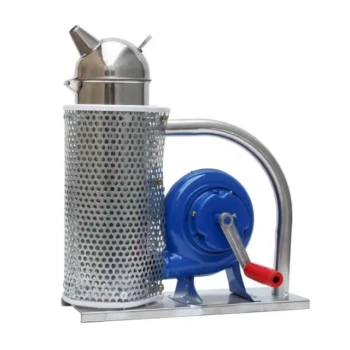
Lyophilization equipment functions as a critical preservation system specifically engineered to dehydrate bee pollen and bee bread without the use of damaging heat. By creating a controlled environment characterized by low temperatures and high vacuum, this technology removes excess moisture while strictly maintaining the biological and chemical stability of the raw material.
Core Takeaway Unlike conventional drying methods that rely on heat, lyophilization (freeze-drying) utilizes sublimation to remove moisture. This process preserves thermosensitive bioactives and produces a structurally superior powder, ensuring that the final product retains its full nutritional profile and mixes uniformly into food formulations.
The Preservation Mechanism
Low-Temperature Dehydration
The primary function of lyophilization equipment is to operate well below the temperatures used in standard drying processes. By keeping the bee pollen and bee bread in a frozen state during moisture removal, the equipment prevents thermal stress.
This low-temperature operation is the specific mechanism that protects the integrity of the material. It stops the chemical reactions that typically cause spoilage or loss of potency in biological substances.
High-Vacuum Environment
To remove moisture without melting the ice, the equipment generates a high-vacuum atmosphere. This allows the frozen water within the pollen to sublimate directly from a solid to a gas.
This vacuum-driven approach ensures deep dehydration without the structural collapse often seen in air-dried products.
Protecting Nutritional Integrity
Retention of Thermosensitive Nutrients
The most significant advantage of using lyophilization equipment is the preservation of fragile nutritional components. Bee pollen is rich in compounds that are easily destroyed by heat.
Specifically, this process prevents the degradation of vitamins, phenolic compounds, and carotenoids. These nutrients are responsible for the health benefits of the product, and lyophilization ensures they remain active in the final powder.
Enhancing Physical Properties
Achieving Superior Dispersibility
Beyond nutrition, the equipment plays a vital role in determining the physical utility of the final powder. The freeze-drying process creates a porous structure that rehydrates and disperses easily.
This results in a powder with excellent dispersibility, avoiding the clumping issues often associated with other drying methods.
Ensuring Uniformity for Formulations
For manufacturers, consistency is key. Lyophilization yields a highly uniform powder.
This uniformity is critical when performing precise concentration adjustments. It allows for the accurate fortification of food formulations, ensuring that every batch contains the exact intended dosage of bee pollen or bee bread.
Operational Constraints and Considerations
Dependency on Strict Environmental Control
While lyophilization offers superior quality, it introduces a trade-off regarding process complexity. The equipment must rigidly maintain specific low-temperature and high-vacuum conditions.
Any fluctuation in these parameters can lead to partial melting or incomplete drying, which would immediately degrade the thermosensitive nutrients the process is meant to protect. Unlike simple heat drying, this process allows for zero margin of error regarding environmental control.
Making the Right Choice for Your Goal
To maximize the value of bee pollen and bee bread products, consider the following based on your production targets:
- If your primary focus is Nutritional Potency: Prioritize lyophilization to guarantee the retention of heat-sensitive vitamins, phenolics, and carotenoids.
- If your primary focus is Product Formulation: Use this technology to create a powder with the high dispersibility and uniformity required for precise ingredient blending.
By leveraging lyophilization, you transform raw bee products into stable, high-value ingredients without compromising their biological activity.
Summary Table:
| Feature | Lyophilization (Freeze-Drying) | Conventional Heat Drying |
|---|---|---|
| Mechanism | Sublimation (Ice to Gas) | Evaporation via Heat |
| Temperature | Below Freezing (Low Thermal Stress) | High Temperatures |
| Nutrient Retention | High (Vitamins, Phenolics preserved) | Low (Heat-sensitive loss) |
| Physical Structure | Porous, Non-clumping | Dense, prone to clumping |
| Dispersibility | Excellent for formulations | Poor rehydration |
| Final Product Quality | Superior nutritional potency | Reduced biological activity |
Scale Your Bee Product Production with HONESTBEE
Are you looking to deliver premium-grade bee pollen or bee bread powders to your customers? HONESTBEE specializes in supporting commercial apiaries and distributors with high-performance beekeeping machinery and tools.
Our comprehensive wholesale portfolio includes advanced processing equipment and hive-making hardware designed to maintain the biological integrity of your harvest. From specialized honey-filling machines to industry-essential consumables, we provide the tools you need to achieve superior nutritional potency and product uniformity.
Ready to enhance your apiary's efficiency and product value? Contact us today to explore our wholesale solutions!
References
- Seymanur Ertosun, Miguel Vilas‐Boas. The impact of bee product incorporation on the processing properties, nutritional value, sensory acceptance, and microbial stability of bread. DOI: 10.1007/s11694-023-02172-4
This article is also based on technical information from HonestBee Knowledge Base .
Related Products
- Heavy-Duty Ergonomic Grip Galvanized Pollen Shovel
- High Quality Honey Dehumidifier Dryer Thickening Machine for Beekeeping
- 30 cm Plastic Entrance Hole Bee Pollen Trap and Collector
- Queen Bee Artificial Insemination Instrument Equipment for Instrumental Insemination
- Professional Stainless Steel Honey Filtering Machine with Water Bath Heating for Beekeeping
People Also Ask
- For what reasons do beekeepers collect bee pollen? Boost Hive Health and Unlock New Revenue Streams
- Why should commercial apiaries focus on the collection of diversified bee products? Maximize Your Hive’s Profit Potential
- How do bee pollen collection tools affect the quality of bee pollen used in functional dairy ice cream production?
- How does a specialized pollen collector facilitate the harvesting of diverse bee products? Automate High-Value Yields
- What is the impact of pollen collectors and associated equipment on the cost structure of pollen production? Maximize ROI