The absolute prerequisite for successfully cleaning raw beeswax is patience. While the technical process of rendering wax is not inherently difficult, it is a slow procedure that cannot be rushed without compromising quality or safety. You do not need a specific "perfect" method; rather, you need to explore different melting techniques to discover which one aligns best with your specific needs and available equipment.
Cleaning beeswax is fundamentally a separation process, not a scrubbing process. Whether you are handling a handful of cappings or large volumes of comb, success relies on allowing time for heat and gravity to separate impurities from the wax, rather than complex mechanical intervention.
The Core Process of Rendering
To transform raw material into usable wax, you must follow a logical sequence of extraction and purification.
Collection and Preparation
The process begins by collecting excess beeswax. This usually consists of cappings from honey extraction or crushed comb.
Before applying heat, you must drain as much residual honey as possible. This minimizes waste and simplifies the subsequent washing steps.
Rinsing Impurities
Once drained, rinse the beeswax in cool, clean water. This step helps wash away remaining honey and water-soluble debris.
The Role of Water and Heat
Melting is rarely done with direct heat alone. It is standard practice to melt the wax with water.
The water acts as a buffer to prevent burning and helps separate heavy impurities, which will settle to the bottom while the wax floats.
Filtration Techniques
Once the wax is molten, it must be filtered to remove fine particulates.
Effective filter materials include nylon, cheesecloth, or even sweatshirt fabric. Pour the hot wax mixture through your chosen filter to catch the debris.
Cooling and Solidification
After filtration, allow the clean wax to cool.
Pouring the wax into a flexible container is highly recommended. This allows you to easily pop the solidified wax block out once it has fully hardened.
Common Pitfalls and Trade-offs
While the process is straightforward, there are critical risks and decision points to navigate.
The Plumbing Hazard
Never use a household sink to rinse or process beeswax.
Beeswax solidifies almost instantly when it hits cool pipes. This leads to severe, stubborn clogs that are difficult and expensive to fix. Always perform rinsing steps outdoors or use a dedicated bucket.
Method Selection
There is no single "best" method for cleaning wax.
High-tech equipment may process wax faster, but simple methods are often sufficient for smaller batches. You must trade off the speed of processing against the cost of equipment and the volume of wax you actually need to render.
Establishing Your Workflow
To ensure you get the best results, tailor your approach to your specific constraints.
- If your primary focus is safety: prioritize melting methods that use a water bath or double boiler to prevent the wax from reaching its flash point.
- If your primary focus is cost-efficiency: utilize household items like cheesecloth or sweatshirt fabric for filtration rather than buying specialized industrial filters.
- If your primary focus is purity: be prepared to repeat the melting and filtering process multiple times, as patience is the only way to achieve distinct clarity.
Treat the process as a slow, steady refinement, and you will consistently produce high-quality beeswax.
Summary Table:
| Process Stage | Key Action | Why It Matters |
|---|---|---|
| Preparation | Drain honey & rinse in cool water | Reduces waste and simplifies the melting process |
| Melting | Heat with water (Double boiler) | Acts as a buffer to prevent burning and separates debris |
| Filtration | Use nylon or cheesecloth | Removes fine particulates and solid impurities |
| Cooling | Use flexible containers | Allows for easy removal of the solidified wax block |
| Safety | Avoid household sinks | Prevents instant, severe plumbing clogs from wax buildup |
Elevate Your Wax Processing with HONESTBEE
Processing high-quality beeswax requires the right tools and patience. At HONESTBEE, we empower commercial apiaries and distributors with professional-grade solutions designed for efficiency and purity.
Whether you need specialized honey-filling machines, hive-making hardware, or a consistent supply of beekeeping consumables, our comprehensive wholesale portfolio has you covered. We help you scale your operations from raw comb to premium honey-themed merchandise.
Ready to upgrade your apiary’s output? Contact us today to discover how our industry-leading equipment and wholesale expertise can grow your business.
Related Products
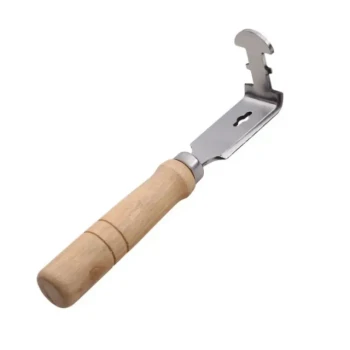
- Professional Stainless Steel Frame Cleaner with Ergonomic Wood Handle
- Electric Beeswax Flat Sheet Machine with Operating Tray for Wax Processing
- Steam Beeswax Melter Wax Warmer for Wax Processing
People Also Ask
- What are the physical characteristics of the frame cleaning tool? Durable Wood Design for Effective Hive Maintenance
- What is the purpose of the frame cleaning tool? A Precision Tool for Efficient Frame Maintenance
- What tools are used for cleaning frames? A Beekeeper's Simple 4-Tool Guide
- In what specific situation is the frame cleaning tool particularly useful? Master Cut Comb Maintenance
- What is the function of the frame cleaning tool in beekeeping? Streamline Your Apiary Hygiene and Maintenance