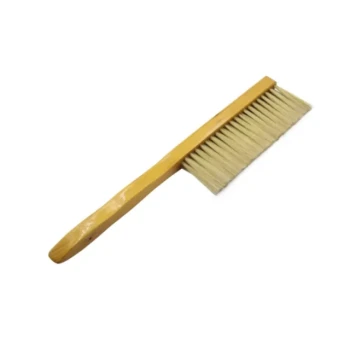
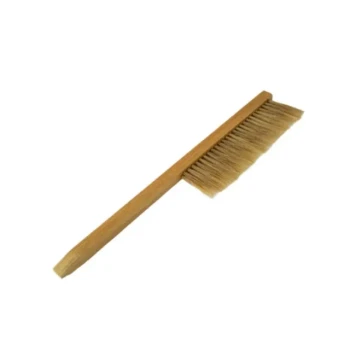
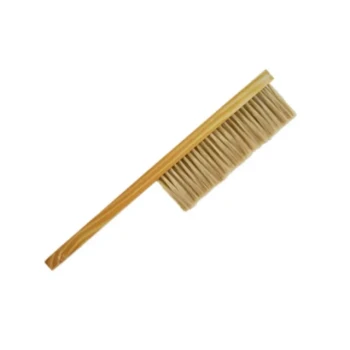
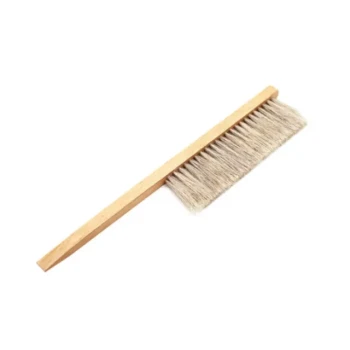
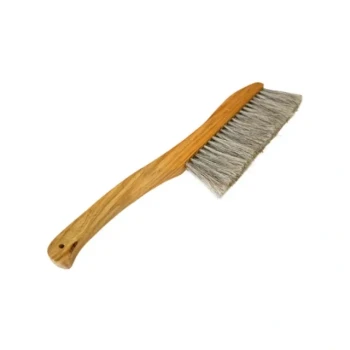
The process of using a bee brush involves manually clearing bees from individual honeycomb frames using a specialized tool. You must execute a gentle rolling or sweeping motion to dislodge the bees, knocking them back into the open hive box before the frame is removed for harvest.
Core Takeaway: Brushing is a hands-on, frame-by-frame removal method. While effective for clearing specific frames or removing stragglers left behind by other methods, it requires a delicate touch to avoid agitating the colony or damaging the bees.
The Mechanics of Removal
The Proper Motion
To use the brush effectively, you must employ a "roll or sweep" technique. Do not scrub the bees; instead, use the long bristles to gently flick them off the comb.
Direction of Removal
The goal is to return the bees to their colony, not scatter them into the air. Angle your brushing so that the bees are knocked directly back into the open hive body or brood chamber below the super you are working on.
Alternative Tools
While a large beekeeping brush is standard, some apiarists prefer a goose feather. A feather can provide an even gentler touch, particularly useful for skittish colonies or when removing the final few bees.
Contextualizing the Method
Primary Use Case
Brushing is most effective when you need to harvest a small number of frames or when you are "cleaning up" after other methods. It provides immediate clearance but requires handling every frame individually.
Integration with Other Methods
For larger harvests, the brush is often a secondary tool. Many beekeepers first use an escape board (which allows bees to leave but not return) or a fume board (which drives bees down using scent). The brush is then used solely to remove any stubborn stragglers remaining on the frames.
Understanding the Trade-offs
Risk of Agitation
Direct physical contact can annoy bees. If you brush too vigorously or take too long, the colony may become defensive. Speed and gentleness are required to maintain a calm apiary.
Efficiency Limitations
Brushing is labor-intensive. Because you must pull, brush, and store one frame at a time, it is significantly slower than using clearance boards that empty an entire super at once.
Making the Right Choice for Your Goal
If your primary focus is harvesting a small amount of honey: Rely on the brush for a quick, low-equipment method to clear just the specific frames you need.
If your primary focus is harvesting entire supers: Utilize an escape board or fume board first to do the heavy lifting, and reserve the brush only for the few remaining bees.
Mastering the gentle roll of the brush ensures you secure your harvest while keeping your colony safe and intact.
Summary Table:
| Feature | Bee Brush Technique Details |
|---|---|
| Core Motion | Gentle rolling or flicking sweep (avoid scrubbing) |
| Direction | Downward into the open hive body/brood chamber |
| Alternative Tool | Goose feathers for a softer touch |
| Primary Use Case | Small-scale harvesting or removing stragglers |
| Pros | Low equipment cost, immediate clearance of specific frames |
| Cons | Labor-intensive, higher risk of bee agitation if slow |
Elevate Your Apiary Operations with HONESTBEE
Are you looking to scale your honey production or optimize your distribution? HONESTBEE specializes in supporting commercial apiaries and beekeeping distributors with a robust wholesale catalog. From precision-engineered honey-filling machines and hive-making equipment to professional-grade brushes and essential consumables, we provide the tools necessary for high-efficiency harvesting.
Why partner with HONESTBEE?
- Full Spectrum Supply: Access everything from heavy machinery to honey-themed cultural merchandise.
- Commercial Grade Quality: Durable equipment designed for the rigors of professional beekeeping.
- Industry Expertise: We understand the unique needs of large-scale honey producers and global distributors.
Ready to enhance your efficiency and yield? Contact us today to discuss our wholesale offerings and how we can support your business growth.
Related Products
- Wooden Bee Brush with Triple Row Artificial Fiber for Beekeeping
- Classic Wooden Bee Brush with Double-Row Boar Bristles
- Double Row Artificial Fiber Bee Brush for Beekeeping
- Wooden Bee Brush with Double-Row Horsehair Bristles
- Premium Triple-Row Horsehair Bee Brush
People Also Ask
- What is the specific function of a bee brush? Ensure Pure Harvests and Colony Welfare During Honey Extraction
- What are the key characteristics of the bristles on a bee brush? Master Gentle and Efficient Bee Removal
- What is the purpose of using a bee brush during the inspection of hive components? Safe & Precise Hive Management
- What problem does a bee brush solve? Protect Your Colony with Gentle Precision Tools
- Why is a bee brush necessary when extracting honeybee hive frames that contain larvae? Protect Your Brood and Colony