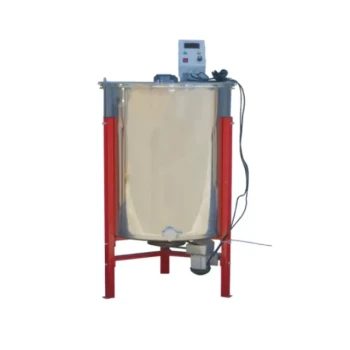
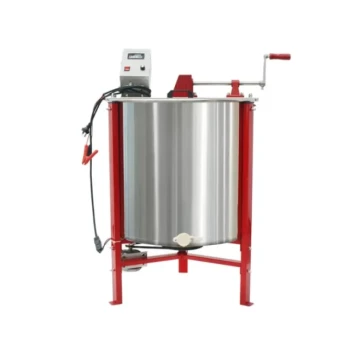
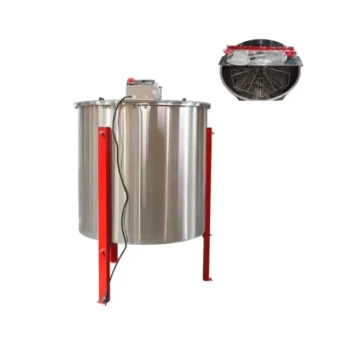
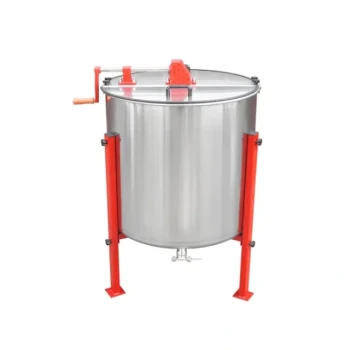
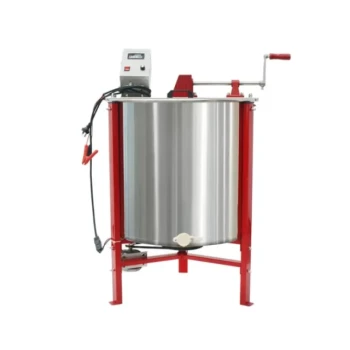
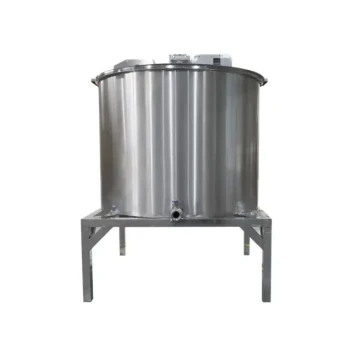
The use of centrifugal honey extraction machinery fundamentally transforms honey production from a destructive harvest to a precise, hygienic science. This technology utilizes physical centrifugal force to separate honey from the comb, eliminating the need to crush the hive structure. This results in a product that significantly exceeds the purity, clarity, and hygiene levels achievable through traditional manual squeezing.
Core Takeaway Centrifugal extraction is the technical prerequisite for producing commercial-grade honey. By mechanically isolating honey without damaging the comb, this process filters out wax and debris, prevents secondary contamination, and preserves the honey’s bioactive stability and shelf life.
The Mechanics of Purity and Hygiene
Elimination of Destructive Harvesting
Traditional methods often involve "destructive harvesting," where honeycombs are crushed and squeezed. This inevitably mixes honey with pollen, beeswax, and brood, creating a cloudy, impure product. Centrifugal extractors apply precise force to spin honey out of the cells, leaving the solid impurities behind and the comb structure intact.
Prevention of Secondary Contamination
Manual handling during squeezing introduces significant risks of bacterial and particulate contamination. Advanced centrifugal machinery creates a closed or semi-closed loop, reducing human contact with the product. This mechanized approach ensures the final product meets strict hygiene standards required for market access.
Reuse of Hive Structure
Because the extractor creates separation without crushing the comb, the empty wax frames can be returned to the hive. This allows the bee colony to reuse the existing structure rather than expending energy to rebuild it. This cycle increases overall production efficiency and supports colony health.
Preservation of Chemical and Biological Integrity
Reducing Oxidative Stress
Automated processing workflows significantly reduce the time honey is exposed to the open air. By minimizing the contact time between honey and oxygen, the machinery prevents environmental impurities from settling in the product. This rapid processing helps maintain the freshness and flavor profile of the raw honey.
Retaining Bioactive Markers
Professional extraction equipment is designed to operate without thermal damage, preserving heat-sensitive compounds. This ensures that critical biochemical markers, such as proline, and other bioactive components remain active. Presence of these markers is often used to verify that the honey is fully ripened and unadulterated.
Moisture Content Control
Centrifugal extraction aids in the management of moisture levels within the final product. Proper mechanical separation ensures that honey is harvested and processed at optimal maturity. Controlling moisture is the single most important technical factor in preventing fermentation and spoilage.
Physical Quality and Marketability
Achieving Commercial Clarity
Raw comb honey contains wax particles and debris that render it unsuitable for most retail markets. Centrifugal systems differ from simple straining by utilizing multi-stage filtration and mechanical pressing. This results in a product with high visual clarity that meets consumer expectations.
Extending Shelf Life
Impurities such as wax and pollen can act as nucleation points for crystallization or substrates for spoilage. By effectively removing these physical impurities, centrifugal machinery extends the stable shelf life of the bottled honey. This stability is essential for maintaining competitive value in the retail supply chain.
Common Pitfalls to Avoid
The Risk of Manual "Squeezing"
It is a critical error to view centrifugal extraction as merely a speed upgrade; it is a quality upgrade. Relying on manual squeezing or pressing methods guarantees a lower grade of purity. Beekeepers aiming for commercial entry must avoid these traditional methods, as the resulting mixture of pollen and wax often fails to meet modern food safety and clarity standards.
Misinterpreting "Raw" Honey
A common misconception is that "raw" honey must contain debris to be authentic. However, technical standards dictate that high-quality honey should be free of physical contaminants while retaining chemical bioactivity. Using centrifugal machinery allows you to produce clean, market-ready honey that is still chemically "raw" and bioactive, striking the balance between nature and hygiene.
Making the Right Choice for Your Goal
To maximize the value of your honey production, align your extraction method with your specific end-goals:
- If your primary focus is Commercial Market Access: Adopt centrifugal extraction immediately to ensure your product meets the strict clarity, hygiene, and shelf-life standards required by retailers.
- If your primary focus is Hive Sustainability: Use centrifugal machinery to preserve the structural integrity of your honeycombs, allowing your colonies to reuse them and focus energy on honey production rather than wax building.
- If your primary focus is Product Purity: Leverage the closed-loop filtration capabilities of automated machinery to minimize oxidation and eliminate the risk of environmental contamination.
By transitioning to centrifugal extraction, you move from simple harvesting to professional processing, securing both the quality of your product and the longevity of your apiary.
Summary Table:
| Technical Factor | Traditional Squeezing | Centrifugal Extraction | Impact on Quality |
|---|---|---|---|
| Comb Integrity | Destroyed/Crushed | Fully Preserved | Allows comb reuse and reduces debris. |
| Purity Level | High wax/pollen content | High clarity, low debris | Enhances visual appeal and marketability. |
| Hygiene Risk | High (Manual contact) | Low (Closed system) | Meets strict food safety standards. |
| Bioactivity | Risk of oxidation | Preserved stability | Maintains enzymes and natural flavor. |
| Shelf Life | Short (Fast fermentation) | Long (Stable) | Prevents spoilage and crystallization. |
Scale Your Honey Production with HONESTBEE Professional Solutions
Transitioning to professional extraction is the key to unlocking commercial success. At HONESTBEE, we specialize in supporting commercial apiaries and distributors with a comprehensive wholesale offering designed for high-efficiency harvesting.
Why Partner with HONESTBEE?
- Complete Equipment Range: From advanced centrifugal extractors to hive-making and honey-filling machines.
- Industry Expertise: We provide the full spectrum of beekeeping tools and essential consumables tailored for large-scale operations.
- Value-Driven Growth: Our hardware and honey-themed cultural merchandise help you build a premium brand that stands out in the retail market.
Ready to elevate your honey quality and operational efficiency? Contact us today to explore our wholesale machinery solutions!
References
- Alayu Tarekegn. Traditional Forest Beekeeping and Its Challenge in Benishangul Gumuz Regional State, Ethiopia. DOI: 10.51458/bstd.2022.25
This article is also based on technical information from HonestBee Knowledge Base .
Related Products
- electric honey extractor honey centrifuge 3 frame honey extractor stainless steel honey frame extractor
- Manual Hand Crank 4 Frame Honey Extractor Centrifuge for Beekeeping
- Professional 4 Frame Self Reversing Electric Honey Extractor for Beekeeping
- 24 Frame Honey Extractor Commercial Radial Honey Frame Extraction Machine
- Stainless Steel Manual 8 Frame Radial Honey Extractor Machine for Beehives
People Also Ask
- What are the characteristics of electric honey extractors? Boost Your Apiary Efficiency with Automated Technology
- What are the disadvantages of using an electric honey extractor? Weighing Cost, Power, and Comb Safety
- What are the advantages of an electric honey extractor? Boost Efficiency and Scale Your Honey Production
- What are the technical advantages of electric honey extractors? Maximize Yield and Protect Your Bee Colony
- How does an electric honey extractor affect the quality of honey? Preserve Flavor & Purity with Precision Extraction