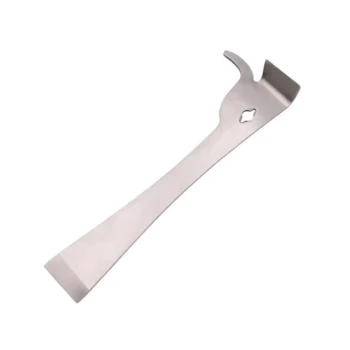
The hive tool is the fundamental manual instrument for beekeeping, serving as a high-strength lever to separate hive components and a scraper to maintain internal order. Because honeybees naturally seal their environment with resinous propolis, this multi-functional steel tool is required to access the colony and perform inspections without causing damage or excessive agitation.
The Core Insight While often viewed simply as a wedge, the hive tool is actually an instrument of efficiency and pest management. Its primary role is to overcome the colony's natural adhesive defenses (propolis) quickly, allowing for necessary maintenance while minimizing the duration of intrusive inspections.
Gaining Access to the Colony
Overcoming the Propolis Seal
Honeybees instinctively apply propolis—a sticky, resinous mixture—to seal gaps and bond hive parts together. This creates a powerful seal that cannot be broken by hand.
The hive tool acts as a lever, utilizing its high-strength steel construction to pry these sealed components apart. This is critical for separating boxes and lifting the hive lid without damaging the woodenware.
Safe Frame Manipulation
Inside the hive, frames are often glued to the frame rests by propolis. Attempting to pull them out manually can result in jarring movements that crush bees and trigger defensive behavior.
The hive tool provides the necessary torque to pry stuck frame bars loose gently. This controlled separation prevents unnecessary disturbance to the bees, keeping the colony calmer during the inspection.
Essential Maintenance and Hygiene
Removal of Excess Material
Bees frequently build "burr comb" (excess beeswax) and apply heavy layers of propolis in areas that impede management.
The sharp edge of the hive tool is used to scrape away this excess material. Keeping frames and box edges clean ensures that the internal layout remains precise and that components fit together properly during reassembly.
Sanitation and Debris Clearance
To support colony health, the hive tool is used to scrape bottom boards and clear debris from Varroa screens.
Removing this filth is vital for hygienic management, as it eliminates waste that could harbor pests or pathogens. Regular scraping allows for more thorough inspections and better decision-making regarding colony health.
Understanding the Trade-offs
The Cost of Disturbance
While the hive tool enables inspection, the act of opening a hive is inherently stressful for the colony. Data from magnetic sensors indicates that the frequency and duration of hive openings directly impact colony stability.
Efficiency vs. Thoroughness
The trade-off lies in how the tool is used. While it is necessary to scrape frames for cleanliness, excessive scraping extends the time the hive is open.
You must balance the need for internal cleanliness with the need to minimize exposure. The hive tool should be used efficiently to complete the job quickly, reducing stress on the bees and protecting honey production.
Making the Right Choice for Your Goal
To use a hive tool effectively, you must adapt your approach based on the specific needs of the season and the colony.
- If your primary focus is Rapid Inspection: Use the tool strictly for leverage to pop frames loose quickly, minimizing the time the colony is exposed to open air.
- If your primary focus is Sanitary Maintenance: Use the tool's scraping edge to thoroughly clean bottom boards and remove burr comb, ensuring debris does not compromise the hive's internal alignment.
Mastering the hive tool means using just enough force to gain access and just enough precision to maintain hygiene, without overstaying your welcome.
Summary Table:
| Function | Primary Use Case | Key Benefit to Beekeeping |
|---|---|---|
| Leverage | Separating boxes & lifting lids | Breaks propolis seals without damaging woodenware |
| Prying | Loosening stuck frames | Enables gentle frame removal to minimize bee agitation |
| Scraping | Removing burr comb & debris | Maintains internal hive dimensions and improves sanitation |
| Sanitation | Cleaning bottom boards | Eliminates waste that could harbor pests and pathogens |
Elevate Your Beekeeping Operations with HONESTBEE
As a professional beekeeper or distributor, you know that high-quality tools are the foundation of a productive apiary. HONESTBEE specializes in supporting commercial apiaries and wholesale distributors with a comprehensive range of premium beekeeping equipment. From high-strength manual hive tools to advanced honey-filling and hive-making machinery, we provide the durability and precision you need to scale your business.
Our Value to You:
- Wholesale Excellence: Competitive pricing on full-spectrum beekeeping consumables and hardware.
- Industrial Solutions: Specialized machinery designed for high-capacity honey production.
- Diverse Portfolio: A one-stop shop for everything from basic tools to honey-themed cultural merchandise.
Ready to optimize your inventory or upgrade your apiary’s efficiency? Contact us today to discuss your wholesale needs!
References
- KH Devkota. Benefit-Cost Analysis of Apiculture Enterprise: A Case Study of Jutpani VDC, Chitwan, Nepal. DOI: 10.3126/jiaas.v27i0.704
This article is also based on technical information from HonestBee Knowledge Base .
Related Products
- HONESTBEE Professional Long Handled Hive Tool with Precision Cutting Blade
- Professional Multi-Function Stainless Steel Hive Tool
- HONESTBEE Premium Italian Style Hive Tool with Hardwood Handle
- Ergonomic Plastic Frame Spacer Tool for Rapid Hive Management Beekeeping
- Professional Grade Foldable Beehive Handles
People Also Ask
- Why are professional hive tools considered indispensable? Master Beekeeping Maintenance with Precision Leverage
- What is the role of professional hive tools in routine apiary maintenance? Expert Tips for Hive Health and Longevity
- What is a bee hive tool? Discover Why It’s the Most Essential Hand Tool for Every Beekeeper
- How do hive tools and queen rearing equipment facilitate the bee colony splitting process? Restore Your Apiary Faster
- Why are professional hive tools & observation equipment necessary for queen rearing evaluation? Master Your Quality