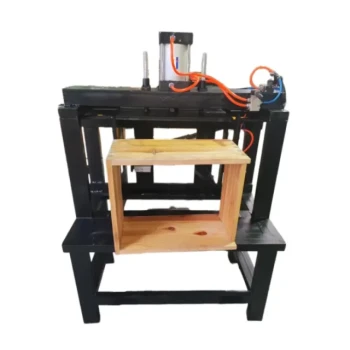
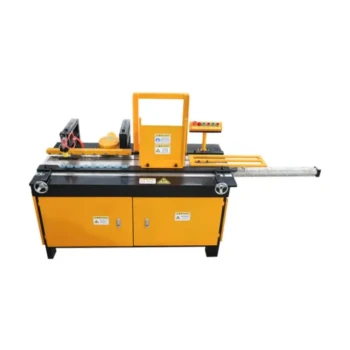
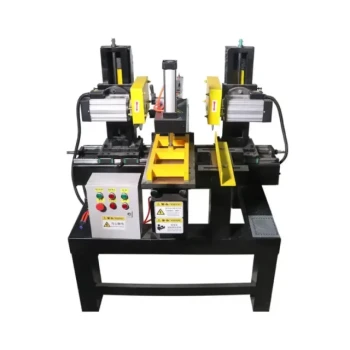
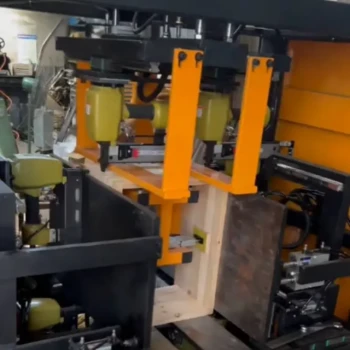
Industrial hive-making machinery acts as the fundamental catalyst in the shift from traditional, artisanal beekeeping to modern commercial apiary management. By utilizing high-precision cutting and standardized assembly processes, these machines transform raw materials into uniform, durable structures that far surpass the capabilities of simple, traditional hive containers. This mechanization provides the necessary physical infrastructure to support large-scale operations, ensuring that equipment is robust enough to withstand intensive commercial use.
The primary role of industrial machinery is to enforce strict equipment standardization through precision manufacturing. This uniformity is the prerequisite for modern beekeeping, enabling part interchangeability, compatibility with automated harvesting systems, and the structural durability required for long-distance logistics.
The Power of Precision and Standardization
Achieving Total Interchangeability
The most critical contribution of industrial machinery is the creation of uniform specifications. In a modern apiary, a beekeeper must be able to move a frame from one hive to another without friction or adjustment. Industrial machinery ensures that every component is cut to exact dimensions, making frames and hive bodies completely interchangeable across millions of colonies and different production sites.
Foundation for Automation
Standardization is not just a convenience; it is a prerequisite for apiary automation. Mechanical harvesting lines and colony rotation systems rely on consistent hive dimensions to function. By removing irregularities in the equipment, machine-made hives allow commercial operations to deploy automated tools that significantly lower labor costs and increase efficiency.
Enhancing Durability and Environmental Resilience
Withstanding Extreme Climates
Traditional hive containers often lack the structural integrity to protect colonies in harsh environments. Industrial machinery produces equipment capable of enduring extreme environmental conditions, such as those found in Mediterranean climates. The precision of the assembly results in superior sealing properties, which are instrumental in helping colonies regulate temperature, survive winter, and resist weather-related stress.
Stability During Transport
Modern commercial beekeeping often involves migratory pollination services, requiring hives to be moved over long distances. Machine-manufactured hives offer the structural stability needed to withstand the vibrations and shocks of transport. This durability protects the colony during transit and ensures the hardware remains intact for years of use.
Enabling Large-Scale Commercial Operations
Reducing Barriers to Entry
By automating the production of hive bodies and frames, industrial machinery significantly lowers the per-unit production cost of modern equipment. This reduction removes the financial barrier that often prevents traditional beekeepers from scaling up. It allows operators to acquire the volume of equipment needed to transition from small-scale collection to professional, industrial-scale enterprises.
Facilitating Multi-Product Harvests
Modern machinery allows for the integration of specialized components, such as pollen traps and queen excluders, by ensuring a precise fit for complex hardware. This capability allows beekeepers to move beyond simple honey collection to multi-product operations—including bee pollen and propolis—facilitating non-destructive harvesting and better colony health management.
Understanding the Operational Trade-offs
The Rigidity of Standardization
While standardization drives efficiency, it also creates operational rigidity. Once a commercial operation invests in a specific standard (such as the Langstroth system produced by these machines), switching to a different hive design becomes structurally and financially difficult. The machinery locks the operation into a specific ecosystem of parts.
Dependence on Manufacturing Tolerances
The efficiency of the entire apiary becomes dependent on the maintenance of the machinery's precision. If the manufacturing equipment drifts out of tolerance, the resulting loss of interchangeability can disrupt the workflow of an entire commercial operation, causing jams in automated lines or poor seals in the field.
Making the Right Choice for Your Goals
To leverage industrial hive-making technology effectively, you must align the machinery's output with your operational objectives:
- If your primary focus is Scalability and Automation: Prioritize machinery that guarantees strict dimensional consistency to ensure seamless integration with mechanical harvesting lines.
- If your primary focus is Colony Health and Survival: Focus on machinery capable of producing high-precision joints and seals to maximize insulation and protection against extreme weather.
- If your primary focus is Migratory Beekeeping: Select equipment manufacturing processes that emphasize structural reinforcement and material density to withstand frequent transportation.
Ultimately, industrial hive-making machinery does not just build boxes; it builds the predictability and consistency required to turn beekeeping into a viable commercial industry.
Summary Table:
| Feature | Traditional Methods | Industrial Machinery | Impact on Modern Beekeeping |
|---|---|---|---|
| Dimensional Consistency | Low (Artisanal variations) | High (Strict precision) | Enables full interchangeability of parts |
| Scalability | Limited by manual labor | High-volume production | Reduces per-unit costs for large operations |
| Durability | Variable quality | Engineered for resilience | Withstands migratory transport & extreme weather |
| Automation Readiness | Non-compatible | Integration-ready | Foundation for mechanical harvesting systems |
| Product Diversity | Mostly honey-focused | Multi-hardware support | Facilitates pollen and propolis collection |
Scale Your Apiary Operations with HONESTBEE
Transitioning from traditional methods to a high-yield commercial enterprise requires the right infrastructure. HONESTBEE specializes in empowering commercial apiaries and distributors with the industrial-grade tools needed to succeed.
We provide a comprehensive wholesale range, including:
- Advanced Machinery: Precision hive-making and honey-filling machines.
- Durable Hardware: Standardized beekeeping tools and equipment for global logistics.
- Industry Consumables: A wide array of essential supplies for high-volume maintenance.
- Cultural Merchandise: Honey-themed products to diversify your brand.
Whether you are scaling your own colonies or supplying the industry, our expertise ensures your equipment meets the highest standards of precision and durability.
Contact HONESTBEE Today to discover how our wholesale solutions and specialized machinery can transform your beekeeping business.
References
- Beekeeping In The Mediterranean, From Antiquity To The Present. DOI: 10.1080/0005772x.2014.11417596
This article is also based on technical information from HonestBee Knowledge Base .
Related Products
- High-Efficiency Pneumatic Bee Hive Making Machine for Rapid Box Assembly
- Beehive Handle and Frame Rest Cutting Machine: Your Specialized Hive Machine
- Automatic Finger Joints Joint Making Machine for Bee Box and Hive Making
- Beehive Machine Double End Saw for Precision Hive Component Manufacturing
- Mini Desktop Bee Hive Frame Forming Making Machine
People Also Ask
- How does the introduction of professional beehive-making machinery benefit sustainable beekeeping? Scale Your Apiary
- Why is specialized beehive-making machinery critical for low-defense breeding? Enhance Selection with Precision Tools
- How does the introduction of specialized beehive making machinery contribute to increasing the scale of regional beekeeping industries?
- What is the importance of specialized beehive making machinery in a circular bio-economy? Build Local Sustainability
- Why is specialized beehive-making machinery essential? Scale Your Apiary with Precision Industrial Standards