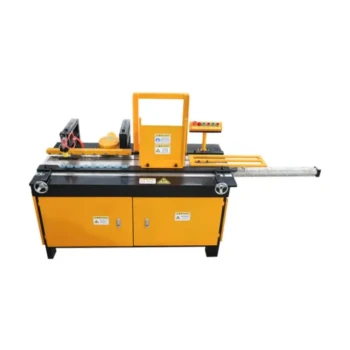
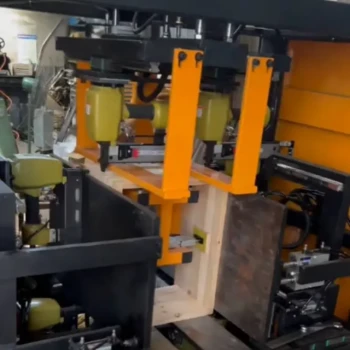
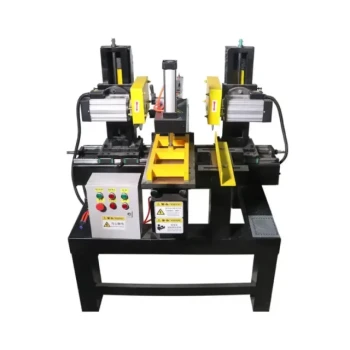
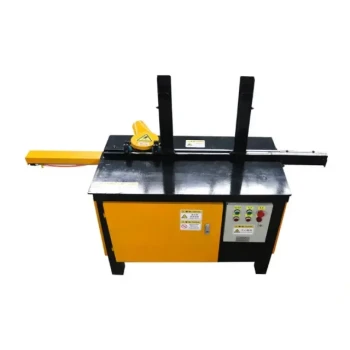
Specialized hive-making machinery acts as the primary catalyst for shifting beekeeping from a manual craft to a scalable industry. It replaces the labor-intensive process of hand-sculpting hives with standardized mass production, directly addressing high production costs and critical labor shortages while making the sector more attractive to a modern workforce.
By enforcing structural precision and uniformity, specialized machinery does more than accelerate production; it establishes the mandatory hardware foundation required for component interchangeability, mechanized harvesting, and large-scale commercial logistics.
Transforming Labor and Cost Structures
The transition to industrial beekeeping is fundamentally an economic shift fueled by automation.
Reducing Production Costs
Manual hive sculpting is financially unsustainable at an industrial scale due to the time involved. Specialized machinery replaces these slow processes with high-efficiency cutting technologies. This significantly lowers the labor cost per unit, allowing operations to expand capacity without a linear increase in payroll.
Solving Labor Shortages
Traditional hive making relies on skilled artisans, a demographic that is increasingly scarce. Automated machinery reduces the dependence on specialized manual skills. This lowers the barrier to entry for new employees and resolves bottlenecks caused by a lack of available craftsmen.
Modernizing Workforce Appeal
Technological advancement in hive production shifts the daily workload away from heavy manual labor. By introducing industrial machinery, the sector becomes more attractive to a modern workforce. This helps apiaries recruit and retain staff who might otherwise avoid physically grueling agricultural roles.
The Strategic Value of Standardization
While cost reduction is the immediate benefit, standardization is the mechanism that enables long-term scaling.
Achieving Component Interchangeability
For a commercial apiary managing millions of colonies, unique hive parts are a logistical nightmare. Machinery ensures every frame and box has uniform specifications. This allows beekeepers to move components seamlessly between different production sites without worrying about fit.
Enabling Downstream Automation
Standardized hives are the prerequisite for further mechanization, such as automated honey harvesting and colony rotation. You cannot utilize advanced extraction lines if your hive boxes vary in size. Precision manufacturing provides the necessary infrastructure for these subsequent industrial processes.
Maintaining Critical "Bee Space"
Biological precision is non-negotiable in beekeeping; incorrect internal spacing affects colony health and behavior. Specialized machinery guarantees the maintenance of precise "bee space" dimensions. This reduces maintenance difficulties and ensures that the equipment physically supports optimal colony development.
Operational Independence and Flexibility
Industrial machinery empowers apiaries to control their own supply chains.
Ensuring Self-Sufficiency
Owning hive-making machinery allows operators to process local materials rather than relying on external vendors. This reduces procurement costs and dependencies on volatile supply chains. It supports a circular economy model where local resources are converted directly into production assets.
Adapting to Local Conditions
Machinery allows for the precise processing of hives tailored to specific local climates and bee species. Rather than purchasing generic equipment, operators can manufacture hives with specifications optimized for their specific environmental challenges.
Facilitating Multi-Product Operations
Precision manufacturing enables the integration of complex consumables, such as pollen traps. This hardware foundation allows operations to transition from simple honey collection to professional, multi-product enterprises producing pollen and other derivatives.
Understanding the Trade-offs
Transitioning to mechanized production introduces new variables that must be managed objectively.
Capital Expenditure vs. Operational Expense
While machinery lowers long-term labor costs (OpEx), it requires significant upfront capital investment (CapEx). Smaller operations must calculate the break-even point carefully to ensure the volume of production justifies the initial hardware cost.
Shifting Skill Requirements
Introducing machinery solves one labor shortage but creates a need for another: equipment maintenance. The workforce must shift from woodworking artisans to technicians capable of operating and maintaining industrial machinery. Neglecting the maintenance of these machines will rapidly negate their efficiency gains.
Making the Right Choice for Your Goal
The role of machinery differs based on the specific strategic outcome you are targeting.
- If your primary focus is Rapid Expansion: Prioritize machinery that maximizes output speed to respond quickly to market demand and increase raw production capacity.
- If your primary focus is Automation Readiness: Ensure your machinery offers the highest possible dimensional precision to guarantee compatibility with future automated harvesting lines.
- If your primary focus is Cost Control: Leverage machinery to utilize local raw materials, reducing procurement expenses and insulating your operation from external price hikes.
Ultimately, specialized hive-making machinery transforms the beehive from a hand-crafted shelter into a standardized industrial unit, serving as the essential building block for a scalable commercial enterprise.
Summary Table:
| Feature | Impact on Industrial Transition | Key Benefit |
|---|---|---|
| Production Speed | Replaces manual sculpting with high-speed cutting | Lower cost per unit & higher capacity |
| Standardization | Guarantees component interchangeability | Simplified logistics & hardware compatibility |
| Labor Shift | Moves from artisan skill to machine operation | Solves labor shortages & attracts modern workers |
| Biological Precision | Maintains exact "Bee Space" dimensions | Improved colony health & easier maintenance |
| Supply Chain | Enables processing of local raw materials | Operational independence & self-sufficiency |
Scale Your Beekeeping Operation with HONESTBEE
At HONESTBEE, we empower commercial apiaries and distributors to bridge the gap between manual craft and industrial efficiency. Our comprehensive wholesale solutions provide everything you need to dominate the market:
- Advanced Machinery: From precision hive-making units to high-capacity honey-filling machines.
- Full Spectrum Equipment: A complete range of beekeeping tools and essential industry consumables.
- Customization & Culture: Specialized hardware and unique honey-themed merchandise to diversify your brand.
Ready to transform your production capacity and reduce overhead? Let our experts guide you to the right industrial setup.
Contact HONESTBEE Today for a Wholesale Consultation
References
- Raphael Mwiti Gikunda, Samantha Anyuor. Cultural barriers towards women and youth entry to apiculture production in Maara Sub-County, Kenya. DOI: 10.37433/aad.v2i2.113
This article is also based on technical information from HonestBee Knowledge Base .
Related Products
- High-Efficiency Pneumatic Bee Hive Making Machine for Rapid Box Assembly
- Beehive Handle and Frame Rest Cutting Machine: Your Specialized Hive Machine
- Mini Desktop Bee Hive Frame Forming Making Machine
- Automatic High-Speed Bee Hive Box Stapling Machine
- Beehive Machine Double End Saw for Precision Hive Component Manufacturing
People Also Ask
- How does the introduction of professional beehive-making machinery benefit sustainable beekeeping? Scale Your Apiary
- Why is specialized beehive-making machinery critical for low-defense breeding? Enhance Selection with Precision Tools
- How does the introduction of specialized beehive making machinery contribute to increasing the scale of regional beekeeping industries?
- What is the importance of specialized beehive making machinery in a circular bio-economy? Build Local Sustainability
- Why is specialized beehive-making machinery essential? Scale Your Apiary with Precision Industrial Standards