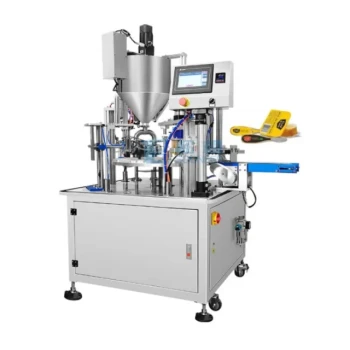
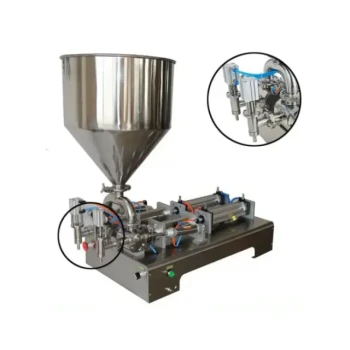
Precision honey filling machines fundamentally address the operational inefficiencies caused by the physical properties of high-viscosity liquids. Specifically, they utilize automated metering systems to eliminate measurement errors and the pervasive issue of dripping, which leads to product waste and inconsistent packaging. By enforcing closed-loop operations, these systems further resolve the dual challenges of maintaining high throughput speeds while guaranteeing the strict hygiene standards required for large-scale food production.
By automating the handling of a difficult, viscous material, these machines bridge the gap between artisanal collection and commercial distribution, ensuring that every unit meets legal weight standards without compromising speed or sanitation.
Overcoming Physical Material Constraints
Managing High Viscosity and Dripping
Honey is notoriously difficult to handle due to its thickness and stickiness. Manual filling often results in trailing drips that soil the container's exterior and the workspace.
Precision machines integrate anti-drip mechanisms and sealing technologies directly into the filling nozzle. This prevents material accumulation on the bottle neck, ensuring the external packaging remains clean and professional.
Minimizing Material Loss
In non-automated processes, overflow is a common and costly error. High-viscosity materials are slow to settle, making visual filling judgments inaccurate.
Advanced machines utilize precise metering control systems to dispense exact volumes. This significantly reduces overflow and the loss of raw material, directly impacting the profitability of commercial apiaries.
Ensuring Regulatory and Operational Consistency
Achieving Metrological Accuracy
For commercial distribution, ensuring the "net content" of a jar matches the label is a legal requirement. Variations in manual filling can lead to regulatory non-compliance.
Precision filling equipment employs volumetric measurement or weighing sensors to keep the deviation of each bottle within a minimal, legally acceptable range. This guarantees that every product unit meets legal metrology requirements regarding net weight.
Eliminating Contamination Risks
Honey is a food product that requires strict sanitary handling. Open-air manual filling exposes the product to environmental dust and human contact.
Automated systems operate within a closed-loop or fully enclosed environment. This design minimizes the risk of secondary microbial contamination and effectively isolates the product from external pollutants during the critical filling stage.
Standardization for Scale
Transitioning from garden production to retail markets requires uniformity. Manual processes are inherently variable.
Automation allows for high repeatability and positioning accuracy. This ensures that every bottle looks identical on the shelf, significantly enhancing the market competitiveness and professional image of the finished product.
Understanding the Operational Trade-offs
While precision machines solve volume and hygiene challenges, they introduce new operational requirements. The complexity of flow control technology means that maintenance becomes more critical; a malfunction in a sensor can halt the entire line.
Furthermore, while these machines prevent contamination during filling, the equipment itself requires rigorous cleaning protocols. Removing high-viscosity honey from internal pistons and metering systems is more labor-intensive than cleaning simple manual tools, requiring dedicated downtime for sanitation.
Making the Right Choice for Your Goals
To select the right equipment, you must identify which industrial challenge is your immediate bottleneck.
- If your primary focus is Regulatory Compliance: Prioritize machines with mass-based weighing sensors to ensure strict adherence to legal net-weight requirements.
- If your primary focus is Hygiene and Shelf-Life: Select equipment featuring a fully enclosed, sterile filling environment to eliminate the risk of secondary contamination.
- If your primary focus is Efficiency and Waste Reduction: Look for systems with advanced anti-drip and overflow protection to maximize the yield from your raw material.
Ultimately, investing in precision filling technology is the critical step that allows honey producers to evolve from bulk collection to standardized, high-value commercial manufacturing.
Summary Table:
| Challenge Category | Specific Operational Problem | Precision Machine Solution |
|---|---|---|
| Material Handling | High viscosity, trailing drips, and mess | Anti-drip nozzles and specialized sealing |
| Resource Waste | Overfilling and raw material loss | Automated metering and precise volume control |
| Legal Compliance | Weight deviations and label inaccuracy | Volumetric sensors and mass-based weighing |
| Food Safety | Microbial contamination and dust exposure | Closed-loop systems and enclosed environments |
| Brand Quality | Inconsistent shelf appearance | High repeatability and precise bottle positioning |
Elevate Your Apiary’s Commercial Potential with HONESTBEE
Transitioning from artisanal collection to large-scale distribution requires equipment that guarantees precision and hygiene. HONESTBEE specializes in supporting commercial apiaries and distributors with a complete range of professional beekeeping tools and industrial machinery.
Our advanced honey-filling machines and specialized hardware are designed to eliminate waste and ensure your products meet strict legal weight standards. Whether you need hive-making equipment or high-performance packaging systems, we provide the tools to scale your business effectively.
Ready to optimize your production line? Contact us today to discuss your wholesale needs and discover how our expertise can enhance your market competitiveness.
References
- María Fernanda Miranda Salazar, Luis Antonio Velasco Matveev. Proposal for the Production and Marketing of Beekeeping Products. DOI: 10.18502/espoch.v2i2.11194
This article is also based on technical information from HonestBee Knowledge Base .
Related Products
- Precision Durable Efficient HONESTBEE Rotary Honey Filling Machine
- Precision Automated Packaging Turntable Honey Spoon Filling Sealing Packing Machine
- Commercial Rotary Honey Filling Machine for Production
- Fully Automatic Honey Filling Packaging Machine for Processing Line
- Automatic Honey Filling and Filtering Machine for Beekeeping Bottle Filling
People Also Ask
- What is a key feature of the new generation of the honey filling machine? The Advanced Electronic Control Unit
- What quality control role does professional honey filling equipment perform? Ensure Consistency and Product Stability
- What are the common types of bottling machines used for honey? Choosing the Right Solution for Your Apiary
- How do high-precision honey filling machines ensure quality? Optimize Your Commercial Production with HONESTBEE
- How do honey filling and processing machines aid native bee product conservation? Boost Value with HONESTBEE Technology