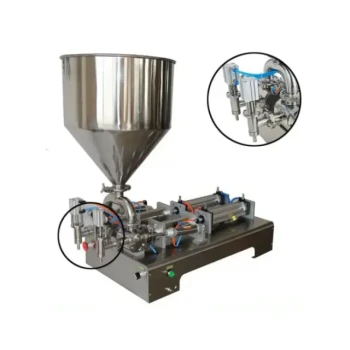
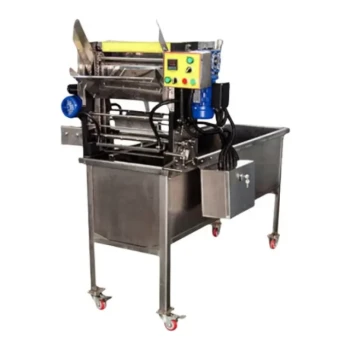
Automated honey filling machines act as the critical technological bridge between raw agricultural production and high-value commercial retail. They utilize high-precision dosing systems within closed operating environments to convert bulk honey into standardized, market-ready units while rigorously preserving the product's natural physicochemical properties.
By automating the filling process, producers move beyond simple packaging to achieve industrial-grade consistency and hygiene. This technology not only minimizes material loss and secondary contamination but serves as a technical prerequisite for entering formal retail channels and export markets.
Achieving Precision and Standardization
The primary technical advantage of automation is the elimination of variance. Manual filling introduces human error, whereas automated systems deliver identical results across thousands of units.
High-Precision Dosing Systems
Industrial machines employ advanced metering controls to distribute honey from bulk storage tanks.
This ensures a consistent net weight in every bottle, meeting strict legal standards for trade weights and measures.
Minimizing Material Loss
Manual handling often results in dripping and spillage, which equates to lost revenue.
Automated systems utilize specialized nozzles and cutoff mechanisms to significantly reduce material loss, ensuring that every ounce of processed honey makes it into the package.
Multi-Format Adaptability
Modern retail requires diverse product sizes to capture different market segments.
Automated systems support standardized production across various specifications, such as 330ml to 1500ml containers, allowing producers to pivot quickly between product lines.
Preserving Product Integrity
Honey is a sensitive product that can degrade if exposed to moisture, air, or contaminants. Automation protects the biological value of the product.
Closed-Environment Operation
Filling machines operate within a closed or sterile environment to isolate the honey from external elements.
This design significantly minimizes the risk of secondary contamination, which is critical for food safety compliance.
Prevention of Oxidation and Fermentation
By controlling the exposure to air during the filling process, these machines help prevent oxidation.
Furthermore, precise filling prevents the introduction of excess moisture or contaminants that could lead to unwanted fermentation during storage.
Retention of Physicochemical Properties
The mechanics of these machines are designed to handle honey's viscosity without altering its structure.
This ensures the natural flavor, aroma, and essential physicochemical properties remain intact from the tank to the bottle.
Enhancing Commercial Viability
Beyond the liquid itself, automation addresses the physical requirements of logistics and retail presentation.
Airtight Sealing Technology
Automated packaging includes specialized sealing processes that are far superior to manual capping.
This airtight seal significantly extends the product shelf life, making the inventory viable for long-term storage and international shipping.
Logistics and Brand Protection
High-quality, standardized packaging prevents damage during the rigors of the logistics process.
Additionally, integrated labeling systems ensure traceability and establish a professional brand image, which is vital for competing on supermarket shelves and e-commerce platforms.
Understanding the Operational Trade-offs
While the advantages are significant, adopting this technology requires a strategic assessment of your operational capacity.
Maintenance and Complexity
Automated systems are complex technical assets that require regular maintenance and calibration.
Operators must possess the technical skill to clean and service the dosing systems to prevent clogging or accuracy drift over time.
Capital Investment vs. Volume
The efficiency gains of automation are realized most fully at scale.
For very small, artisanal batches, the setup time and capital cost of a fully automated line may outweigh the benefits compared to semi-automatic or manual methods.
Making the Right Choice for Your Goal
To maximize the value of an automated filling system, align the machine's capabilities with your specific commercial objectives.
- If your primary focus is entering major retail chains: Prioritize machines that offer certified hygiene standards and consistent weight controls to meet strict supplier entry requirements.
- If your primary focus is export and logistics: Select systems with superior airtight sealing technologies to ensure shelf-life stability during long-haul transport.
- If your primary focus is premium brand positioning: Focus on machines that integrate high-quality labeling and defect-free packaging to ensure aesthetic perfection.
Automation transforms honey from a raw material into a reliable, scalable commercial asset.
Summary Table:
| Technical Feature | Primary Advantage | Impact on Commercialization |
|---|---|---|
| High-Precision Dosing | Eliminates weight variance | Ensures legal compliance & reduces product waste |
| Closed-Environment | Prevents secondary contamination | Meets strict food safety and export standards |
| Airtight Sealing | Isolates honey from air/moisture | Extends shelf life & prevents fermentation |
| Multi-Format Support | Rapidly switch between bottle sizes | Enables market diversification (330ml to 1500ml) |
| Integrated Labeling | Professional finish & traceability | Enhances brand image and retail competitiveness |
Elevate Your Honey Production with HONESTBEE
Transitioning from raw production to high-value retail requires the right industrial foundation. At HONESTBEE, we specialize in empowering commercial apiaries and distributors with professional-grade honey-filling machines, hive-making equipment, and a full spectrum of beekeeping tools.
Why partner with us?
- Industrial Precision: Our machinery ensures every unit meets rigorous trade weight standards.
- End-to-End Solutions: From specialized hardware to essential industry consumables, we cover your entire workflow.
- Global Scalability: We help you meet the hygiene and packaging standards necessary for international export.
Ready to scale your operation and secure your place on the supermarket shelf? Contact us today to discuss your wholesale needs!
References
- Numan Ertaş. A Research on Beekeeping Sector in Şemdinli. DOI: 10.53568/yyusbed.1251428
This article is also based on technical information from HonestBee Knowledge Base .
Related Products
- Fully Automatic Honey Filling Packaging Machine for Processing Line
- Automatic Honey Filling and Filtering Machine for Beekeeping Bottle Filling
- Precision Durable Efficient HONESTBEE Rotary Honey Filling Machine
- Semi Automatic Small Honey Bottle Filling Machine Honey Filler
- Precision Automated Packaging Turntable Honey Spoon Filling Sealing Packing Machine
People Also Ask
- Why are fully automatic honey filling and packaging lines essential? Boost Your Honey's Market Value and Quality
- What is a fully-automatic honey filler? Streamline Your Production with High-Precision Automation
- How do automated honey filling and packaging machines affect profitability? Boost Margins with HONESTBEE Technology
- How do automated honey filling and packaging machines contribute to the market value of honey products? Maximize Your ROI
- How do industrial-grade automated honey filling and packaging machines mitigate the risk of physical contamination?