The primary purpose of the follow-up trial was to evaluate whether feeding pollen substitutes remains beneficial to bee colonies during an active spring nectar and pollen flow. Researchers sought to verify if artificial supplements provide any value when natural resources are available, or if they become redundant.
The trial aims to confirm findings from a previous study, which indicated that supplemental feeding offered no advantage once natural alder pollen became abundant.
The Context of the Investigation
To understand the significance of this trial, one must look at the specific biological and environmental conditions being tested.
The Triggering Observation
This research was not conducted in isolation; it was a direct response to prior data.
A previous trial had already suggested that natural abundance negates the need for supplements. specifically, once alder pollen became available, the artificial substitutes appeared to provide no further benefit to the colony.
The Variable of Interest
The follow-up trial zeroed in on the spring nectar and pollen flow.
This is a critical window for colony development. The researchers needed to determine if the presence of natural nectar and pollen completely replaces the need for intervention, or if a mix of natural and artificial food sources yields better results.
Assessing the Utility of Supplemental Feeding
While the goal is to optimize colony health, this trial highlights the importance of resource management.
Identifying Redundancy
The core "trade-off" being examined here is economic and labor efficiency versus biological gain.
If the trial confirms that substitutes are useless during a flow, beekeepers are wasting money and time by continuing to feed.
The Natural Threshold
The study seeks to define the "tipping point."
It attempts to identify exactly when the volume of natural forage (specifically alder pollen) becomes sufficient enough to render human intervention unnecessary.
Implications for Colony Management
The results of this trial directly impact how apiarists should manage their resources during the spring season.
- If your primary focus is economic efficiency: You should monitor natural pollen flows closely to stop supplemental feeding the moment natural sources like alder become abundant.
- If your primary focus is maximum colony output: You must verify if the "no benefit" finding holds true for your specific region before removing supplements entirely.
This trial is the key to distinguishing between essential nutrition and unnecessary overhead.
Summary Table:
| Feature | Follow-up Trial Details |
|---|---|
| Primary Goal | Evaluate supplement value during active spring nectar/pollen flow |
| Key Question | Do artificial supplements provide benefit when natural resources are abundant? |
| Trigger | Previous findings showing no advantage once alder pollen is available |
| Core Focus | Identifying the 'tipping point' for economic and labor efficiency |
| Target Pollen | Specifically monitoring the impact of Natural Alder Pollen |
Streamline Your Commercial Beekeeping with HONESTBEE
Is your feeding strategy optimized for the spring flow? At HONESTBEE, we support commercial apiaries and distributors with the high-performance tools and machinery needed to manage resources effectively. Whether you are scaling up with our specialized hive-making machines or streamlining production with honey-filling equipment, we provide the hardware and consumables to turn research insights into operational success.
Maximize your colony output and minimize overhead today.
Contact HONESTBEE for Wholesale Solutions
Related Products
- Heavy-Duty Ergonomic Stainless Steel Pollen Shovel
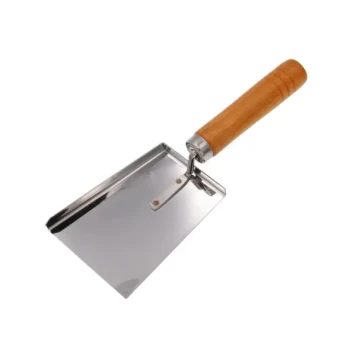
- Stainless Steel Pollen Shovel with Wooden Handle
- Heavy-Duty Ergonomic Grip Galvanized Pollen Shovel
- Removable Plastic Pollen Trap With Ventilated Tray for Bees Pollen Collector
- Plastic Bee Pollen Trap Strips Comb Catcher Collector
People Also Ask
- How is pollen cleaned after it has been dried? Master Efficient Separation for Pure Bee Pollen
- What methods are used to clean harvested bee pollen? Scale Your Beekeeping Operations with the Right Technique
- How can harvested bee pollen be cleaned to remove impurities? Efficient Methods for Commercial and Hobbyist Beekeepers
- How do bee pollen collection tools affect the quality of bee pollen used in functional dairy ice cream production?
- What is the technical significance of using specialized cutting tools for propolis? Master Precision Pollen Harvesting