For modern commercial beekeeping, the suitable honeybee species are primarily Apis mellifera and Apis cerana. Both naturally nest in enclosed cavities and can be managed in hives with movable frames, allowing routine inspections, queen control, brood management, and mechanical honey extraction. Open-nesting species such as Apis dorsata, Apis florea, and Apis andreniformis are generally unsuitable for long-term management in standard commercial box hives.
Species selection determines whether a commercial apiary can use standardized movable-frame equipment at all—and influences hive dimensions, handling tools, transport systems, protective equipment, and extraction capacity. For scalable operations, equipment must be matched not only to species but also to local ecotype, colony temperament, and production objectives.
Which Honeybee Species Suit Movable-Comb Hives?
Apis mellifera: The main commercial choice
The western honeybee, Apis mellifera, is the dominant species in large-scale honey production and crop pollination. Its strong honey production, suitability for migratory beekeeping, and compatibility with standardized equipment make it the usual choice for commercial apiaries.
These colonies are well suited to modular frame hives, supers, wax foundation, queen-management equipment, uncapping systems, and mechanical extractors. Their larger commercial role also supports a broad supply chain for compatible hive hardware and replacement components.
Apis cerana: Suitable for localized and regional operations
The eastern honeybee, Apis cerana, is also adapted to enclosed cavities and movable-comb management. It can be managed using frame hives, although hive dimensions, frame layouts, and colony scale should be selected for local A. cerana populations rather than assumed to be identical to A. mellifera systems.
It is often well suited to forest, plantation, and smaller-scale regional beekeeping environments. Its management value depends on local adaptation, forage availability, colony behavior, and the practicality of obtaining compatible equipment.
Open-nesting species are not standard-hive candidates
Apis dorsata builds large, exposed combs, while Apis florea and Apis andreniformis construct smaller open-air nests. Their nesting behavior does not align with enclosed, reusable frame equipment.
These species may be important wild pollinators and honey resources, but they are not reliable candidates for routine confinement, frame manipulation, or standardized commercial extraction. Attempting to force them into conventional box hives creates a biological and operational mismatch.
How Species Selection Changes Commercial Hive Equipment
The species determines the basic equipment platform
Selecting A. mellifera or A. cerana enables an apiary to standardize around movable frames, modular hive bodies, removable supers, and compatible foundation. This is the foundation for repeatable inspections and scalable operations.
Open-nesting species do not support the same equipment model. For distributors and wholesalers, this distinction is fundamental: standard frame-hive inventories serve cavity-nesting managed bees, not every honeybee species.
Frame and hive dimensions require careful matching
Species and local bee stock can differ in colony size, comb-building behavior, and preferred cavity dimensions. As a result, hive bodies, frame sizes, entrances, and internal spacing should be matched to the selected bee and the management system.
A. mellifera operations often use widely standardized commercial frame systems. A. cerana operations may require regionally appropriate designs or equipment specifically intended for smaller colonies, making configurable product portfolios especially valuable.
Extraction machinery follows colony and operation scale
Movable frames allow honey to be removed by uncapping and centrifugal extraction rather than destroying the comb. This supports repeated harvests, faster processing, and more efficient reuse of drawn comb.
Large A. mellifera operations may justify higher-capacity extractors, uncapping machines, settling tanks, pumps, and honey-processing lines. Smaller A. cerana apiaries may need compact or adaptable equipment rather than maximum-throughput machinery.
Transport equipment reflects the production model
A. mellifera is widely used in migratory beekeeping, where colonies are moved between seasonal flowering sites and agricultural crops. Commercial operators therefore need secure hive bodies, pallets, straps, ventilation solutions, lifting equipment, and transport-ready configurations.
A. cerana operations are more often planned around localized forage, although transport requirements still depend on the business model. Equipment suppliers should distinguish between stationary-apiary packages and migratory-apiary packages instead of treating all customers alike.
Behavioral Traits Also Affect Equipment Requirements
Foraging range influences apiary planning
The supplied references associate A. cerana with a more localized foraging range and A. mellifera with a broader range. These are useful planning tendencies, not fixed limits; actual foraging distance varies with forage density, landscape, weather, colony strength, and local genetics.
The practical implication is that hive equipment should be specified alongside the production environment. Dense local forage may support compact stationary apiaries, while extensive agricultural or orchard operations may require larger colonies, more supers, and more transport capacity.
Temperament affects safety and labor efficiency
Subspecies, races, and regional ecotypes can differ in defensiveness, swarming tendency, productivity, and seasonal behavior. For example, Italian and Russian stocks may present different handling and management requirements, while local highland and lowland populations may also behave differently.
More defensive colonies increase the importance of protective suits, gloves, smokers, hive tools, secure stands, and safe inspection procedures. These items should be included in commercial equipment planning rather than treated as optional accessories.
Colony growth determines modularity needs
A colony may require additional hive volume during nectar flows and reduced space during weaker periods. Modular hive bodies and removable frames allow the beekeeper to adjust capacity without replacing the entire hive.
This flexibility is particularly important when apiaries operate across changing climates, flowering seasons, or multiple bee stocks. Standardized components reduce training requirements, simplify inventory management, and make replacement faster.
Understanding the Trade-offs
Standardization improves scale but limits interchangeability
Using a common frame standard simplifies purchasing, labor, transport, and extraction. However, components from different hive standards are not automatically interchangeable.
A distributor should confirm frame dimensions, box sizes, frame spacing, foundation compatibility, and extractor capacity before supplying a mixed equipment package. “Movable frame” describes the operating principle, not one universal physical standard.
Higher capacity is not always better
Large extractors and heavy-duty handling systems can improve throughput for commercial A. mellifera operations. They may be uneconomical for smaller A. cerana apiaries or producers with limited harvest volumes.
Equipment should be sized to colony count, harvest frequency, labor availability, and expected honey flow. Overcapacity ties up capital and can complicate installation, maintenance, and delivery.
Species is only one selection variable
Choosing A. mellifera or A. cerana does not by itself guarantee productivity. Local ecotype, disease pressure, forage conditions, climate, queen quality, swarming behavior, and beekeeper skill all influence results.
Equipment must therefore support the actual operating context. A technically compatible hive can still perform poorly if its volume, ventilation, handling method, or safety provisions do not suit the bee stock and environment.
Open-nesting bees should not be treated as a standard-hive opportunity
The commercial appeal of wild honeybee species can lead to unsuitable equipment recommendations. Open-air nesting behavior makes routine confinement and non-destructive frame-based management impractical.
For resellers, clearly separating standard managed-bee equipment from products for observational, conservation, or nonstandard applications protects customers from purchasing systems that cannot meet their operational goals.
Making the Right Choice for Your Goal
The most reliable purchasing decision begins with the bee species, production model, and local management conditions.
- If your primary focus is large-scale honey production: Prioritize Apis mellifera equipment built around standardized frames, modular supers, migratory transport systems, and high-capacity uncapping and extraction machinery.
- If your primary focus is localized or regional beekeeping: Select Apis cerana-compatible hive dimensions, frames, and compact extraction equipment suited to local colony size and forage conditions.
- If your primary focus is equipment distribution: Maintain a full-spectrum portfolio covering compatible hive standards, frames, foundation, smokers, protective gear, handling tools, transport equipment, and extraction systems.
- If your primary focus is operational reliability: Verify dimensions and compatibility across every component before ordering, and work with suppliers that provide fast technical responses, dependable fulfillment, and consistent replacement parts.
Selecting the right bee species first allows the entire commercial apiary equipment system to be standardized around biological reality rather than forcing unsuitable species into unsuitable hives.
Summary Table:
| Aspect | Apis mellifera | Apis cerana |
|---|---|---|
| Nesting Behavior | Cavity-nesting; suitable for movable-frame hives | Cavity-nesting; suitable for movable-frame hives |
| Commercial Suitability | Dominant in large-scale honey production and pollination | Suitable for localized/regional operations |
| Hive Dimensions | Standardized commercial frame systems | Regionally appropriate designs; often smaller colony sizes |
| Extraction Equipment | High-capacity extractors, uncapping machines, processing lines | Compact or adaptable equipment for smaller yields |
| Transport Requirements | Migratory beekeeping needs secure transport systems | More stationary; transport depends on business model |
| Behavioral Traits | Broader foraging range; temperament varies by subspecies | More localized foraging; temperament varies by ecotype |
| Equipment Compatibility | Broad supply chain of compatible hardware | May require specialized or configurable components |
At HONESTBEE, we supply a comprehensive range of equipment tailored to your chosen honeybee species and operational scale. For distributors and commercial beekeepers, our one-stop sourcing covers everything from standardized frame hives and extraction machinery to protective gear and transport solutions. Benefit from rapid response times, dedicated service, and ultra-fast delivery. Whether you're expanding your product portfolio or optimizing your apiary, our team is here to support your success. Contact us today to discuss your requirements and let us help you build a reliable, efficient supply chain.
Related Products
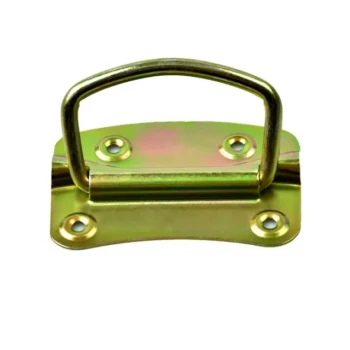
- Professional Grade Foldable Beehive Handles
- Ergonomic Two Person Foldable Hive Lifter
- Professional Frame Comb Fork and Lifter for Efficient Handling
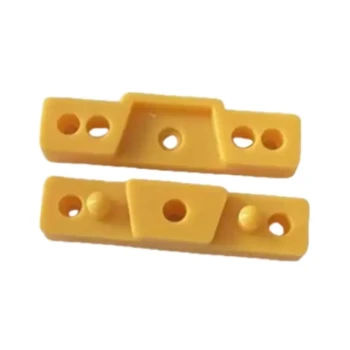
- Durable Plastic Interlocking Hive Connector for Beekeeping
- Wooden Bee Brush with Double-Row Horsehair Bristles
People Also Ask
- How do bee hive handles facilitate the evaluation of food stores? Use the Lift Test for Winter Survival
- How do the geometry and dimensions of hive handles influence operational safety and control? Expert Design Insights
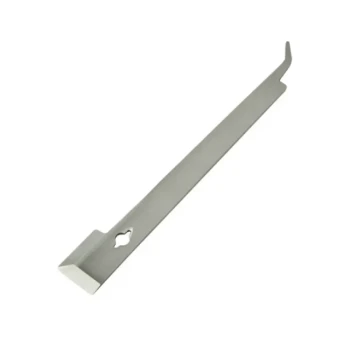
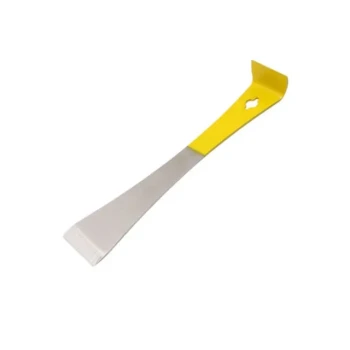
- What is a bee hive tool? Discover Why It’s the Most Essential Hand Tool for Every Beekeeper
- What are the common sizes and features of bee hive tools? Choose the Right Tools for Your Apiary
- What is the role of professional hive tools in routine apiary maintenance? Expert Tips for Hive Health and Longevity