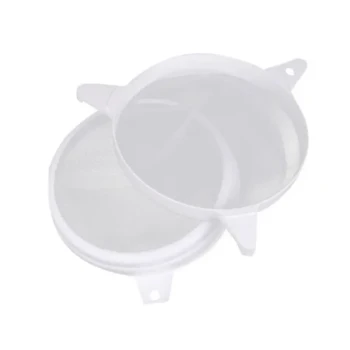
Honey filtration and continuous stirring systems represent the critical bridge between raw harvest and marketable product. By effectively removing suspended particles, wax residue, and biological contaminants, these technologies produce a clear, homogeneous liquid that meets rigorous international export standards while significantly extending shelf life.
The combination of precise filtration and continuous agitation transforms honey from a variable raw ingredient into a stable, high-value commodity. This process removes physical defects and crystallization triggers without compromising the product's biological integrity or safety.
Enhancing Visual and Sensory Appeal
Achieving Market-Ready Clarity
Raw honey often contains suspended solids, including wax particles, pollen grains, and debris. Filtration equipment mechanically screens these impurities out, resulting in the clear, glistening liquid that consumers associate with high quality.
Eliminating Perceived Defects
Beyond solid debris, the processing stage removes trapped air bubbles and fine sediment. These elements can mar the visual presentation, making the honey appear cloudy or "dirty," which directly impacts consumer willingness to pay a premium price.
Ensuring Texture Consistency
Continuous stirring systems are vital for maintaining homogeneity throughout the batch. They prevent separation and ensure that the texture remains smooth and uniform, which is essential for a positive sensory experience during consumption.
Ensuring Product Stability and Safety
Controlling Crystallization
Suspended particles often act as nucleation sites where sugar crystals begin to form. By removing these fine impurities through filtration, and ensuring uniformity through stirring, producers can significantly delay the crystallization process and prolong the product's liquid state.
Preventing Spoilage
Biological contaminants and organic debris can accelerate fermentation or spoilage. Industrial-grade systems facilitate sterile operations, isolating the honey from microorganisms that could compromise its safety or medicinal properties, such as those found in stingless bee honey.
Meeting Export Standards
Global markets require strict adherence to purity and hygiene benchmarks. Automated filtration and stirring workflows ensure the final product consistently meets international food safety regulations, allowing producers to maintain stable profit margins despite fluctuating trade volumes.
Understanding the Trade-offs
The Risk of Over-Processing
While clarity is desirable for mass markets, excessive filtration can remove beneficial pollen. This not only strips the honey of some nutritional value but can also remove the "fingerprint" required to prove geographical origin, which is a selling point for artisanal brands.
Balancing Heat and Mechanics
To facilitate filtration, honey is often warmed; however, imprecise temperature control can be detrimental. Overheating or aggressive mechanical handling can denature sensitive enzymes and destroy volatile natural aromas, reducing the honey's biological activity and flavor profile.
Making the Right Choice for Your Goal
To maximize the value of your honey processing line, align your equipment choice with your target market.
- If your primary focus is global export markets: Prioritize high-efficiency filtration systems that ensure absolute clarity and extended shelf life to meet strict international shipping and storage standards.
- If your primary focus is artisanal or medicinal honey: Select systems with gentle, low-temperature processing capabilities to retain active enzymes and pollen while ensuring basic hygiene.
- If your primary focus is high-volume retail: Invest in automated continuous stirring and filling lines to guarantee batch-to-batch consistency and maximize production efficiency.
True value enhancement lies in balancing the removal of impurities with the preservation of honey's natural character.
Summary Table:
| Feature | Function | Market Value Benefit |
|---|---|---|
| Filtration Systems | Removes wax, pollen, and debris | Achieves premium visual clarity and purity |
| Continuous Stirring | Maintains batch homogeneity | Ensures uniform texture and prevents separation |
| Crystallization Control | Removes nucleation sites | Extends shelf life and maintains liquid state |
| Biological Safety | Isolates contaminants | Meets strict international food safety regulations |
| Gentle Processing | Precise temperature management | Preserves natural enzymes and volatile aromas |
Scaling Your Beekeeping Business with HONESTBEE
Maximize your profit margins and meet global export standards with HONESTBEE. As a premier partner for commercial apiaries and distributors, we provide more than just tools; we offer a complete pathway to professional honey production.
Our comprehensive wholesale range includes:
- Advanced Machinery: From high-efficiency honey-filling machines to automated hive-making equipment.
- Processing Solutions: Industrial filtration and continuous stirring systems designed to preserve honey's natural integrity.
- Full Spectrum Supplies: Beekeeping tools, machinery, consumables, and unique honey-themed cultural merchandise.
Whether you are upgrading a commercial processing line or expanding your distribution portfolio, HONESTBEE delivers the hardware and expertise you need to succeed.
Ready to enhance your honey's market value? Contact our expert team today to discuss your wholesale equipment needs!
References
- Seble Tigistu. Review on Actors and their Value Adding Activities in Honey Value chain; Challenges and Opportunities in Ethiopia. DOI: 10.5281/zenodo.7668740
This article is also based on technical information from HonestBee Knowledge Base .
Related Products
- Electric Double Wall Honey Filtering Machine Purifier Equipment for Honey Processing Plant
- Professional Stainless Steel Honey Filtering Machine with Water Bath Heating for Beekeeping
- 0.5T Capacity Honey Dehumidifier Dryer with Vacuum Heating and Thickening Filtering Machine
- Honey Concentrating and Filtering Dehumidifier Machine 2T Capacity for Honey
- Professional Stainless Steel Honey Filter with Support Handle
People Also Ask
- What types of equipment are used in honey filtering? Build an Efficient System for Pure, Marketable Honey
- What is the process of filtering honey? A Guide to Clean, Pure, and Market-Ready Honey
- What is the overall importance of using the right equipment in honey filtering? Boost Quality & Marketability
- How should honey filtering equipment be properly maintained? Extend Equipment Life & Protect Honey Purity
- What steps are involved in maintaining honey filtering equipment? A Guide to Protecting Your Honey Quality