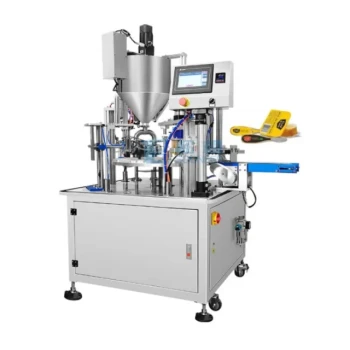
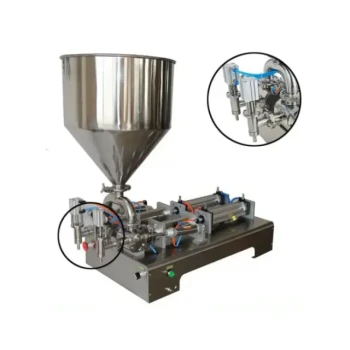
Industrial-grade honey filling machines are the primary mechanism for transforming raw agricultural yields into viable commercial products. They provide the high-precision quantitative filling and strict hygiene controls necessary to ensure honey meets the rigorous consistency and safety specifications required for global market entry. By automating the packaging process, these systems physically isolate the product from contaminants while delivering the efficiency needed to scale operations.
The core value of industrial automation lies in standardization. While traditional methods struggle with consistency, industrial-grade machines guarantee that every unit meets exact volume and hygiene metrics, converting a variable natural resource into a trusted, export-ready commodity.
Transforming Raw Yields into Commercial Assets
Achieving Precise Standardization
The primary function of these machines is high-precision quantitative filling. Raw honey is naturally variable, but the commercial market demands exact specifications. Industrial equipment ensures that every package contains a precise, consistent volume, transforming a primary agricultural product into a standardized commodity.
Enforcing Strict Hygiene Control
Hygiene is the most critical factor in food safety compliance. Industrial machines utilize physical isolation during the filling process to prevent human contact and environmental contamination. This automated barrier is essential for meeting the rigorous sanitary standards mandated by international food safety regulators.
Optimizing Production Efficiency
Manual filling is inherently slow and prone to inconsistency. Automated operation dramatically increases packaging speed and throughput. This efficiency allows producers to meet large-scale demand without sacrificing the quality or accuracy of the final product.
The Mechanics of Market Expansion
Unlocking Global Retail Channels
Major retail chains and international distributors require strict adherence to packaging standards. By ensuring airtight seals and consistent product appearance, industrial machines provide the technical assurance needed to enter these high-level distribution channels. They bridge the gap between small-scale community production and the global marketplace.
Reducing Waste and Loss
Precision technology minimizes product loss during the dispensing phase. Automated systems handle varying viscosities—from runny nectars to thick royal jelly—without the spillage or overfilling common in manual processing. This maximizes the economic yield from every harvest.
Extending Shelf Life
Professional filling equipment plays a direct role in product preservation. By ensuring hygienic sealing and minimizing exposure to air and secondary pollutants, these machines help maintain the biological activity stability of the honey. This results in a longer shelf life, which is vital for logistics and inventory management.
Understanding the Operational Trade-offs
Capital and Complexity
Implementing industrial-grade machinery requires a significant upfront capital investment compared to manual labor. Furthermore, it shifts operational requirements from general labor to specialized technical maintenance, necessitating a skilled workforce to keep the automation running smoothly.
Flexibility Limitations
High-speed industrial machines are optimized for specific container sizes and distinct viscosity ranges. Transitioning between vastly different packaging formats or honey types often requires downtime for recalibration and cleaning, potentially reducing agility for smaller, multi-product batches.
Making the Right Choice for Your Operation
- If your primary focus is entering international markets: You must prioritize machines that offer certified hygiene isolation and high-precision dosing to meet export compliance standards.
- If your primary focus is brand building and consistency: Focus on automation that ensures uniform product appearance and airtight sealing to establish a premium market image.
- If your primary focus is community development and conservation: Leverage industrial processing to increase the economic value of native bee products, creating a financial incentive for local habitat protection.
Industrial-grade filling technology is not just about speed; it is the fundamental tool for validating the quality and safety of your product on a commercial scale.
Summary Table:
| Feature | Industrial Filling Benefit | Commercial Impact |
|---|---|---|
| Dosing Accuracy | High-precision quantitative filling | Eliminates product waste and ensures label compliance |
| Hygiene Control | Physical isolation and automated barriers | Meets international food safety and export standards |
| Production Speed | High-throughput automation | Scales operations to meet large-scale retail demand |
| Product Integrity | Airtight sealing and minimal oxidation | Extends shelf life and maintains biological activity |
| Versatility | Adjustable for various viscosities | Handles everything from runny nectars to royal jelly |
Scale Your Honey Production with HONESTBEE
At HONESTBEE, we understand that for commercial apiaries and distributors, efficiency is the key to global growth. We provide a comprehensive wholesale range of beekeeping tools, specialized hive-making machinery, and high-precision honey-filling machines designed to meet the most rigorous industry standards.
Whether you are looking to upgrade your processing facility with automated hardware or need a reliable supplier for essential consumables and honey-themed merchandise, our team is here to support your expansion. Transform your raw yields into premium commercial assets today.
Contact our experts to find the right equipment for your business
References
- Richie Nimmo. Book review: Buzz: Urban Beekeeping and the Power of the Bee. DOI: 10.1177/1749975515570218e
This article is also based on technical information from HonestBee Knowledge Base .
Related Products
- Precision Durable Efficient HONESTBEE Rotary Honey Filling Machine
- Commercial Rotary Honey Filling Machine for Production
- Fully Automatic Honey Filling Packaging Machine for Processing Line
- Automatic Honey Filling and Filtering Machine for Beekeeping Bottle Filling
- Precision Automated Packaging Turntable Honey Spoon Filling Sealing Packing Machine
People Also Ask
- How do honey filling machines work? Achieve Precision & Speed for Your Apiary
- How do high-precision honey filling machines ensure quality? Optimize Your Commercial Production with HONESTBEE
- What quality control role does professional honey filling equipment perform? Ensure Consistency and Product Stability
- How do honey filling and processing machines aid native bee product conservation? Boost Value with HONESTBEE Technology
- What is a key feature of the new generation of the honey filling machine? The Advanced Electronic Control Unit