Light-proof and sealed plastic storage containers are essential because Royal Jelly contains highly unstable proteins and bioactive substances that degrade rapidly upon exposure to the environment. These containers provide a critical physical barrier against ultraviolet light and oxygen, preventing photo-oxidation and enzymatic breakdown that would otherwise destroy the product's nutritional and medicinal value.
The Bottom Line: Royal Jelly is chemically fragile; its potency relies on active compounds like 10-HDA. Without strict isolation from light and air, these compounds destabilize immediately, rendering the product ineffective regardless of its storage temperature.
The Chemistry of Instability
To understand the container requirement, you must first understand the volatility of the substance itself. Royal Jelly is not a static food product; it is a complex biological compound.
Vulnerability to Oxidation
Royal Jelly contains monosaccharides, disaccharides, and active proteins that are highly reactive with oxygen.
When exposed to air, these components undergo enzymatic reactions and fermentation. This chemical shift degrades the nutritional profile and can alter the physical consistency of the jelly.
Sensitivity to Photo-Degradation
Light is a primary catalyst for decomposition in Royal Jelly.
Ultraviolet (UV) rays trigger photo-oxidation, which breaks down sensitive bioactive ingredients. Even brief exposure to standard room lighting can initiate the deterioration of key physicochemical indicators.
How the Container Preserves Potency
The specific engineering of the container—opaque, sealed, and plastic—directly counters these environmental threats.
Isolating 10-HDA
One of the most critical components in Royal Jelly is 10-HDA (10-hydroxy-2-decenoic acid). This fatty acid is a marker of quality but is extremely sensitive to environmental exposure.
Sealed containers create a near-anaerobic environment. This isolation ensures that 10-HDA and other antioxidant capacities remain biologically active from extraction to the laboratory or market.
Mechanical Protection for Freezing
While glass offers excellent sealing, the prompt specifically highlights plastic containers. This is often due to the thermal requirements of Royal Jelly storage.
To inhibit microbial growth, Royal Jelly must be stored at industrial-grade ultra-low temperatures (typically -18°C or lower). Specialized plastic containers are preferred here because they can withstand rapid deep-freezing without fracturing, unlike many types of rigid glass.
Understanding the Trade-offs
While the right container is the first line of defense, it is not a complete solution on its own.
The Temperature Dependency
A light-proof, sealed container cannot save Royal Jelly stored at room temperature.
The container only handles light and air. Heat causes rapid oxidation and degradation of fatty acids regardless of the packaging. The container must be viewed as part of a system that includes continuous freezing.
Material Integrity
Not all plastics are suitable. The "specialized" nature of these containers implies they must be non-reactive.
Lower-grade plastics may interact with the acidic nature of Royal Jelly over time, potentially leaching chemicals into the product. The container must be specifically designed to maintain physicochemical stability without introducing new contaminants.
Making the Right Choice for Your Goal
When evaluating storage solutions for Royal Jelly, your strategy should depend on your specific preservation objectives.
- If your primary focus is preserving biological activity (10-HDA): Prioritize containers with verified UV-blocking opacity to prevent photo-oxidation of sensitive fatty acids.
- If your primary focus is long-term physical stability: Ensure the plastic is rated for ultra-low temperature resilience (-18°C) to prevent cracking during the necessary freezing process.
Effective preservation requires a synchronized approach: total isolation from light and air, combined with immediate and continuous deep freezing.
Summary Table:
| Environmental Factor | Impact on Royal Jelly | Protective Container Feature |
|---|---|---|
| UV/Light Exposure | Triggers photo-oxidation and breaks down bioactive components | Opaque / Light-proof Material |
| Oxygen Exposure | Causes enzymatic reactions, fermentation, and degradation | Hermetic Air-tight Seal |
| Room Temperature | Rapid oxidation of fatty acids and proteins | Compatible with -18°C Freezing |
| Structural Stress | Glass can fracture during rapid deep-freezing | High-resilience Specialized Plastic |
Maximize the Longevity of Your Royal Jelly Supplies
Preserving the delicate 10-HDA and protein levels in Royal Jelly requires professional-grade storage solutions. HONESTBEE provides commercial apiaries and distributors with high-performance, non-reactive, and UV-opaque containers specifically engineered for deep-freeze stability.
Beyond storage, we offer a comprehensive wholesale portfolio of beekeeping machinery, hive-making tools, and honey-themed cultural merchandise. Let us help you maintain the highest product quality from hive to market.
Contact HONESTBEE Today for Your Wholesale Needs
References
- Ratna Iffany Faradilla Besari, Lilik Eka Radiati. Benguk Tempeh Flour (<i>Mucuna pruriens</i> L.): Royal Jelly Production of <i>Apis mellifera</i> in the Dearth Period. DOI: 10.1051/bioconf/202519100030
This article is also based on technical information from HonestBee Knowledge Base .
Related Products
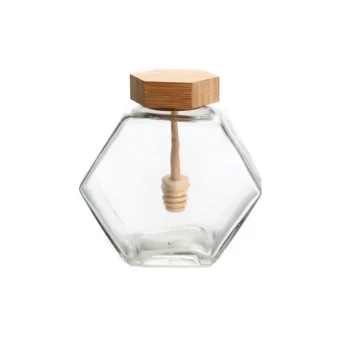
- Hexagonal Glass Honey Jar with Wooden Lid Integrated Dipper Elegant Functional Storage
- Classic Glass Honey Jar with Metal Lug Cap for Beehive Storage
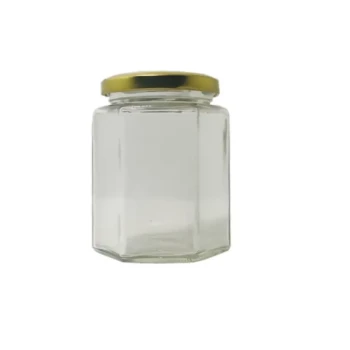
- Hexagonal Glass Honey Jars with Metal Lug Caps Elegant Versatile Packaging
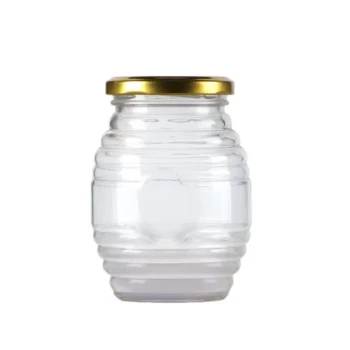
- Classic Drum Shaped Glass Honey Jar with Airtight Lid
- No Grafting Queen Rearing Kit: System for Royal Jelly Production and Queen Rearing
People Also Ask
- What are the benefits of glass jars regarding strength and safety for storing honey? Ensure Purity and Long-Term Quality
- What are the advantages of using glass jars for honey storage? Ensure Purity and Premium Appeal for Your Product
- What is the aesthetic appeal of using glass jars for honey? Elevate Your Brand with Premium Packaging
- What are the advantages of glass containers for honey? Elevate Quality and Market Value with Premium Packaging
- What are the benefits of using high-transparency Glass Jars for honey? Elevate Purity and Premium Branding