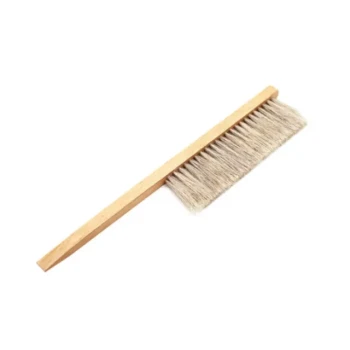
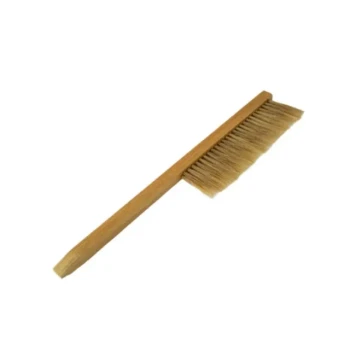
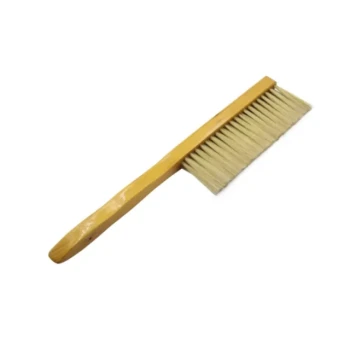
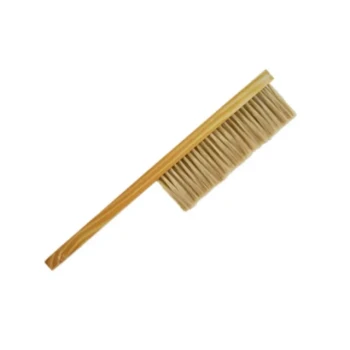
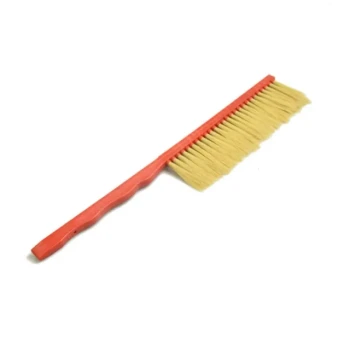
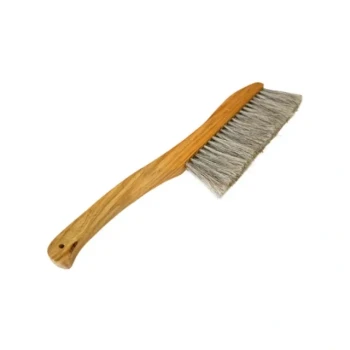
Soft fine-bristle brushes are the definitive standard for handling stingless bees because these specimens possess small bodies and exceptionally fragile exoskeletons. Using the flexible bristles of a soft brush allows for the gentle transfer of newly emerged or adult bees from brood combs to hoarding cages, significantly minimizing the risk of mechanical damage and mortality.
By minimizing physical trauma during transfer, soft brushes ensure that specimen survival rates remain high and that subsequent physiological data reflects the bee's natural state rather than the stress of handling.
The Physiological Vulnerability of Stingless Bees
Navigating Delicate Exoskeletons
Stingless bees are physically distinct from standard honeybees, often being much smaller in size.
Their exoskeletons are relatively fragile, a trait that is even more pronounced in newly emerged adults found within brood combs.
Preventing Mechanical Trauma
Rigid tools, such as hard forceps, apply point-pressure that often exceeds the structural limits of the bee.
This concentrated force can easily crush the exoskeleton or damage limbs, leading to injuries that—even if not immediately visible—are often fatal.
Why the Brush Mechanics Matter
Distributed Pressure
The core advantage of a fine-bristle brush is flexibility.
Upon contact, the bristles bend, which distributes the force of the movement across a wider surface area of the bee rather than focusing it on a single, vulnerable point.
Safe Transfer to Hoarding Cages
The brush effectively guides the bee without the need for grasping or pinching.
This allows for a low-impact transfer from the nest to hoarding cages, preserving the physical integrity of the specimen.
The Impact on Research Integrity
Eliminating Confounding Variables
In scientific research, it is critical to distinguish between natural mortality and mortality caused by the handler.
Just as with other delicate invertebrates, using flexible tools ensures that observed outcomes are due to the experimental variables, not physical injury from the transfer process.
Ensuring Accurate Physiological Data
Trauma during handling does not just risk killing the bee; it can alter its internal biology.
Using soft brushes prevents stress-induced changes, ensuring the accuracy of sensitive physiological metrics, such as glandular protein content measurements.
Understanding the Trade-offs
Speed vs. Safety
While brushes offer the highest safety profile, the transfer process is manual and time-consuming.
Researchers processing high volumes of specimens may find this method slower compared to vacuum-based aspiration, though the latter carries higher risks of damage.
Operator Technique
The tool is only as effective as the hands using it.
While the bristles are soft, successful transfer still requires steady motor skills to avoid pinning the bee against the substrate with the ferrule (metal part) of the brush.
Making the Right Choice for Your Goal
Selecting the correct handling method depends on balancing your need for throughput against the requirement for specimen viability.
- If your primary focus is physiological research: Prioritize soft brushes to ensure glandular protein levels and metabolic states remain unaltered by physical trauma.
- If your primary focus is basic colony maintenance: Use brushes for high-value individuals (like queens) or newly emerged bees, where the exoskeleton is softest.
Ultimately, the soft fine-bristle brush represents the optimal balance between manual control and biological preservation.
Summary Table:
| Feature | Soft Fine-Bristle Brush | Rigid Handling Tools (Forceps) |
|---|---|---|
| Pressure Distribution | Evenly distributed across bristles | High point-pressure on single area |
| Impact on Exoskeleton | Minimal risk of crushing or damage | High risk of fracture or limb loss |
| Research Integrity | Maintains natural physiological state | Risks stress-induced data errors |
| Ideal Use Case | Newly emerged bees & delicate research | Robust adult specimens (with caution) |
| Specimen Safety | Excellent; avoids mechanical trauma | Poor; high potential for mortality |
Elevate Your Bee Research and Operations with HONESTBEE
Preserving the health of your colony starts with the right equipment. HONESTBEE specializes in providing commercial apiaries and distributors with high-quality, professional-grade beekeeping tools and machinery. Whether you are conducting sensitive research on stingless bees or managing large-scale honey production, our portfolio offers everything from precision handling tools to advanced honey-filling and hive-making machines.
Why partner with HONESTBEE?
- Comprehensive Wholesale Offering: A complete range of beekeeping hardware and essential consumables.
- Built for Professionals: Our tools are designed to maximize specimen survival and operational efficiency.
- Global Reach: We cater specifically to the needs of industry distributors and large-scale apiaries.
Ensure your specimens remain healthy and your yields stay high. Contact us today to explore our full product catalog and wholesale solutions!
References
- Lars Straub, Jakkrawut Maitip. Age-dependent hypopharyngeal gland size and protein content of stingless bee workers, Tetragonula pagdeni. DOI: 10.1371/journal.pone.0308950
This article is also based on technical information from HonestBee Knowledge Base .
Related Products
- Wooden Bee Brush with Double-Row Horsehair Bristles
- Classic Wooden Bee Brush with Double-Row Boar Bristles
- Wooden Bee Brush with Triple Row Artificial Fiber for Beekeeping
- Double Row Artificial Fiber Bee Brush for Beekeeping
- Plastic Handle Single Row Artificial Fiber Bee Brush
People Also Ask
- Why is a bee brush necessary when extracting honeybee hive frames that contain larvae? Protect Your Brood and Colony
- What is the correct way to use a bee brush and what actions should be avoided? Master Gentle Hive Management
- What are the specific functions of the bee brush and the sealed sampling bottle? Optimize Your Parasite Sampling.
- What is a bee brush and what is it used for? Master Precision Bee Removal with Gentle Sweeping Techniques
- What is a bee brush used for in beekeeping? Essential Tool for Safe Hive Inspections & Honey Harvesting