Standardized movable frame hives are the technological prerequisite for modern, intensive beekeeping. They are required because they enable beekeepers to perform critical, non-destructive inspections for pests and diseases while managing the colony's growth by manipulating individual combs. Furthermore, the uniform structure of these hives facilitates large-scale migratory beekeeping, allowing operations to physically transport colonies to capitalize on seasonal nectar flows.
The movable frame transforms the hive from a static enclosure into a modular management system. This allows for granular control over colony health and resource allocation, which is impossible to achieve with traditional fixed-comb methods.
The Mechanics of Colony Health
To manage Western honey bees (Apis mellifera) intensively, you must be able to intervene in the colony's biology without destroying its infrastructure.
Non-Destructive Inspection
In traditional wall or log hives, inspecting the brood nest often requires cutting out comb, which damages the colony. Movable frames allow you to lift out individual sheets of comb to diagnose diseases or pest infestations. You can then return the frame exactly as it was, minimizing stress and rebuilding time for the bees.
Precision Queen Management
Intensive management requires the ability to locate and manipulate the queen. Movable frames allow you to isolate the queen or move frames of brood between hives to balance colony strength. This modularity ensures that weak colonies can be bolstered before they collapse.
Separation of Brood and Storage
Standardized hives often utilize vertical layering to separate the brood chamber from honey storage (supers). This architectural configuration isolates the queen's laying area from the honey harvest, simplifying maintenance and ensuring the purity of the extracted product.
Maximizing Production Through Mobility
Intensive management is rarely stationary; it follows the bloom. The physical standardization of the hive is what makes this logistics challenge solvable.
The Migratory Advantage
High-efficiency production relies on moving colonies to different altitudes and regions to follow peak flowering periods. The standardized, stackable nature of movable frame hives allows them to be loaded onto trucks in bulk. This mobility significantly increases honey yield compared to stationary traditional hives.
Streamlined Honey Extraction
Standardized frames are designed to fit into centrifugal extractors. Because the frames guide bees to build combs in organized, rectangular patterns, the honey can be harvested mechanically without destroying the wax comb. The empty combs are returned to the hive, allowing bees to refill them immediately rather than wasting energy secreting new wax.
The Role of Standardization
Beyond the physical movement of frames, the standardization of dimensions provides operational stability.
Operational Consistency
Using specific dimensions (such as 300mm by 470mm frames) ensures that equipment is interchangeable across an entire operation. If a hive body is damaged, it can be swapped instantly without disturbing the internal frames. This uniformity is crucial for scaling operations from a few hives to thousands.
Scientific Control and Measurement
For research and data-driven management, standardization creates a predictable baseline. It allows researchers and managers to control variables such as initial colony weight and total comb surface area. This precision is necessary to accurately measure foraging pressure and competition levels in a target area.
Understanding the Trade-offs
While movable frame hives are superior for production, they introduce specific challenges that must be managed.
Risk of Cross-Contamination
Because frames are interchangeable, it is easy to accidentally spread pathogens (like American Foulbrood) from a sick colony to a healthy one during management. Strict hygiene protocols are required when moving biological material between hives.
Thermal Efficiency vs. Convenience
Standardized wooden boxes are often less insulated than natural tree cavities or thick log hives. While they maximize accessibility for the beekeeper, they may require additional interventions—such as insulation wrapping—to protect the colony during harsh weather conditions.
Making the Right Choice for Your Goal
The movable frame hive is a tool designed for intervention. How you use it depends on your specific management objectives.
- If your primary focus is Disease Control: Leverage the movable frames to perform regular brood pattern inspections, identifying issues before they become systemic.
- If your primary focus is Maximum Yield: Utilize the standardized stacking ability to separate honey supers from brood and transport colonies to areas with the highest nectar density.
- If your primary focus is Research: Rely on the uniform frame dimensions to establish consistent baselines for colony weight and population density experiments.
Success in intensive beekeeping comes from using the flexibility of the frame to serve the biological needs of the colony.
Summary Table:
| Feature | Traditional Fixed-Comb Hives | Standardized Movable Frame Hives |
|---|---|---|
| Inspection | Destructive; requires cutting comb | Non-destructive; individual frame removal |
| Disease Control | Difficult to monitor or isolate | Precise diagnosis and modular treatment |
| Mobility | Stationary; difficult to transport | Stackable design for migratory beekeeping |
| Honey Harvest | Comb is destroyed during harvest | Centrifugal extraction; wax comb is reused |
| Scalability | Low; equipment is often unique | High; interchangeable parts across operations |
Scale Your Apiary with HONESTBEE Precision Equipment
Maximize your honey yield and operational efficiency with the industry's most reliable standardized equipment. HONESTBEE specializes in catering to commercial apiaries and distributors, providing a comprehensive wholesale catalog that ranges from specialized hive-making and honey-filling machinery to high-quality beekeeping tools and consumables.
Whether you are managing thousands of colonies or supplying the next generation of beekeepers, our hardware ensures the consistency and durability your business demands. Let us help you streamline your production—contact our expert team today to discuss our full spectrum of professional beekeeping solutions.
References
- D. P. Abrol. Introduction of<i>Apis mellifera</i>in Jammu and Kashmir: present status and future prospects. DOI: 10.1080/0005772x.2004.11099616
This article is also based on technical information from HonestBee Knowledge Base .
Related Products
- Professional Grade Foldable Beehive Handles
- Professional Multi-Function Stainless Steel Hive Tool
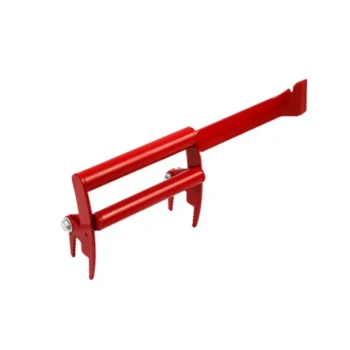
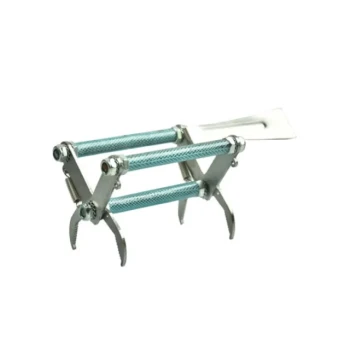
- Heavy-Duty Lever-Action Frame Grip with Hive Tool
- Wooden Bee Hive Frames for Beekeeping and Wholesale
- Plastic Bee Frame Beekeeping Hive Frames for Wholesale
People Also Ask
- How do bee hive handles facilitate the evaluation of food stores? Use the Lift Test for Winter Survival
- How do the geometry and dimensions of hive handles influence operational safety and control? Expert Design Insights
- What is a bee hive tool? Discover Why It’s the Most Essential Hand Tool for Every Beekeeper
- What are the common sizes and features of bee hive tools? Choose the Right Tools for Your Apiary
- What is the role of professional hive tools in routine apiary maintenance? Expert Tips for Hive Health and Longevity