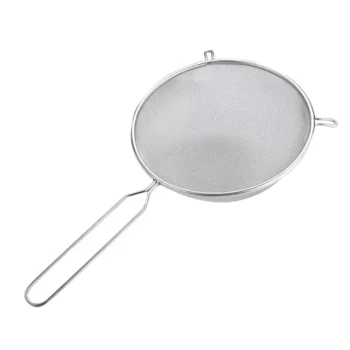
The requirement for a 0.5 mm stainless steel sieve is driven by the need for chemical neutrality and sample homogeneity. This specific aperture size is the industry standard for mechanically removing macroscopic debris—such as wax and bee parts—without altering the honey's fundamental matrix. Additionally, the stainless steel construction prevents chemical reactions that could contaminate the sample and skew analytical data.
Core Takeaway The 0.5 mm sieve acts as a critical standardization tool, stripping away physical contaminants that interfere with optical and electrochemical instruments while preserving the chemical integrity of the honey for accurate analysis.
Ensuring Sample Representativeness
Mechanical Removal of Impurities
The primary function of the 0.5 mm aperture is physical filtration. Raw honey often contains "coarse impurities" and foreign matter acquired during the extraction process.
This specific mesh size effectively creates a barrier against residual wax debris, honeycomb fragments, and bee parts. Removing these solids is the first step in converting a raw product into a testable sample.
Achieving Consistency
For analysis to be valid, the sample must be consistent throughout. A sample containing random suspended solids is not representative of the batch.
Passing the honey through this sieve homogenizes the liquid. This ensures that any aliquot (portion) taken for testing accurately represents the physical and chemical properties of the whole.
The Critical Role of Material Selection
Preventing Chemical Contamination
The choice of stainless steel is as important as the aperture size. Honey is naturally acidic and can react with reactive metals.
Using stainless steel prevents the equipment itself from leaching metallic ions into the sample. This avoids chemical contamination, ensuring that the chemical indicators detected during analysis are native to the honey and not artifacts of the preparation equipment.
Impact on Analytical Accuracy
Protecting Optical Measurements
Many honey analysis methods rely on optical physics, such as refractive index measurements to determine moisture content.
Particulate matter left in the sample can scatter light, leading to erratic or incorrect readings. The 0.5 mm filtration step removes the suspended solids that cause this optical interference.
Ensuring Electrochemical Precision
Advanced testing often involves electrochemical detection. Solid impurities can physically block electrodes or alter the electrical properties of the solution.
By removing these physical contaminants, the sieve ensures that the sensors interact directly with the honey matrix, yielding precise and reproducible results.
Understanding the Trade-offs
Balancing Clarity and Composition
The goal of pretreatment is to clean the sample, not to refine it into a different product.
A 0.5 mm sieve represents a calculated balance. It is fine enough to catch visible debris that skews mass and sensory data, yet coarse enough to allow the viscous fluid to pass without requiring excessive heat or pressure that might degrade heat-sensitive enzymes.
The Risk of Inadequate Filtration
Failing to use this specific aperture allows foreign matter to persist.
This introduces a variable error margin in every subsequent test. Even if the chemistry of the honey is perfect, the presence of wax particles can artificially inflate solid content readings or alter sensory profiles.
Making the Right Choice for Your Goal
- If your primary focus is Instrumental Accuracy: Ensure strict adherence to the 0.5 mm standard to prevent particulate interference with refractometers and electrodes.
- If your primary focus is Chemical Purity: Verify the sieve is high-grade stainless steel to eliminate the risk of metallic leaching into acidic honey samples.
By standardizing the physical state of the sample, you transform a variable raw product into a consistent analyte ready for precise measurement.
Summary Table:
| Feature | Specification/Benefit | Impact on Analysis |
|---|---|---|
| Aperture Size | 0.5 mm | Removes wax, bee parts, and coarse debris without affecting honey matrix. |
| Material | Stainless Steel | Prevents chemical reactions and metallic leaching in acidic honey samples. |
| Homogenization | Physical Filtration | Ensures consistent aliquots and representative testing results. |
| Optical Clarity | Particle Removal | Eliminates light scattering for accurate refractive index measurements. |
| Electrochemical | Solid Elimination | Prevents electrode blocking and ensures precise sensor interaction. |
Elevate Your Honey Processing with HONESTBEE Precision Tools
At HONESTBEE, we understand that accuracy in honey analysis starts with superior equipment. Whether you are a commercial apiary or a distributor, our high-grade stainless steel sieves and filtration systems are designed to meet the strictest industry standards for sample purity.
Beyond filtration, we supply the full spectrum of beekeeping tools, from specialized honey-filling machines to automated hive-making equipment and essential consumables. Partner with HONESTBEE to enhance your production efficiency and ensure the chemical integrity of your products.
Contact Our Experts Today to discover how our comprehensive wholesale solutions can benefit your business!
References
- Lara Sobrino‐Gregorio, Isabel Escriche. Using an automatic pulse voltammetric electronic tongue to verify the origin of honey from Spain, Honduras, and Mozambique. DOI: 10.1002/jsfa.10022
This article is also based on technical information from HonestBee Knowledge Base .
Related Products
- Stainless Steel Bee Hive Frame Wire for Beekeeping
- Stainless Steel Double Layer Honey Strainer Sieve Filters
- Professional Stainless Steel Honey Filter with Support Handle
- Stainless Steel Triangle Support Honey Strainer and Filters
People Also Ask
- What are the arguments for and against wiring beehive frames? Balance Durability and Management Flexibility
- What are the drawbacks of wiring beehive frames? Key Limitations and Structural Trade-offs Revealed
- How is the wire secured at the top of the frame? A Guide to Locking in Tension for Strong Honeycomb
- What factors determine the amount of wiring needed in beehive frames? Tailor Your Strategy for Your Climate
- What tools are needed to wire a beehive frame? Essential Equipment for Durable Frame Construction