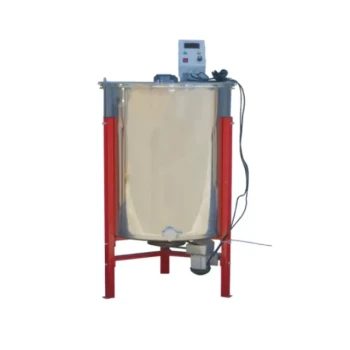
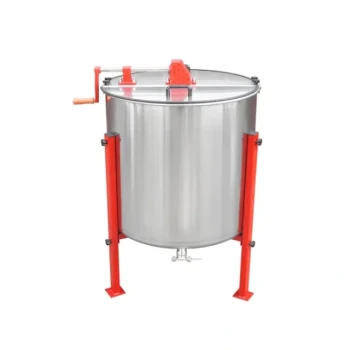
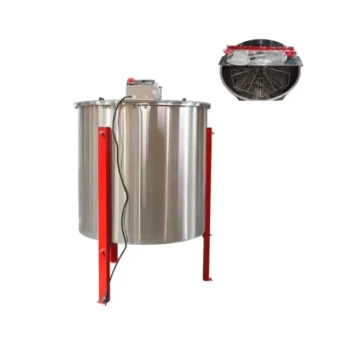
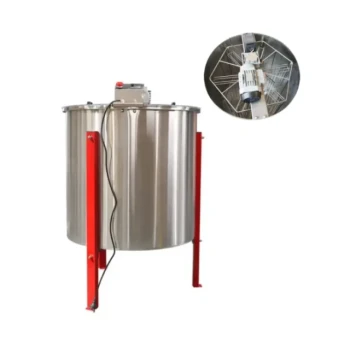
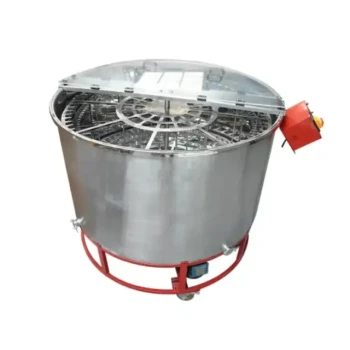
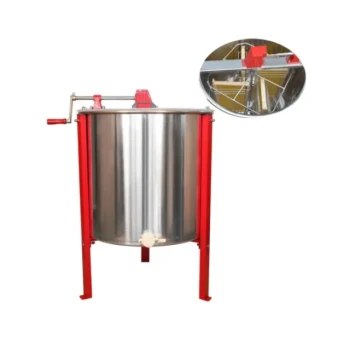
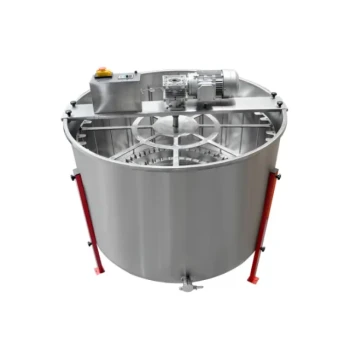
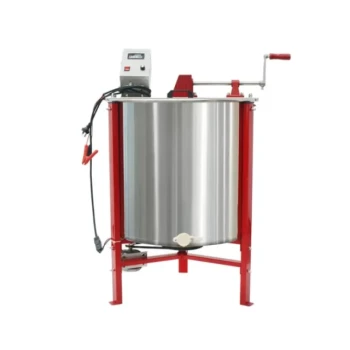
Centrifugal separation is the critical factor in harvesting premium honey because it extracts the liquid without destroying the wax honeycomb structure. By spinning the frames rather than crushing them, you prevent the introduction of organic impurities—such as bee larvae, excess pollen, and wax debris—that typically contaminate honey during manual squeezing methods.
By utilizing centrifugal force, you decouple the harvesting process from the destruction of the comb. This ensures that the final product retains the purity and clarity required for high-end markets while simultaneously preserving the colony's hard work.
The Mechanics of Purity
To understand why centrifugal extraction is superior for quality, you must look at what it leaves behind.
Eliminating Contamination Risks
Manual harvesting often involves crushing the comb to squeeze out the honey. This destructive process inadvertently mixes the honey with "non-honey" elements found within the hive.
A centrifugal extractor avoids this entirely. It applies rotational force to pull the liquid honey out of the cells while leaving heavier solids and structural elements in place. This prevents the accidental inclusion of bee larvae, wax particles, or excessive pollen loads that can ruin the flavor profile and visual clarity of the harvest.
Meeting Market Standards
High-end consumers and commercial buyers demand clarity and consistency. Honey harvested via crushing often appears cloudy and requires aggressive filtration to remove debris.
Aggressive filtration can strip honey of beneficial enzymes and trace pollen that verify its origin. Centrifugal extraction delivers a cleaner raw product immediately, reducing the need for post-processing and preserving the honey’s natural characteristics.
The Strategic Value of Comb Preservation
While your surface goal is quality, the deeper value of a centrifugal extractor lies in resource management. This device allows you to treat the honeycomb as a reusable asset rather than a disposable wrapper.
Immediate Comb Reuse
Because the extractor spins the honey out without damaging the physical structure of the wax, the empty combs remain intact.
Beekeepers can immediately return these empty frames to the beehive. This creates a seamless cycle where the colony can instantly begin refilling the cells rather than spending time on reconstruction.
The Energy Equation
Beeswax production is biologically expensive for a colony. It is estimated that bees must consume 8 to 10 kilograms of honey to secrete just 1 kilogram of wax.
By preserving the comb structure through centrifugal extraction, you save the colony this massive energy expenditure. Instead of eating their own honey reserves to rebuild the hive, bees can direct that energy toward foraging and honey production, significantly shortening the production cycle.
Understanding the Trade-offs
While centrifugal extractors are the standard for quality and efficiency, they introduce operational variables that differ from manual methods.
Maintenance and Hygiene
Unlike simple crushing tools, a centrifugal extractor is a machine with moving parts. It requires a rigorous cleaning regimen to prevent fermented honey or bacterial buildup in the drum or on the spinning cage between harvests.
Capital vs. Labor
This method shifts the cost from labor (manual squeezing) to capital (buying the machine). While it increases yield and quality, it requires an upfront investment and storage space for the equipment, which may be a consideration for micro-apiaries.
Making the Right Choice for Your Goal
The decision to use a centrifugal extractor impacts both the quality of your current bottle and the volume of your next harvest.
- If your primary focus is Market Quality: The centrifugal method is non-negotiable for producing clear, debris-free honey without requiring heavy filtration that degrades the product.
- If your primary focus is Production Speed: The ability to return intact combs to the hive eliminates the wax-building phase, significantly shortening the time between harvests.
Mastering extraction is not just about getting honey out; it is about keeping the ecosystem intact.
Summary Table:
| Feature | Centrifugal Extraction | Manual Crushing/Squeezing |
|---|---|---|
| Honey Clarity | High (minimal debris) | Low (cloudy/requires heavy filtering) |
| Comb Integrity | Preserved & Reusable | Destroyed |
| Resource Savings | Saves 8-10kg honey per 1kg wax | High energy cost for hive rebuild |
| Contamination Risk | Low (no larvae/wax debris) | High (organic impurities mixed in) |
| Production Cycle | Shortened (fast turnaround) | Extended (reconstruction needed) |
Maximize Your Harvest Quality with HONESTBEE
At HONESTBEE, we specialize in empowering commercial apiaries and distributors with professional-grade beekeeping technology. Whether you need high-capacity centrifugal honey extractors, specialized honey-filling machines, or durable hive-making equipment, our comprehensive wholesale solutions are designed to enhance your production efficiency and market value.
Don’t let manual methods slow down your growth or compromise your honey’s purity. Partner with HONESTBEE to access the full spectrum of industrial beekeeping tools and essential consumables.
Ready to scale your apiary or distribution business?
Contact our expert team today to discuss our wholesale offerings and how we can support your success.
References
- Shukurala Chaimiso. Assessment of Constraints and Opportunities of Honey Production in Gombora Haddiya Zone, South Nation Nationality and People Regional State, Ethiopia. DOI: 10.55014/pij.v1i3.48
This article is also based on technical information from HonestBee Knowledge Base .
Related Products
- electric honey extractor honey centrifuge 3 frame honey extractor stainless steel honey frame extractor
- Manual Hand Crank 4 Frame Honey Extractor Centrifuge for Beekeeping
- Professional 4 Frame Self Reversing Electric Honey Extractor for Beekeeping
- 24 Frame Honey Extractor Commercial Radial Honey Frame Extraction Machine
- Electric 4 Frame Tangential Honey Extractor
People Also Ask
- What are the characteristics of electric honey extractors? Boost Your Apiary Efficiency with Automated Technology
- What are the disadvantages of using an electric honey extractor? Weighing Cost, Power, and Comb Safety
- What are the advantages of an electric honey extractor? Boost Efficiency and Scale Your Honey Production
- What are the technical advantages of electric honey extractors? Maximize Yield and Protect Your Bee Colony
- How does an electric honey extractor affect the quality of honey? Preserve Flavor & Purity with Precision Extraction