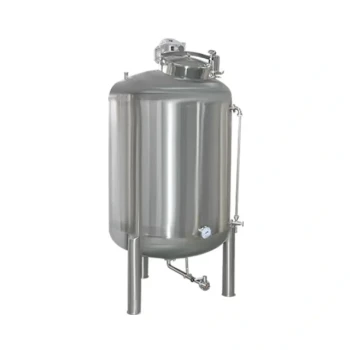
Controlled low-temperature storage is the definitional requirement for stabilizing the volatile biochemistry of stingless bee honey during research. Equipment such as constant temperature chambers, specifically when set to 4°C, significantly inhibits internal biochemical reactions and slows the degradation of physicochemical properties. By creating a precise environment, researchers can ensure bioactive components remain stable for a year or longer, enabling accurate validation of shelf life and storage protocols.
High-moisture stingless bee honey is naturally unstable; without precise low-temperature intervention, rapid fermentation and enzymatic degradation render long-term research data invalid.
The Biochemistry of Degradation
Combating High Moisture Content
Stingless bee honey is biologically distinct from common honey due to its naturally higher moisture levels.
This characteristic makes it highly susceptible to spontaneous fermentation and the growth of spoilage bacteria.
Controlled storage equipment suppresses the activity of yeast and bacteria that thrive in these high-moisture environments.
Inhibiting Enzyme Activity
The medicinal value of this honey lies in its unique enzymatic profile.
However, these enzymes are heat-sensitive and can degrade rapidly under fluctuating ambient temperatures.
Low-temperature chambers act as a "metabolic brake," effectively pausing enzyme activity to preserve the honey's original biological state.
Preventing Oxidative Degradation
Exposure to heat accelerates the breakdown of core bioactive components.
Key compounds, such as flavonoids and phenolic acids, are preserved only when oxidative processes are slowed by cold environments.
Storage equipment ensures these antioxidants remain at therapeutic concentrations throughout the research period.
The Role of Equipment in Research Validity
Establishing a Stability Baseline
To conduct valid long-term research, environmental variables must be eliminated.
Constant temperature chambers provide a static environment (e.g., exactly 4°C) that allows researchers to isolate time as the only variable.
This isolation is necessary to prove that physicochemical indicators can remain stable for 12 months or more.
Preventing Non-Enzymatic Browning
Honey often undergoes color changes known as non-enzymatic browning during storage.
This reaction is temperature-dependent and alters the sensory profile of the honey.
Controlled equipment prevents this aesthetic and flavor degradation, ensuring the "end-state" product resembles fresh honey.
Validating Supply Chain Models
Research is rarely just theoretical; it aims to solve logistical problems.
Using this equipment allows scientists to model "best-case" scenarios for warehousing.
The data gathered validates whether cold-chain logistics are a viable investment for extending commercial shelf life.
Common Pitfalls to Avoid
Over-Reliance on Temperature Alone
Temperature control is critical, but it is not a cure-all.
If the honey is not sealed in chemically inert containers (like glass or sterile centrifuge tubes), it may still absorb moisture or oxidize.
Equipment must be used in conjunction with high-integrity sealing to prevent secondary fermentation.
The Risk of Equipment Failure
Unlike low-moisture honey, stingless bee honey has very little buffer against spoilage.
A failure in the cooling mechanism can lead to rapid fermentation in a matter of hours or days.
Research protocols must include redundancy or monitoring alarms to protect long-term samples.
Making the Right Choice for Your Research
To ensure your storage protocols yield actionable data, align your equipment use with your specific research metrics:
- If your primary focus is Shelf Life Validation: Utilize constant temperature chambers at 4°C to demonstrate stability over a 12-month timeline.
- If your primary focus is Bioactive Preservation: Combine low-temperature storage (4–8°C) with sterile, inert sealing to minimize oxidative loss of phenolic compounds.
- If your primary focus is Supply Chain Optimization: Use the equipment to simulate warehouse conditions, validating the ability to hold inventory for peak market demand.
Precision in temperature control is the only way to transform a volatile, perishable substance into a consistent, high-value data point.
Summary Table:
| Factor | Impact of High Temperature | Benefit of Controlled Low-Temp (4°C) |
|---|---|---|
| Moisture/Yeast | Rapid fermentation & spoilage | Suppresses microbial & yeast activity |
| Enzyme Activity | Rapid degradation/loss of value | Acts as a "metabolic brake" to preserve enzymes |
| Oxidative Stress | Breakdown of flavonoids/phenolics | Slows oxidative processes & preserves antioxidants |
| Visual Quality | Non-enzymatic browning | Maintains original color & sensory profile |
| Research Data | High variability/invalid results | Provides stability baseline for valid 12-month studies |
Elevate Your Honey Quality with HONESTBEE Professional Solutions
At HONESTBEE, we understand that the delicate nature of stingless bee honey requires precision-engineered solutions. Whether you are a commercial apiary looking to stabilize your harvest or a distributor seeking to maintain product integrity throughout the supply chain, our comprehensive wholesale portfolio has you covered.
From specialized honey-filling machines that ensure sterile sealing to advanced beekeeping tools and machinery, we provide the hardware necessary to transform volatile raw honey into a high-value commercial product. Our expertise spans the full spectrum of industry consumables and honey-themed cultural merchandise designed to help your brand stand out.
Ready to optimize your honey storage and production? Contact us today to discuss your equipment needs
References
- Mayara Faleiros-Quevedo, Tiago Maurício Francoy. Stingless bees honeys': physical-chemical characterization, difficulties and challenges. DOI: 10.33448/rsd-v11i6.28996
This article is also based on technical information from HonestBee Knowledge Base .
Related Products
People Also Ask
- What economic role do honey storage tanks play? Boost Your Revenue Through Strategic Inventory Management
- What roles do industrial honey storage tanks and filtration meshes play in processing? Ensure Purity & Consistency
- What is the purpose of a honey storage tank? Streamline Your Honey Processing for Quality & Efficiency
- What are honey storage tanks used for? Essential Features for Quality Preservation and Profit
- How do large honey storage tanks and gravity fall filling systems improve honey packaging efficiency and safety?