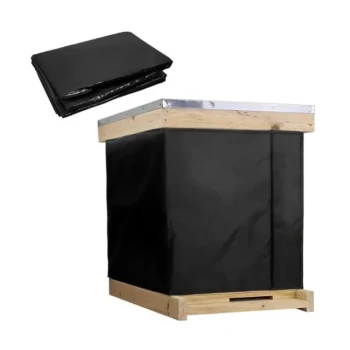
Maintaining a closed hive cover is the single most critical factor for winter colony survival. During the cold months, honey bees do not hibernate; instead, they form a tight cluster to generate warmth, striving to maintain a central temperature in the mid-90s Fahrenheit. Opening the hive breaks this thermal seal, releasing essential heat and exposing the colony to rapid temperature drops that can be fatal.
The primary defense a colony has against freezing temperatures is the containment of metabolic heat generated by the winter cluster. Opening the hive breaches this insulation, dissipating the warmth required to keep the bees alive.
The Mechanics of Winter Survival
The Winter Cluster
To survive freezing external temperatures, bees rely on a collective survival mechanism known as the winter cluster.
They pack tightly together, vibrating their wing muscles to generate metabolic heat.
According to established data, the goal of this cluster is to maintain a specific core temperature in the mid-90s Fahrenheit.
The Danger of Thermal Shock
The hive cover acts as the ceiling of a heated room.
Removing it creates a "chimney effect," allowing the warm air that has risen to the top of the box to escape instantly.
Once this heat is lost, the bees must consume excessive amounts of their stored honey to generate enough energy to reheat the space, which risks starvation before spring.
Structural Insulation and Design
The Role of the Inner Cover
The physical components of the hive are designed to aid in temperature regulation.
Specifically, the inner cover creates a "dead air space" between the colony and the outer elements.
This pocket of air acts as a critical insulation layer, buffering the colony against extreme cold and reducing temperature fluctuations.
Natural Hive Geometry
The design of hive boxes, particularly 8-frame hives, mimics the dimensions of hollowed-out trees found in nature.
Bees naturally build their nests upwards rather than side-to-side.
This vertical structure supports their instinct to move upward into their food stores while keeping the heat concentrated in a narrower column.
Common Pitfalls to Avoid
The Urge to Inspect
A common mistake for beekeepers is the desire to visually inspect food stores or colony health during winter.
While the intention is good, the trade-off is too high; the momentary insight is not worth the loss of thermal integrity.
Disassembling hive bodies to check frames disrupts the cluster and breaks the propolis seals that prevent drafts.
Safe Maintenance Alternatives
You can monitor and assist the hive without cracking the seal.
It is good practice to check the hive entrance for blockages caused by dead bees.
Using a tool like an old bee brush or a plastic coat hanger, you can gently clear the entrance to ensure airflow without ever opening the box.
Making the Right Choice for Your Goal
To ensure your colony makes it to spring, prioritize heat retention over curiosity.
- If your primary focus is Colony Survival: Keep the hive cover strictly closed to maintain the critical mid-90s Fahrenheit core temperature.
- If your primary focus is Hive Maintenance: Restrict your activity to clearing the lower entrance of debris using external tools, leaving the hive bodies intact.
Success in winter beekeeping is defined by doing less, trusting the bees' thermal regulation, and keeping the heat inside where it belongs.
Summary Table:
| Factor | Impact on Winter Survival | Why It Matters |
|---|---|---|
| Winter Cluster | Core temp: mid-90s°F | Bees vibrate wing muscles to generate metabolic heat. |
| Hive Cover | Thermal Seal | Prevents the "chimney effect" where essential heat escapes instantly. |
| Inner Cover | Dead Air Space | Acts as an insulation layer to buffer against extreme external cold. |
| Vertical Design | Heat Concentration | Mimics natural hollows, keeping heat concentrated in a narrow column. |
| Propolis Seals | Draft Prevention | Disruption causes cold drafts that force bees to consume more honey. |
Boost Your Apiary’s Winter Survival with Professional Grade Gear
At HONESTBEE, we understand that commercial success depends on the health of your colonies. Whether you are a large-scale commercial apiary or a regional distributor, we provide the high-performance beekeeping tools and machinery needed to protect your investment.
From high-insulation hive components to advanced hive-making and honey-filling machines, our comprehensive wholesale offering ensures you have the right equipment to weather any season. Contact us today to discuss our bulk supply options and discover how our industry-leading hardware and consumables can optimize your production and profitability.
Related Products
- Inner Beehive Cover for Beekeeping Bee Hive Inner Cover
- Telescopic Beehive Outer Cover Lid Roof with Galvanised Sheeting for Langstroth Hive and Beehive Outer Cover
- Professional Insulated Winter Hive Wrap for Beekeeping
- Metal Bee Hive Stand Bee Box Stand for Beekeeping
- Professional Galvanized Steel Frame Rest for Beehives
People Also Ask
- What is the purpose of the inner cover in a beehive? A Key to Hive Health & Easy Management
- What is the function and placement of an inner cover in a beehive? Essential Hive Management Guide
- What is the purpose of the inner and outer covers in a beehive? Essential for Hive Health & Management
- What is a beehive's inner cover and how is it used? Essential Guide for Hive Insulation and Ventilation
- What are the functions of the inner and outer covers on a beehive? Essential Guide for Hive Protection and Management