Including a reference standard creates a critical bridge between digital imagery and physical reality. In the context of bee morphological image acquisition, a camera captures raw data in a pixel coordinate system, which lacks inherent information about real-world size. By placing an object of known dimensions within the frame, you establish a calibration baseline that allows software to mathematically translate abstract pixels into precise physical measurements.
Without a reference standard, a digital image is essentially a map without a scale bar. The standard provides the necessary "scale factor" that converts pixel distances into biologically meaningful millimeter-scale data, enabling accurate and automated scientific analysis.
The Mechanics of Digital Calibration
The Disconnect Between Pixels and Millimeters
A digital image is fundamentally a grid of pixels. To a computer algorithm, a morphological feature—such as the length of a bee's wing—is defined only by the number of pixels it occupies.
Without external context, 100 pixels could represent 1 millimeter or 1 meter. The image file itself does not contain the data required to distinguish between these two physical realities.
Establishing the Mapping Relationship
The primary function of the reference standard is to establish a mapping relationship. This connects the image's internal coordinate system to actual physical units of length.
By analyzing an object of known size (such as a ruler or scale bar), the system can determine exactly how many pixels equate to a specific physical distance.
Calculating the Scale Factor
Once the software compares the pixel count of the reference object against its known real-world size, it generates a scale factor.
This factor is a constant multiplier. The algorithms apply this multiplier to every subsequent measurement in the image, converting raw pixel data into accurate metric values.
Why This Matters for Biological Research
Enabling Automation
Modern morphological research relies heavily on semi-automated or fully automated measurement tools. These algorithms are designed to process large volumes of data quickly.
For these tools to function, they require a standardized input. The reference standard allows the algorithm to automatically calibrate itself for every specific image, ensuring consistent data processing without manual calculation for every sample.
Ensuring Biological Meaning
Data is only valuable if it is interpretable. As the primary reference notes, the goal is to obtain "biologically meaningful" parameters.
Researchers need output in standard units (like millimeters) to compare findings with other studies. The reference standard ensures that the final data reflects the actual anatomy of the bee, rather than the arbitrary resolution settings of the camera used to photograph it.
Common Pitfalls to Avoid
The Risk of Missing Data
If a reference standard is omitted from the field of view, the image becomes scientifically ambiguous.
While you can still assess relative proportions (e.g., the wing is twice as long as the head), you lose the ability to determine absolute size. This renders the data useless for studies requiring precise morphological metrics.
Perspective Errors
The reference standard must be in the same focal plane as the bee.
If the standard is placed significantly behind or in front of the specimen, the "mapping relationship" will be distorted by perspective. This results in a scale factor that does not accurately reflect the dimensions of the bee, leading to subtle but systemic measurement errors.
Making the Right Choice for Your Workflow
To ensure your dataset is robust and capable of automated analysis, consider the following:
- If your primary focus is Automated Analysis: Ensure the reference standard is high-contrast and easily recognizable by algorithms to facilitate the calculation of the scale factor.
- If your primary focus is Biological Accuracy: Verify that the reference standard is placed on the exact same plane as the morphological features you are measuring to maintain the integrity of the pixel-to-millimeter conversion.
By treating the reference standard as a mandatory component of your imaging setup, you ensure that your pixel data can be reliably transformed into actionable scientific insight.
Summary Table:
| Aspect | Role of Reference Standard | Impact on Data |
|---|---|---|
| Calibration | Maps pixel counts to physical units (mm) | Establishes real-world scale |
| Automation | Provides a constant scale factor for software | Enables high-throughput processing |
| Accuracy | Corrects for focal plane and resolution variables | Ensures biologically meaningful metrics |
| Comparability | Standardizes measurements across different studies | Facilitates cross-research validation |
Elevate Your Beekeeping Operations with HONESTBEE
Precision matters whether you are conducting morphological research or managing a commercial apiary. HONESTBEE specializes in empowering commercial apiaries and distributors with professional-grade beekeeping tools, specialized machinery, and essential consumables.
From advanced hive-making and honey-filling machines to high-quality hardware and unique honey-themed merchandise, we provide the comprehensive wholesale solutions you need to scale your business and ensure operational excellence.
Ready to upgrade your equipment and efficiency?
Contact HONESTBEE Today to discover how our industry-leading portfolio can support your success.
References
- Zlatin Zlatev, Veselina Nedeva. An algorithm for determination of the morphological characteristics of honey bees. DOI: 10.5513/jcea01/18.2.1902
This article is also based on technical information from HonestBee Knowledge Base .
Related Products
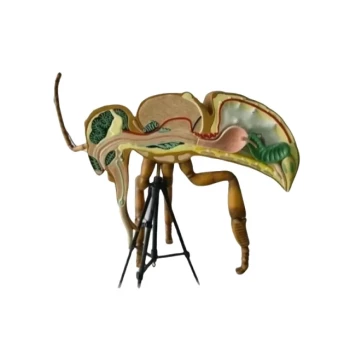
- HONESTBEE Anatomy Bee Model Detailed Anatomical Display for Education and Study
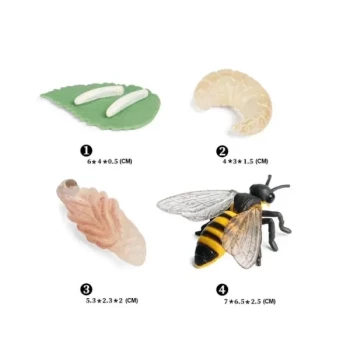
- Honey Bee Lifecycle Model: A Detailed Honeycomb Display of Bee Development
- Professional Large-Format Hive Number Set for Beekeeping
- Modern Flat-Mount Hive Number Set for Beekeeping
- Assembled Wooden Bee Frames with Beeswax Foundation Ready to Use by HONESTBEE
People Also Ask
- How do honey bees utilize water to regulate the internal temperature of the hive? Master Evaporative Cooling Methods
- Is it good to have honey bees in your yard? A Guide to Boosting Your Garden's Health
- What criteria should be considered in the selection process for honey bee breeding? Top Traits for Sustainable Apiaries
- What should be considered when learning the behavior of honey bees and their queens? Master Colony Management
- Why is maintaining specific relative humidity levels critical in caged honey bee experiments? Ensure Research Validity